Mineral collection kits make geology easier to explore by combining real specimens with labels, testing tools, and educational guides. The best options help beginners identify differences in color, hardness, texture, crystal form, and mineral composition without requiring a large separate equipment investment.
We compared 10 kits for specimen variety, identification support, included tools, age suitability, and overall learning value. Whether you are shopping for a child, student, classroom, or curious adult, this roundup highlights practical starting points for building geology skills.
Best 10 Mineral Collection Kits for Geology Beginners Picks for 2026
Best Overall
National Geographic 300+ Rock Collection

- More than 300 genuine specimens
- Includes two break-open geodes
- Learning guide, magnifier, and storage bag included
Best For: Beginners wanting maximum variety and hands-on exploration
Best for Mineral Testing

- 15 real mineral specimens
- Includes streak plate, nail, and magnifying viewer
- Supports introductory identification tests
Best For: Young learners and classroom or homeschool science activities
Best Compact Starter Set
National Geographic 15-Piece Collection
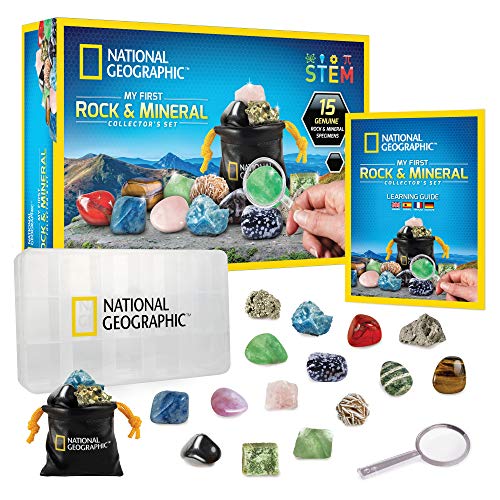
- 15 gemstones and crystals
- Includes guide, clear case, and storage pouch
- Compact introduction to collecting
Best For: Beginners who want an organized, display-friendly starter set
Best Classroom Collection
Geosciences Industries 75-Sample Set

- 75 numbered and identified samples
- Covers igneous, sedimentary, and metamorphic rocks
- Includes study guide, streak plate, magnifier, and magnet
Best For: Classrooms and older beginners studying rock classification
Hands-On Testing Pick

- Includes 13 testing tools and mineral samples
- Covers hardness, streak, magnetism, and effervescence
- Compact design for home, classroom, or field use
Best For: Beginners learning practical mineral identification
Largest Starter Collection

- Includes 9 polished gems and 45 raw specimens
- Adds identification cards and a learning book
- Compartmented case supports storage and display
Best For: Kids and new collectors seeking variety
Classic Display Set
Complete Rock, Mineral & Fossil Collection

- Contains 57 authentic specimens
- Includes charts, labels, trays, and guides
- Adds fossils to the rocks-and-minerals mix
Best For: Home or classroom study with organized specimens
Hands-On Tester
Eisco Rock & Mineral Science Kit

- 12 specimens for comparative study
- Includes multiple identification tests
- Padded box and image reference card
Best For: Adult beginners learning hands-on mineral identification
Best Heavy-Duty Pick
Dancing Bear 18-Piece Rock Set

- 18 rocks and minerals included
- Educational descriptions and information
- Plastic box for collection storage
Best For: Young learners, teachers, and casual collectors
Expanded Explorer

- 43 specimens with volcanic and crystal samples
- Includes magnifier and testing tools
- Adds geode display and polishing activities
Best For: Beginners and hobbyists wanting broad, hands-on study
Best Overall – National Geographic 300+ Rock Collection
For shoppers comparing mineral collection kits for geology beginners, this National Geographic set stands out for its unusually large variety and hands-on extras. It includes more than 300 genuine specimens, two break-open geodes, a magnifying glass, a learning guide, and a storage bag.
Best For: Beginners who want a broad starter collection with an engaging geode-cracking activity.
Pros:
- Includes over 300 genuine rocks, minerals, and crystals.
- Two geodes add an interactive discovery experience.
- Learning guide and magnifying glass support identification and close examination.
- Storage bag helps keep the collection organized.
Cons:
- The large number of specimens may be more than a first-time collector needs.
- Recommended for ages 8 and up, so it is not intended for very young children.
This is the strongest choice for variety and gift appeal. Choose it if you want a collection that can serve as both a display set and an ongoing earth-science activity.
Best for Mineral Testing – Toysmith Mineral Science Kit
This Toysmith kit is a practical option among mineral collection kits for geology beginners because it focuses on examining and comparing specimens. Its 15 minerals are paired with a magnifying viewer, streak plate, nail, and identification guide for introductory testing.
Best For: Young learners, homeschool activities, and classroom demonstrations centered on basic mineral identification.
Pros:
- Includes 15 real mineral specimens for hands-on observation.
- Accessories introduce hardness, streak, luster, and crystal-shape testing.
- Compact 7.5-by-5-inch format is convenient for a tabletop activity.
- Requires no batteries.
Cons:
- With 15 specimens, it offers less variety than larger collections.
- The supplied notes identify the included components generally as a toy, so the presentation may be simpler than a display-focused kit.
Rather than emphasizing quantity, this set emphasizes the process of asking questions and performing basic tests. It is a sensible pick when learning activities matter more than building a large collection.
Best Compact Starter Set – National Geographic 15-Piece Collection
For beginners who prefer a manageable assortment, this 15-piece National Geographic set is one of the more straightforward mineral collection kits for geology beginners. It combines selected gemstones and crystals with a full-color learning guide, clear storage box, and storage pouch.
Best For: New collectors who want a compact, organized introduction to rock and mineral collecting.
Pros:
- Includes 15 named rock and mineral specimens, including tiger’s eye, rose quartz, pyrite, and fluorite.
- Full-color guide supports specimen identification.
- Clear storage box and pouch make the collection easy to organize and display.
- Recommended for ages 8 and up.
Cons:
- It has considerably fewer specimens than the 300-plus-piece collection.
- Does not include a geode activity or magnifying glass in the supplied components.
This collection keeps the entry point simple without omitting storage or identification materials. It is a good fit when a beginner needs a curated set rather than an extensive assortment.
Best Classroom Collection – Geosciences Industries 75-Sample Set
Geosciences Industries 13357 Introductory Earth Science Classroom Rocks and Minerals Collection
Check Price On AmazonThis Geosciences Industries collection is designed for structured earth-science learning, making it a strong classroom-oriented choice among mineral collection kits for geology beginners. It provides 75 numbered and identified samples, plus tools and guides for classification and observation.
Best For: Classrooms, homeschool units, and older beginners studying rock types and the rock cycle.
Pros:
- Includes 75 mineral and rock samples measuring approximately 1 to 2 inches.
- Samples are numbered and matched to a collection index sheet.
- Includes igneous, sedimentary, and metamorphic rock samples.
- Study guide, streak plate, magnifier, and magnet support practical investigation.
Cons:
- Its 19.3-by-11-inch format and 3.6-pound weight make it less portable than smaller kits.
- Recommended ages begin around 11, so it may be advanced for younger children.
- The classroom-focused presentation may be less gift-like than a display collection.
With its indexed samples and classification materials, this set is better suited to lessons than casual collecting. Select it when systematic study and coverage of rock types are priorities.
Hands-On Testing Pick – 13-Piece Mineral ID Kit
For beginners comparing mineral collection kits for geology beginners, this 13-piece set emphasizes practical identification rather than display alone. It includes tools and sample minerals for exploring hardness, streak, magnetism, and effervescence at home, in class, or in the field.
Best For: Students, teachers, and rock hounds who want to practice basic mineral tests.
Pros:
- Includes a dropper bottle, streak plate, glass plate, magnet, nail, copper sheet, and retractable hand lens.
- Comes with mineral samples including talc, coal, magnetic iron ore, gypsum, hematite, and calcite.
- Supports hands-on tests related to hardness, streak color, magnetism, and acid reactions.
Cons:
- Includes 13 pieces, so it offers fewer specimens than the larger collection-focused kits.
- The acid-testing activity requires vinegar or diluted hydrochloric acid, which is not listed as included.
This is the strongest choice when learning mineral identification methods matters more than building a large labeled collection. Its compact, foldable design also suits classroom use and fieldwork.
Largest Starter Collection – 54-Piece Rock & Mineral Kit
Among mineral collection kits for geology beginners, this set stands out for its quantity and presentation. It combines 9 polished gemstones, 45 raw crystals, rocks, and minerals with identification cards, a learning book, and a compartmented storage case.
Best For: Kids, families, and new collectors who want a broad, organized specimen collection.
Pros:
- Provides 54 assorted specimens, including polished gems and raw stones sourced globally.
- Includes 54 illustrated rock identification and game cards plus a colorful reference book.
- The transparent-lid storage box helps organize and display the collection.
Cons:
- The kit is collection- and identification-focused rather than a dedicated mineral-testing set.
- Specimens are approximately 1–1.5 inches, so individual pieces may be relatively small for some displays.
This is a practical starter choice for learners who are motivated by variety, labeling, and collecting. The storage case and game cards add useful structure for family or classroom exploration.
Classic Display Set – Complete Rock, Mineral & Fossil Collection
This collection is a traditional option among mineral collection kits for geology beginners, combining authentic rocks, minerals, and fossils with reference materials. Its 57 specimens, identification charts, labels, and storage trays make it suited to structured study at home or in the classroom.
Best For: Learners ages 8 and up who want a substantial rock, mineral, and fossil assortment.
Pros:
- Includes 57 authentic rocks, fossils, and minerals.
- Provides five-color identification charts, self-adhesive labels, storage trays, and information guides.
- Features large, handpicked specimens, including a fossil described as 70 million years old.
Cons:
- The supplied details do not specify dedicated testing tools such as a streak plate or magnet.
- Its large format may be less convenient for portable field use.
This kit is a strong fit when specimen variety, size, and organized reference materials are the priority. Choose it over a testing-focused kit if you want fossils included alongside rocks and minerals.
Hands-On Tester – Eisco Rock & Mineral Science Kit
For shoppers comparing mineral collection kits for geology beginners, this Eisco set emphasizes practical identification rather than simply displaying specimens. Its 12 one-inch samples, image card, testing tools, and padded box create a structured introduction to common geology observations.
Best For: Adult beginners who want to practice basic rock and mineral identification with a compact, organized kit.
Pros:
- Supports hardness, streak, magnetic, appearance, and effervescence tests.
- Includes an image card for quicker specimen matching.
- Provides 12 distinct, hand-processed specimens from diverse sources.
- Padded storage helps protect and organize the samples.
Cons:
- Contains 12 specimens, fewer than the larger collections in this roundup.
- The manufacturer recommends it for ages 18 and up.
This is a focused learning kit for buyers who value guided testing and orderly storage. It is a particularly practical choice when identification exercises matter more than collection size.
Best Heavy-Duty Pick – Dancing Bear 18-Piece Rock Set
This Dancing Bear set is a straightforward option among mineral collection kits for geology beginners, combining 18 rocks and minerals with a description sheet, educational information, and a plastic collection box. It suits learners who want a ready-made display and reference collection without a large assortment of testing equipment.
Best For: Young learners, teachers, and casual collectors seeking an accessible educational rock and mineral display.
Pros:
- Includes 18 rocks and minerals for broader comparison than a small starter set.
- Comes with a collection box for storage and display.
- Description and educational information support introductory study.
Cons:
- The supplied details do not list dedicated mineral-testing tools.
- The plastic box may be less protective than a padded storage case.
With its larger sample count and simple presentation, this collection is best viewed as an introductory reference set. It offers an approachable starting point for classroom use or a young collector’s first display.
Expanded Explorer – 43-Piece Geology Rock Kit
For buyers seeking mineral collection kits for geology beginners with room to explore, this 43-piece kit combines a wide specimen selection with identification guides, testing tools, storage, and display-oriented extras. The assortment includes gemstones, volcanic samples, polished geodes, and crystal specimens.
Best For: Beginners and hobbyists who want a broad collection with magnification, hardness, streak, and geode-focused activities.
Pros:
- Includes 43 natural specimens across gemstones, volcanic rocks, and crystals.
- Provides magnifying, hardness-testing, and streak-testing tools.
- Includes a manual, marker, and durable storage packaging.
- Features geode display and polishing tools for additional hands-on activity.
Cons:
- The larger assortment may be more than a learner needs for a basic introduction.
- Its included activities may require more time and workspace than a simple display set.
This is the most expansive option here for buyers who want variety and activities in one package. It can support progression from basic observation to more involved specimen study and display.
How We Picked the Best Mineral Collection Kits for Geology Beginners
We evaluated these Mineral Collection Kits for Geology Beginners based on the usefulness of their specimens, clarity of labeling, quality of educational materials, and suitability for hands-on learning. Kits with testing tools received extra consideration because simple activities—such as checking streak, magnetism, hardness, or reaction to a supplied solution—can turn a display set into a practical lesson.
We also considered specimen count, storage, age guidance, and whether the kit works well for independent exploration, supervised activities, or classroom demonstrations. A larger collection is not automatically better if the samples are poorly identified or the instructions are difficult to follow.
Quick Comparison
- Best for broad variety: Larger 40- to 300-plus-piece collections offer more opportunities to compare rocks, minerals, crystals, and fossils.
- Best for structured learning: Science kits with image cards, identification guides, or test materials provide a clearer path for beginners.
- Best for younger children: Choose age-appropriate kits with durable specimens, simple explanations, and adult supervision for testing activities.
- Best for portability: Compact boxes with roughly 12 to 20 labeled specimens are easier to organize and carry.
Key Buying Factors for Mineral Collection Kits for Geology Beginners
Specimen Variety and Labeling
Look for clearly named samples representing several categories, such as minerals, rocks, crystals, fossils, or volcanic material. Labels or identification cards are especially important for first-time collectors; unlabeled specimens can be attractive but provide less educational value.
Testing Tools and Instructions
A hand lens, streak plate, magnet, glass plate, nail, copper sheet, or dropper bottle can support basic identification tests. Check that the kit explains what each test shows and includes appropriate safety guidance. Some tests should be performed only with adult supervision.
Size, Storage, and Durability
Small specimens are convenient and usually safer for younger users, while larger samples make textures and crystal structures easier to see. A sturdy box or display case helps prevent lost pieces and keeps labels with the correct specimens.
Age and Learning Level
Match the kit to the recipient’s reading ability and curiosity. A simple labeled collection may be ideal for a young child, while older students may benefit more from diagnostic tools and detailed earth-science information.
Who Should Buy Which Mineral Collection Kits for Geology Beginners?
Choose a compact 12- to 20-piece kit for a first introduction, a gift, or a child who benefits from a manageable number of samples. Select a mid-size collection with testing tools for students who want to conduct basic experiments and practice identification. Larger 40-piece and 300-plus-piece sets are better for families, serious young collectors, and classrooms that need broad specimen variety. If display matters as much as experimentation, prioritize organized storage, polished samples, geodes, and clear educational descriptions.