The best engineering building sets turn abstract STEM concepts into hands-on projects. Kids and adults can explore structures, motion, hydraulics, mechanics, and design by building working models they can test and modify.
We compared 10 sets across age range, project variety, construction style, educational value, and replay potential to help you choose the right fit for a curious beginner, aspiring engineer, or experienced maker.
Best 10 Engineering Building Sets Picks for 2026
Best for Structural Exploration
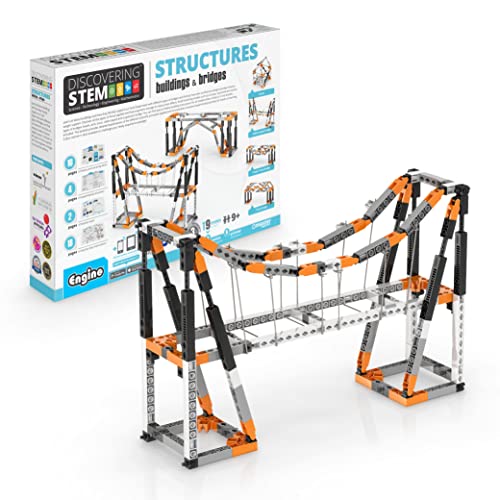
- Build nine building and bridge models
- Includes theory, experiments, and quiz materials
- Multi-directional snap-fit ABS components
Best For: Ages 9+ exploring practical structural engineering
Best for Physics in Motion
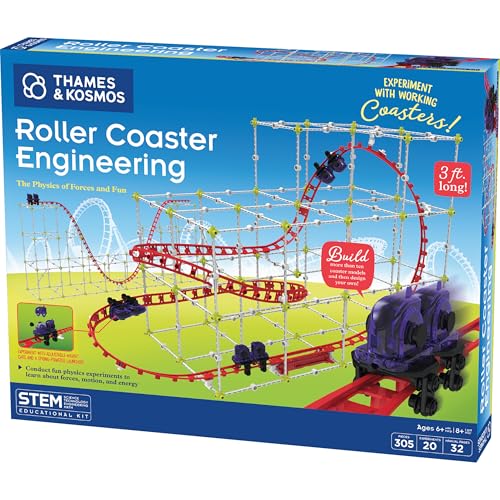
- Build working roller coaster models
- Investigate force, motion, and energy
- Includes a 32-page illustrated manual
Best For: Ages 6+ learning through moving physics models
Best for Motorized Construction

- 638 parts and 25 vehicle model options
- Includes a motorized 6V crane build
- Metal parts and three real tools
Best For: Ages 10+ learning mechanical construction
Best for Structural Engineering Practice

- Build 20 bridge and skyscraper models
- Explores load, compression, and tension
- Includes 287 pieces and a 36-page manual
Best For: Ages 8–14 ready for intermediate structural concepts
Hydraulic Robotics Challenge

- Builds a working water-powered robotic arm
- Six axes with up to 270-degree rotation
- Detailed project for ages 12 and up
Best For: Older kids interested in hydraulics and robotics
Multi-Model Builder

- Creates 10 engineering-themed models
- Includes 112 plastic building pieces
- Designed for ages 4 to 8
Best For: Young builders exploring varied vehicle projects
Metal Mechanics Project

- Contains 194 metal construction components
- Builds two off-road vehicle designs
- Includes illustrated instructions and tools
Best For: Ages 8–16 who enjoy metal vehicle builds
Best Racing Build

- 905-piece race car model for ages 9+
- Working W16 engine, steering, and scissor doors
- Detailed yellow-and-black display design
Best For: Young racing fans and aspiring vehicle engineers
Best Multi-Model STEM Set
50-in-1 Motorized Building Kit

- Builds 50 models one at a time
- Includes 107 pieces and an integrated motor
- Designed for ages 6–12 with clear instructions
Best For: Beginner STEM builders seeking variety
Best Advanced Engine Model

- 1,029-piece diesel engine scale model
- Rechargeable dual-speed motor with USB cable
- Movable pistons and transparent mechanical details
Best For: Teens, adult hobbyists, and diesel enthusiasts
Best for Structural Exploration – Buildings & Bridges
For shoppers comparing engineering building sets, this Engino kit focuses on real structural concepts rather than simple block stacking. Kids ages 9 and up can build nine models, including houses, pyramids, and several bridge designs, while using the included theory, experiments, and quiz materials.
Best For: Curious kids who want guided practice with bridges, buildings, construction skills, and introductory engineering principles.
Pros:
- Offers nine model options, including beam, arch, truss, cable-stayed, and suspension bridges.
- Includes instructions, theory pages, experiments, a quiz book, and a free app.
- Snap-fit parts connect in multiple directions for more complex 3D builds.
- Designed for ages 9 and up and backed by a two-year limited warranty.
Cons:
- Models are built one at a time from the included components.
- The educational material may feel more structured than open-ended for some children.
This is a strong choice when the goal is to connect hands-on construction with recognizable structural engineering ideas. Its bridge variety and supporting learning materials make it especially suitable for guided STEM activities or science-fair preparation.
Best for Physics in Motion – Roller Coaster Engineering
This Thames & Kosmos set gives engineering building sets a moving, experiment-driven focus. Children ages 6 and up can design working roller coasters, then investigate force, motion, and energy through guided challenges and explanations.
Best For: Young learners who are excited by moving models and want an accessible introduction to physics-based engineering.
Pros:
- Builds working roller coaster models with an included roller coaster car.
- Explores force, motion, energy, and related physics concepts through experiments.
- Includes a 32-page, full-color manual with step-by-step instructions.
- Reusable plastic parts support multiple designs and challenges.
Cons:
- The set centers on roller coaster designs rather than buildings or bridges.
- Some challenges may require patience while testing track shapes and sizes.
Choose this kit if movement and experimentation are more appealing than static construction. The reusable building system and guided challenges provide a practical way to see how engineering decisions affect a working model.
Best for Motorized Construction – Meccano Super Construction
Among engineering building sets, this Meccano kit stands out for its metal parts, real tools, and powered vehicle design. Recommended for ages 10 and up, it includes 638 pieces and supports 25 construction-vehicle concepts, with a motorized crane as the featured working model.
Best For: Older children and teens who enjoy mechanical assembly, construction vehicles, and building with tools.
Pros:
- Provides 638 pieces for 25 construction-vehicle model options.
- The included 6V motor powers a crane with a rotary body and extendable hook.
- Uses metal components and includes three real tools.
- Parts can be mixed and matched for original designs.
Cons:
- Assembly is more involved than a simple snap-together building set.
- Four AA batteries are required for motorized operation.
- The supplied instruction sheet covers 11 models, although the set advertises 25 build options.
This is a compelling pick for builders ready for a more hands-on mechanical experience. Its motorized crane adds play value, while the metal parts and tools make the construction process feel closer to a traditional engineering kit.
Best for Structural Engineering Practice – Bridges & Skyscrapers
This intermediate Thames & Kosmos kit is a focused option for engineering building sets that teach how structures handle forces. With 287 interchangeable pieces, children ages 8 to 14 can build 20 models while exploring load, compression, tension, and building materials.
Best For: Learners ready for a more focused introduction to structural mechanics through bridges, skyscrapers, and model-building experiments.
Pros:
- Includes 20 structural models covering bridges and skyscrapers.
- Explains force, load, compression, tension, and related concepts.
- Provides 287 interchangeable plastic building pieces.
- Includes a 36-page illustrated experiment and assembly manual.
Cons:
- The set is marked intermediate, so younger or new builders may need guidance.
- Its focus is structural science rather than motorized or moving models.
- Models are assembled one at a time from the available parts.
For children specifically interested in why bridges and tall structures stand, this kit offers a concentrated learning path. The model variety, interchangeable parts, and experiment manual make it a useful step up from basic construction toys.
Hydraulic Robotics Challenge – Hydrobot Arm
For older learners seeking engineering building sets with real mechanical action, the TEACH TECH Hydrobot Arm offers an in-depth hydraulic assembly project. It uses water power rather than batteries and is designed for multiple hours of hands-on building.
Best For: Kids ages 12 and up who enjoy robotics, hydraulics, physics, and detailed mechanical projects.
Pros:
- Builds a working robotic arm powered by water-based hydraulics.
- Six axes and up to 270-degree rotation provide interactive movement.
- Levers control a gripper that can open, close, or use suction components.
- Step-by-step instructions support problem-solving and analytical thinking.
Cons:
- Requires careful assembly and a substantial time commitment.
- Recommended for ages 12 and up, so it may be too advanced for younger children.
- Plastic construction may not appeal to builders specifically seeking metal sets.
This is a strong choice when the goal is a serious, project-style introduction to hydraulics and robotics rather than a quick-build toy.
Multi-Model Builder – 10-in-1 STEM Vehicle Kit
This 10-in-1 kit is a flexible option among engineering building sets for younger children. Its 112 plastic pieces can be assembled into models such as a bulldozer, crane, forklift, windmill, and other engineering vehicles, with instructions for each project.
Best For: Children ages 4 to 8 who want varied construction projects and moving models for home or classroom activities.
Pros:
- Offers 10 different model-building projects.
- Introduces science, technology, engineering, and math concepts through play.
- Assembly instructions explain the parts and installation steps.
- Includes a storage box for easier cleanup.
Cons:
- Plastic construction is not intended for children seeking metal building sets.
- Only one model is assembled at a time.
- The many small pieces may require organized storage and supervision for younger users.
Its multiple designs and age-appropriate challenge levels make this a practical starter set for children who may lose interest after building only one model.
Metal Mechanics Project – 3D Metal Engineering Kit
For builders ready to move beyond basic plastic construction, this 194-piece metal kit offers a hands-on engineering building set focused on mechanical assembly. It includes parts and tools to create two different off-road vehicle designs, one model at a time.
Best For: Kids ages 8 to 16 who enjoy metal construction, vehicle models, logical thinking, and guided DIY projects.
Pros:
- Includes 194 precision-engineered metal components.
- Step-by-step illustrated instructions help beginners follow the build.
- Supports spatial reasoning, concentration, and hands-on problem-solving.
- Comes with a small screwdriver and wrench for assembly.
Cons:
- Only one of the two designs can be built at a time.
- Metal assembly may be more demanding for younger or inexperienced builders.
- Focused on off-road vehicle models rather than a broad range of structures.
This set suits children who want a more substantial metal-building experience and the freedom to experiment with mechanical designs after completing the guided models.
Best Racing Build – LEGO Technic Bugatti Bolide
For builders interested in engineering building sets and motorsport, the LEGO Technic Bugatti Bolide combines a substantial 905-piece build with realistic mechanical features. It is designed for ages 9 and up and doubles as a display model when complete.
Best For: Young racing fans, model builders, and learners exploring vehicle engineering.
Pros:
- Includes a working W16 engine, steering, scissor doors, and realistic movement.
- Yellow-and-black styling with sticker details creates an eye-catching display piece.
- Provides a hands-on introduction to construction and motorsport technology.
Cons:
- Recommended for ages 9 and up, so it may be too advanced for younger children.
- The model focuses on one race car rather than multiple builds.
Choose this set when authentic automotive details and display appeal matter more than having a broad selection of projects. Its working features make the finished Bugatti especially engaging for vehicle enthusiasts.
Best Multi-Model STEM Set – 50-in-1 Motorized Building Kit
This 50-in-1 kit is a flexible choice among engineering building sets for children ages 6 to 12. With 107 pieces, step-by-step instructions, and a motorized unit, it lets kids build one model at a time while practicing problem-solving and spatial reasoning.
Best For: Beginners who want varied STEM projects, motorized models, and hands-on family activities.
Pros:
- Offers 50 possible models, including fighter jets, radar vehicles, and ferris wheels.
- Motorized designs make completed builds more interactive.
- Clear instructions support beginner-friendly building and learning.
- Targets logical thinking, patience, fine motor skills, and spatial reasoning.
Cons:
- Only one model can be built at a time.
- Requires three AAA 1.5V batteries, which are not included.
- The 107-piece count is smaller than that of more advanced engineering kits.
This set is a practical starting point for children who may lose interest in a single long build. Its variety and motorized operation encourage repeated experimentation, though battery availability should be planned for.
Best Advanced Engine Model – Inline 4-Cylinder Diesel Kit
For teens and adults seeking engineering building sets with deeper mechanical detail, this 1,029-piece diesel engine model offers a challenging project and working demonstration. Its transparent components and rechargeable motor help show how an inline four-cylinder engine operates.
Best For: Diesel enthusiasts, aspiring engineers, adult hobbyists, and STEM demonstrations.
Pros:
- Features movable pistons, air valves, exhaust pipes, turbocharger details, and a transparent cylinder head.
- Rechargeable dual-speed motor runs through an included USB cable without requiring batteries.
- Large 1,029-piece build offers an in-depth mechanical assembly experience.
- Includes step-by-step color instructions and durable, non-toxic ABS construction.
Cons:
- Recommended for ages 14 and up, making it unsuitable for younger builders.
- Its advanced engine-focused design may be less appealing to children seeking varied models.
- The set is intended for indoor use.
This is the strongest choice here for a serious mechanical build and an educational display. The motorized moving parts add demonstration value, while the high piece count makes it better suited to patient teens and adults.
How We Picked These Engineering Building Sets
We evaluated each set for the quality of its building experience, clarity of its learning objectives, range of included projects, and suitability for its recommended age. We also considered whether models are static or functional, how much independent problem-solving they encourage, and whether the parts support rebuilding after the first project.
The roundup includes structural kits for bridges and skyscrapers, mechanical and motorized systems, hydraulic projects, themed vehicles, general STEM activity sets, and more advanced engine models. Because “best” depends heavily on the builder, we prioritized variety rather than ranking every set by a single standard.
Quick Comparison
| Best For | Recommended Type | What to Look For |
|---|---|---|
| Young beginners | General STEM or multi-project kits | Large parts, simple instructions, forgiving builds |
| Structural design | Bridge and skyscraper sets | Load testing, balance, beams, and reinforcement |
| Moving mechanisms | Motorized construction sets | Gears, axles, power systems, and durable connections |
| Hands-on science | Hydraulic or roller-coaster kits | Cause-and-effect experiments and repeatable testing |
| Advanced builders | Metal or engine model kits | Small parts, precision assembly, and patience |
| Vehicle fans | Technic-style car sets | Realistic mechanisms, steering, suspension, and display value |
Key Buying Factors for Engineering Building Sets
Age and Complexity
Use the manufacturer’s age recommendation as a starting point, not a guarantee. Younger builders often need larger components and adult guidance, while older children may prefer detailed mechanisms and open-ended challenges. A set that is too easy can lose its appeal quickly; one that is too complex may become frustrating.
Build Type and Learning Goals
Choose a kit that matches the concept the builder wants to explore. Structural sets demonstrate stability and force, roller coasters illustrate energy and motion, hydraulic arms show fluid pressure, and motorized sets introduce gears, power transmission, and control. Multi-project kits offer broader experimentation but may provide less depth in one subject.
Parts, Instructions, and Rebuildability
Check the piece count and construction material before buying. Metal parts can feel more precise but may require tools and careful alignment. Plastic systems are generally easier to rebuild. Clear, well-sequenced instructions matter for first-time builders, while experienced makers may value alternate designs and compatibility with existing components.
Space, Supervision, and Value
Consider storage, assembly time, and whether the finished model needs a permanent display area. Small parts require supervision around younger children. A higher-priced kit can be worthwhile when it offers durable components, multiple builds, a motor, or strong replay value rather than only a single display model.
Who Should Buy Which Engineering Building Sets?
Choose a general STEM activity kit for a beginner who wants variety, a structural engineering set for someone interested in bridges and buildings, and a roller-coaster or hydraulic kit for builders who learn best through visible motion. Motorized construction sets suit children ready to explore mechanisms, while a Technic-style car is a strong choice for vehicle enthusiasts who also want a collectible model.
Metal engineering kits and running engine models are better suited to older builders, teens, or adults who enjoy precision work and troubleshooting. Before ordering, match the set’s complexity, project theme, and required supervision to the individual builder—not just the advertised part count.