Choosing the right thermal printer can make shipping faster, cleaner, and less expensive by eliminating ink, toner, and manual label cutting. The best model depends on your shipping volume, preferred connection, workspace, and the platforms you use.
Below, we compare 10 thermal printers for shipping across practical features such as 4×6 label support, setup, connectivity, speed, compatibility, and portability.
Best 10 Thermal Printers for Shipping Picks for 2026
Best Overall
Rollo USB Shipping Label Printer

- Fast 150 mm/s direct thermal printing
- Broad marketplace and carrier compatibility
- Supports labels from 1.57 to 4.1 inches
Best For: Online sellers who prefer fast, reliable USB printing
Best Wireless Value
Phomemo 241BT Bluetooth Label Printer

- Bluetooth printing for iOS and Android
- USB support for multiple computer systems
- Supports labels from 1 to 4.6 inches
Best For: Mobile-first sellers needing flexible connectivity
Best for High-Volume Work
HP Compact 4x6 Shipping Label Printer

- Prints at up to 6 inches per second
- 203 DPI direct thermal output
- Works with roll and fanfold labels
Best For: Small businesses needing fast, compact USB printing
Best Bluetooth Setup
JADENS Wireless 4x6 Label Printer

- Bluetooth and USB connectivity
- Supports roll and fanfold labels
- Works with many ecommerce platforms
Best For: Small businesses printing from phones and computers
Commercial USB Pick
Westinghouse 4x6 Thermal Label Printer

- Prints up to 6 inches per second at 203 DPI
- Supports Windows, macOS, Linux, and ZPL software
- Includes starter labels and essential setup accessories
Best For: Desktop shipping stations and small ecommerce businesses
Mobile-Friendly Pick
Labeer Bluetooth 4x6 Thermal Printer

- Prints PDF labels from phones through the FlashLabel Pro app
- Supports 4x6 and several smaller label sizes
- Includes auto-calibration and paper/jam detection
Best For: Mobile sellers and mixed-device shipping teams
Template-Rich Pick
KNAON Bluetooth 4x6 Label Printer
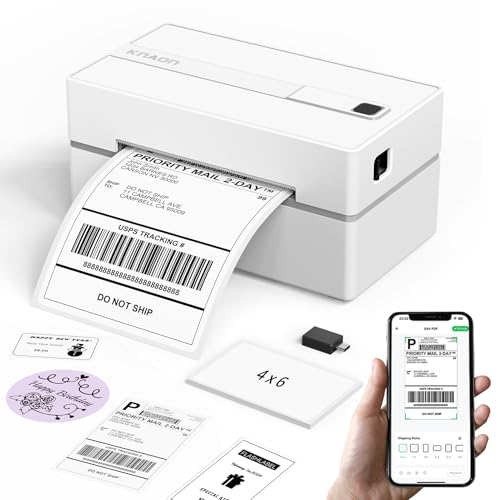
- Offers thousands of templates, icons, and fonts in the app
- Supports Bluetooth, USB, and multiple operating systems
- Prints labels up to 4.2 inches wide at up to 180 mm/s
Best For: Custom labeling and small-business shipping workflows
Best Smart-Cropping Pick
Arrvel A42BT 4x6 Bluetooth Label Printer

- App-based Bluetooth and USB connectivity
- AI Smart Cropping for logistics PDFs
- Up to 72 labels per minute at 203 DPI
Best For: Small businesses wanting flexible app tools and wireless printing
Best for High-Volume Use
MUNBYN RW403B Wireless Label Printer

- Supports labels from 1.57 to 4.25 inches wide
- DAC calibration helps reduce misalignment
- Rated for up to 970,000 labels
Best For: Frequent shipping and inventory-label printing
Best for Label-Size Flexibility
Rongta RP425 Bluetooth Shipping Printer
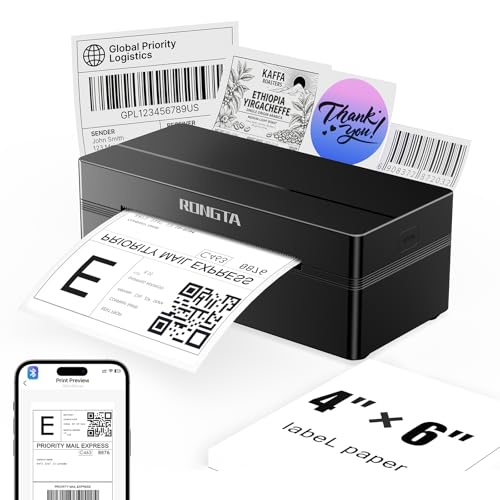
- Supports 0.98- to 4.37-inch-wide labels
- Automatic label detection and feeding
- Bluetooth app support for iOS and Android
Best For: Users printing shipping, barcode, QR, and small labels
Best Overall – Rollo USB Shipping Label Printer
For sellers comparing thermal printers for shipping, the Rollo USB stands out as a fast, dependable wired option. It prints 4×6 labels at up to one label per second, uses inkless direct thermal technology, and works with Windows and Mac computers.
Best For: Online sellers who want broad platform compatibility and fast USB printing.
Pros:
- Prints clear 203 DPI labels at up to 150 mm/s.
- Works with major marketplaces and shipping platforms, including Amazon, Shopify, Etsy, eBay, USPS, and UPS.
- Supports label widths from 1.57 to 4.1 inches for shipping, barcode, product, and sticker labels.
- Includes access to the Rollo Ship app and its shipping tools.
Cons:
- USB connectivity is the primary printer connection, so it is not a wireless-first choice.
- Designed for monochrome printing only.
The Rollo is a practical pick for a home office or small shipping station that values speed, flexible label sizing, and established ecommerce compatibility over wireless convenience.
Best Wireless Value – Phomemo 241BT Bluetooth Label Printer
The Phomemo 241BT is a flexible option among thermal printers for shipping, with Bluetooth printing for phones and tablets plus USB support for computers. Its Labelife app supports label design, templates, barcodes, and QR codes for both home and business use.
Best For: Sellers who want wireless printing from mobile devices as well as computer connectivity.
Pros:
- Supports Bluetooth printing through the Labelife app on iOS and Android.
- Also works with PC, Mac, Chrome OS, and Linux through USB or the required software.
- Handles label widths from 1 to 4.6 inches and supports major marketplaces and carriers.
- Prints at up to 150 mm/s without ink or toner.
Cons:
- Mobile printing requires the Labelife app.
- Computer users need the appropriate driver or Chrome extension depending on their operating system.
- Prints black-and-white labels only.
Choose the Phomemo if wireless convenience matters and you want one printer that can serve mobile devices, computers, and several common shipping workflows.
Best for High-Volume Work – HP Compact 4×6 Shipping Label Printer
For a compact shipping setup, this HP direct thermal printer offers fast 4×6 label production without ink or toner. Its 203 DPI output and adjustable media guides support shipping, barcode, warehouse, and product labels up to 4 inches wide.
Best For: Home offices and small businesses that prioritize quick, straightforward USB label printing.
Pros:
- Prints at up to 6 inches per second.
- Produces clear 203 DPI monochrome labels without ink cartridges.
- Works with fanfold and roll labels up to 4 inches wide.
- Includes the printer, power adapter, USB cable, and quick start guide.
Cons:
- USB is the listed connectivity option, with no wireless connection noted.
- Its maximum media size is limited to 4×6 inches.
The HP is a sensible choice when you need a compact, quick printer for routine shipping labels and want a familiar setup with the essential accessories included.
Best Bluetooth Setup – JADENS Wireless 4×6 Label Printer
The JADENS JD268BT is a versatile choice among thermal printers for shipping, combining Bluetooth and USB connectivity with support for roll and fanfold labels. It prints 203 DPI monochrome labels and works with many ecommerce and shipping platforms.
Best For: Small online businesses that want wireless printing and support for varied label formats.
Pros:
- Supports Bluetooth printing and USB connections.
- Works with Windows, Mac, Android, and iOS workflows using the applicable connection or app.
- Handles label widths from 1.57 to 4.1 inches, including 4×6 formats.
- Compatible with platforms such as Amazon, eBay, Shopify, ShipStation, Shippo, and ShippingEasy.
Cons:
- Phone printing requires the Jadens printer app; iOS and Android cannot print directly through Bluetooth alone.
- Labels must be recalibrated when changing label types or sizes.
- Prints monochrome labels only.
JADENS offers useful connectivity and media flexibility for sellers who print from different devices, though its app requirements and recalibration step add a little setup work.
Commercial USB Pick – Westinghouse 4×6 Thermal Label Printer
The Westinghouse WHTP203e is a practical choice among thermal printers for shipping when you want a desktop, USB-connected setup for regular 4×6 labels. It supports Windows, macOS, and Linux, prints at up to 6 inches per second, and uses direct thermal printing without ink, toner, or ribbons.
Best For: Small businesses, ecommerce sellers, and shipping stations that primarily print from a desktop computer.
Pros:
- 203 DPI output and speeds up to 6 inches per second.
- Works with Windows, macOS, Linux, and ZPL software.
- Supports rolls and fanfold labels from 0.78 to 4.6 inches wide.
- Includes starter labels, holder, USB cable, power accessories, and a USB flash drive.
Cons:
- It is not Bluetooth-capable.
- An Ethernet cable and USB-C cable or adapter are sold separately.
- Setup requires following the driver-installation instructions and running a print test.
Choose this model if dependable wired connectivity and fast, routine 4×6 printing matter more than mobile convenience. Its commercial-grade design and included setup accessories make it well suited to a fixed packing desk.
Mobile-Friendly Pick – Labeer Bluetooth 4×6 Thermal Printer
The Labeer Y43BT stands out among thermal printers for shipping if you want to print 4×6 labels wirelessly from a phone or Windows computer. Its FlashLabel Pro app can crop and rotate PDF labels, while automatic calibration and label-detection features help streamline repeated packing tasks.
Best For: Sellers and shipping teams that print from iPhone, Android, or Windows devices and need flexible label-size support.
Pros:
- Supports Bluetooth printing from mobile devices through the FlashLabel Pro app.
- Works with 4×6 labels plus sizes from 1.57 to 4.41 inches wide.
- Compatible with Windows, macOS, ChromeOS, and Linux through the stated connection methods.
- Includes automatic label calibration, paper-out detection, jam detection, and job controls.
Cons:
- Mobile printing requires the FlashLabel Pro app.
- At 203 DPI, it is designed for standard clear, scannable labels rather than higher-resolution output.
- The supplied details indicate a simple, monochrome printer rather than a multifunction device.
For sellers who move between a phone and computer, the Labeer offers useful wireless flexibility without giving up standard 4×6 shipping-label support. Its multiple media sizes also make it practical for inventory and product labeling.
Template-Rich Pick – KNAON Bluetooth 4×6 Label Printer
The KNAON Y813BT is one of the more versatile thermal printers for shipping for users who want Bluetooth connectivity, app-based templates, and support for several label types. It works with major shipping platforms after saving labels as PDFs and importing them into FlashLabel Pro, and it prints at speeds up to 180 mm/s.
Best For: Small businesses and home users who print shipping, barcode, product, and custom labels from phones or computers.
Pros:
- Supports Bluetooth through the FlashLabel Pro app and USB connectivity across multiple operating systems.
- Offers more than 3,000 templates, 5,000 icons, and 100 fonts in the app.
- Handles paper widths from 1.5 to 4.2 inches and prints at up to 180 mm/s.
- Includes 10 test shipping-label papers and a USB drive with setup resources.
Cons:
- Mobile and direct Bluetooth printing require the FlashLabel Pro app.
- Shipping-platform labels must be saved as PDFs and imported into the app.
- ChromeOS users need the FlashLabel extension, while Windows Bluetooth printing requires the stated driver.
This KNAON model makes the most sense when customization is part of your workflow, not just shipping-label output. Its compact design, app templates, and broad label support suit sellers handling varied packaging and product-labeling jobs.
Best Smart-Cropping Pick – Arrvel A42BT 4×6 Bluetooth Label Printer
For sellers who want thermal printers for shipping with flexible wireless and USB connectivity, the Arrvel A42BT combines app-based control with a compact desktop design. Its FlashLabel Pro app supports AI Smart Cropping for converting full-size logistics PDFs into 4 x 6-inch labels, while the included stand helps organize label rolls.
Best For: Small businesses and home offices that want app-based label design, broad platform compatibility, and quick 4 x 6-inch shipping-label printing.
Pros:
- Supports Bluetooth through the FlashLabel Pro app on iOS, Android, Windows, and macOS, plus USB connectivity for Windows, macOS, ChromeOS, and Linux.
- Prints up to 150 mm/s, or up to 72 labels per minute, at 203 DPI.
- AI Smart Cropping can optimize logistics PDFs, and the app includes templates, icons, and fonts for custom labels.
- Supports fanfold and roll labels from 1.57 to 4.3 inches wide and includes a label stand.
Cons:
- Mobile devices and macOS must connect through the FlashLabel Pro app rather than system Bluetooth settings.
- The 203 DPI resolution is designed for monochrome labels rather than detailed graphics.
- The stand and label-holder crossbar require proper assembly and positioning.
The A42BT is a versatile choice when wireless app features matter as much as basic shipping-label output. Its long claimed lifespan, software tools, and included accessories make it especially practical for growing label-printing workloads.
Best for High-Volume Use – MUNBYN RW403B Wireless Label Printer
The MUNBYN RW403B is one of the thermal printers for shipping to consider when long-term durability and consistent feeding are priorities. It supports labels from 1.57 to 4.25 inches wide, uses DAC technology for automatic calibration, and is rated for quiet operation in shared workspaces.
Best For: Small businesses, home offices, and packing stations handling varied label types and frequent shipping or inventory work.
Pros:
- Handles direct thermal labels from 1.57 to 4.25 inches wide, including shipping, return, product, and inventory labels.
- DAC Dynamic Algorithm Tech auto-calibrates to help reduce label misalignment.
- Rated for up to 970,000 labels and a near-zero jam rate of less than 0.01%.
- Bluetooth and USB connectivity support computers and mobile devices, with a stated two-year manufacturer warranty.
Cons:
- Bluetooth connection behavior can be less immediately obvious because the indicator light illuminates during data transfer.
- The printer uses monochrome direct thermal output, so it is not intended for color printing.
- Setup and control depend on the supported app or computer connection rather than onboard display controls.
With its broad label-size range, automatic calibration, and high stated duty life, the RW403B is aimed at users who want dependable everyday production. Its 60 dB operating level may also suit quieter offices and home work areas.
Best for Label-Size Flexibility – Rongta RP425 Bluetooth Shipping Printer
The Rongta RP425 is a practical option among thermal printers for shipping for users who print more than standard 4 x 6-inch labels. Its automatic label identification and support for widths from 0.98 to 4.37 inches make it suitable for shipping labels, barcodes, QR codes, and smaller organizational labels.
Best For: Small businesses and mobile users who need one compact printer for shipping labels and multiple smaller label formats.
Pros:
- Supports iOS and Android printing through the RONGTA app, along with USB connectivity and computer drivers for Windows, macOS, and ChromeOS.
- Automatically detects, grabs, and feeds labels to reduce manual adjustment.
- Accepts label widths from 0.98 to 4.37 inches, including 4 x 6 shipping, 2 x 2 circular, 2 x 1 barcode, and 1 x 1 QR-code labels.
- Prints at up to 150 mm/s with 203 DPI resolution in a compact design.
Cons:
- The included warranty is listed as one year, shorter than some competing models in this group.
- Windows and Mac users need to download the driver software from Rongta’s official website.
- The product is limited to monochrome thermal printing.
The RP425 stands out for automatic feeding and unusually broad label-size support. It is a good fit when shipping is only part of the workflow and the same printer also needs to produce barcodes, QR codes, or smaller labels.
How We Picked the Best Thermal Printers for Shipping
We focused on the features that matter most when printing carrier and marketplace labels: reliable 4×6 output, connection options, ease of setup, operating-system support, print clarity, and compatibility with services such as USPS, UPS, FedEx, Amazon, Shopify, and other shipping platforms. We also included a mix of USB, Bluetooth, compact, portable, and commercial-grade designs so different businesses can find a suitable match.
Because shipping workflows vary, no single printer is ideal for everyone. A high-volume seller may prioritize consistent desktop performance, while a home business or occasional shipper may value wireless access and a smaller footprint.
Quick Comparison
- Best for high-volume desktop shipping: Choose a commercial-grade USB printer with dependable continuous operation.
- Best for wireless printing: Bluetooth models can print from compatible phones, tablets, or computers without a direct cable connection.
- Best for small workspaces: Compact printers take up less desk room and are easier to store between shipping sessions.
- Best for flexibility: Look for broad Windows, macOS, Android, or iOS support if multiple people or devices will use the printer.
Key Buying Factors for Thermal Printers for Shipping
Label Size and Print Quality
Most carrier labels use the standard 4×6-inch format, so confirm that the printer supports it natively. A resolution around 203 DPI is generally sufficient for shipping labels, barcodes, and address text when the media and settings are correct.
Connectivity and Compatibility
USB is typically straightforward and dependable for a dedicated workstation. Bluetooth adds convenience, especially for mobile workflows, but check whether the printer supports your specific operating system and requires a companion app. Also verify compatibility with the marketplaces and carrier platforms you use.
Speed, Volume, and Reliability
Frequent shippers should consider print speed, automatic label detection, heat management, and the manufacturer’s recommended duty cycle. A printer that handles repeated jobs consistently may be more valuable than one with a lower purchase price.
Printer Footprint and Label Loading
Measure your available desk space and check whether the printer accepts fanfold labels, rolls, or both. Simple loading and clear status indicators reduce interruptions when preparing multiple packages.
Who Should Buy Which Thermal Printers for Shipping?
Small businesses and online sellers should prioritize dependable 4×6 printing, broad platform compatibility, and a connection that fits their primary computer or mobile device. High-volume shippers will usually benefit from a sturdy USB model designed for repeated desktop use. Home-based sellers may prefer a compact unit that is easy to set up and store. Mobile or multi-device users should focus on Bluetooth printers, while occasional shippers can save money by choosing a straightforward model with the essential label features rather than advanced connectivity.
Before buying, confirm included accessories, label-media requirements, software support, and return coverage. These details can affect the total cost and determine how smoothly the printer fits into your current shipping workflow.