The best science experiment sets turn curiosity into hands-on discovery, giving children practical ways to explore chemistry, physics, geology, and biology at home.
We compared 10 popular kits by experiment variety, age suitability, educational value, included tools, and the kind of play each set supports.
Best 10 Science Experiment Sets Picks for 2026
Magic-Making STEM Pick
National Geographic Science Magic Kit

- 20 included magic experiments
- 85+ additional experiments in the booklet
- Ages 8+; no batteries required
Best For: Kids who enjoy science-themed magic and varied STEM activities
Complete Chemistry Station

- 57-piece chemistry lab setup
- Includes experiment cards and a 16-page manual
- Non-hazardous chemicals; ages 6+
Best For: Young learners who want a structured chemistry workspace
Earth Discovery Favorite
National Geographic Earth Science Kit

- 100+ activities and experiments advertised
- Includes crystals, volcanoes, tornadoes, and dig kits
- Full-color guide explains the science
Best For: Kids interested in geology and Earth science
Big Variety Activity Set

- 150 experiments across several science topics
- Includes tools, materials, and goggles
- Illustrated step-by-step manual
Best For: Families wanting a wide range of repeatable science activities
Best Chemistry-Focused Pick
National Geographic Amazing Chemistry Set

- 100+ total experiments
- Includes lab-style tools
- Ages 8 and up
Best For: Young learners interested in chemistry and crystal growing
Best Variety on a Budget

- Guides 80 experiments
- Includes many lab tools
- Colorful project variety
Best For: Kids who enjoy broad science exploration and role play
Best Three-in-One Set
National Geographic Mega Science Lab
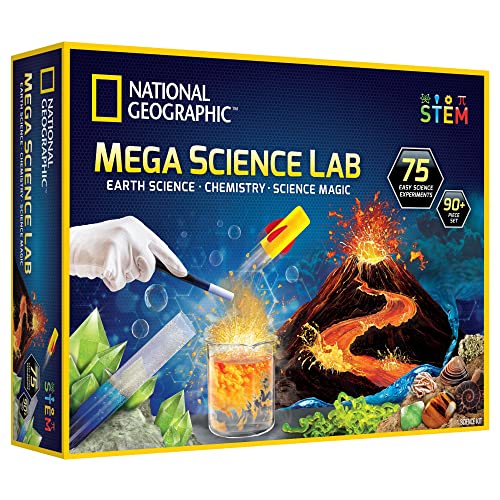
- Covers three science themes
- Includes 75 experiments
- Adds rock and fossil specimens
Best For: Curious kids who want variety across earth science and chemistry
Most Comprehensive Pick
Doctor Jupiter Ultimate Science Kit

- More than 135 guided experiments
- Includes bonus household-item activities
- Leak-proof bottles help reduce mess
Best For: Kids ages 8+ and family STEM activities
Biggest Variety Pick
UNGLINGA 272 Experiments Science Kit

- Advertises 272 experiments
- Includes chemistry and physics activities
- Comes with kid-sized lab tools
Best For: Groups seeking a large selection of projects
Most Playfully Gross Pick
National Geographic Gross Science Kit

- Includes 45 gross science activities
- Explores polymers, reactions, and pH
- Adds 30 household-item experiments
Best For: Kids who enjoy humorous, creepy STEM projects
Magic-Making STEM Pick – National Geographic Science Magic Kit
For kids who enjoy both tricks and hands-on learning, this science experiment set combines 20 magic experiments with a bonus booklet containing more than 85 additional activities. It is designed for children ages 8 and up and focuses on STEM learning through manual, science-themed play.
Best For: Kids who want a large variety of science magic activities and families seeking a giftable STEM kit.
Pros:
- Includes materials for 20 magic experiments.
- Bonus booklet adds more than 85 additional experiments.
- Designed for ages 8 and up with no batteries required.
Cons:
- The kit centers on science magic rather than a single branch of science.
- It is intended for one player.
This is a strong choice when variety and presentation matter most. Its magic theme can make STEM activities especially engaging, while the included booklet extends the kit beyond the core experiments.
Complete Chemistry Station – Ooze Labs Chemistry Station
This science experiment set gives young learners a dedicated, colorful lab setup for chemistry activities. With 57 pieces, experiment cards, and a full-color manual, it supports projects involving slime, fizzing reactions, bubbles, chromatography, and an underwater volcano.
Best For: Children ages 6 and up who want a realistic-looking chemistry workspace with organized equipment.
Pros:
- Includes a large chemistry station and 57 pieces.
- Provides beakers, test tubes, flasks, pipettes, and other lab tools.
- Uses non-hazardous chemicals and includes experiment cards plus a 16-page manual.
Cons:
- The activities are primarily focused on chemistry.
- Some projects require regular household items beyond the included materials.
The built-in station makes this kit feel more like a working lab than a loose collection of supplies. It is a practical pick for younger children who benefit from visual organization and guided experiments.
Earth Discovery Favorite – National Geographic Earth Science Kit
Among science experiment sets, this Earth-focused option is suited to kids who are curious about rocks, crystals, volcanoes, and natural processes. It includes more than 15 activities within a collection advertised as offering 100+ experiments and activities, along with a detailed learning guide.
Best For: Kids ages 8 and up who prefer geology and Earth science projects they can share with family or classmates.
Pros:
- Features crystal growing, an erupting volcano, water tornadoes, and geologic dig kits.
- Includes a full-color guide explaining the science behind the activities.
- Designed to support multiple experiments and group participation.
Cons:
- Its subject matter is concentrated on Earth sciences.
- Some activities may be more suitable for shared use than individual play.
This kit stands out for buyers looking for a focused Earth science experience rather than a general laboratory set. The combination of hands-on projects and explanations can help turn entertaining activities into meaningful lessons.
Big Variety Activity Set – UNGLINGA 150 Experiments Kit
This science experiment set is built around breadth, with 150 activities spanning Earth science, surface tension, chemistry, physics, magic, volcanoes, crystals, and digging. It includes kid-friendly materials and lab tools, while some projects use common household items.
Best For: Families seeking a broad, reusable activity collection for children ages 8 and up.
Pros:
- Covers multiple science topics across 150 experiments.
- Includes science tools, materials, and goggles for scientist-style play.
- Step-by-step, illustrated instructions support guided activities.
Cons:
- Some experiments require household items not included in the kit.
- The broad topic range may provide less depth in any one science area.
Choose this set when maximum activity count is the priority. Its wide mix of projects can support repeated science time at home, especially when an adult is available to help organize materials and explain the lessons.
Best Chemistry-Focused Pick – National Geographic Amazing Chemistry Set
For children who want to focus on chemistry, this science experiment set offers more than 100 activities for ages 8 and up. The included materials support 15 hands-on experiments, while a bonus guide adds 85 projects using common household items.
Best For: Kids ages 8 and up who enjoy chemistry, crystal growing, and colorful hands-on reactions.
Pros:
- Includes materials for 15 chemistry experiments plus 85 bonus activities.
- Features engaging projects such as crystal growing, color-changing solutions, and glowing worms.
- Uses hands-on tools including test tubes, beakers, and pipettes.
Cons:
- The included materials cover 15 experiments; the bonus projects require household items.
- Its chemistry focus may be less appealing to children seeking earth science activities.
This is a strong choice for a chemistry-centered learning experience, especially when you want real lab-style tools and a large supply of follow-up activities.
Best Variety on a Budget – 80-Experiment Science Lab Kit
This science experiment set is designed for broad exploration, with 80 guided laboratory activities and a large assortment of tools and materials. Projects include rainbow rain, volcanoes, fountains, and bottle-blowing balloons, making it a flexible option for young experimenters.
Best For: Children who want a wide mix of colorful experiments and scientist role-play tools.
Pros:
- Provides guidance for 80 experiments, from simpler activities to more challenging projects.
- Includes goggles, petri dishes, test tubes, droppers, measuring tools, balloons, and other accessories.
- Materials are stored in separate bottles with tight lids for continued use.
Cons:
- The listed age guidance is inconsistent, so adult judgment may be useful when choosing activities.
- Some experiments may require careful setup and supervision.
- The product details do not specify dimensions beyond a placeholder listing.
With its extensive tool selection and step-by-step experiment cards, this kit works well for families seeking variety rather than a single science specialty.
Best Three-in-One Set – National Geographic Mega Science Lab
This science experiment set combines earth science, chemistry, and science magic in one package for ages 8 and up. It includes 45 prepared experiments plus 30 additional household-item activities, giving children several ways to explore STEM concepts.
Best For: Kids who want to rotate among geology, chemistry, and science demonstrations.
Pros:
- Combines three themes: earth science, chemistry, and science magic.
- Includes projects such as volcanoes, glow-in-the-dark crystals, water tornadoes, and gas-powered rockets.
- Provides real rock, mineral, crystal, and fossil specimens for collection and exploration.
Cons:
- The kit weighs 5.7 pounds, making it less compact than smaller experiment sets.
- Only 45 experiments include the supplied kit materials; 30 bonus activities use household items.
- The broad subject range may offer less depth in any one science area.
This is the most versatile option of the three, particularly for children who lose interest quickly and benefit from switching between experiments, specimens, and science tricks.
Most Comprehensive Pick – Doctor Jupiter Ultimate Science Kit
For families seeking science experiment sets with plenty of variety, the Doctor Jupiter Ultimate Science Kit includes more than 135 activities. Kids ages 8 and up can explore color changes, glowing water, underwater volcanoes, magic potions, and additional experiments using common household items.
Best For: Kids ages 8 and up who want a broad STEM activity set and parents looking for guided projects to do together.
Pros:
- Includes more than 135 experiments across a wide range of topics.
- Clear, illustrated, step-by-step instructions support independent or shared use.
- Includes bonus experiments using everyday household items.
- Leak-proof ingredient bottles help reduce mess and support repeat activities.
Cons:
- The large number of activities may require substantial adult setup and supervision.
- The set is recommended for children ages 8 and up.
This is a strong choice when experiment variety is the priority. Its included lab-style tools, materials, and bonus booklet offer an engaging way to encourage STEM learning and parent-child bonding.
Biggest Variety Pick – UNGLINGA 272 Experiments Science Kit
The UNGLINGA kit stands out among science experiment sets for its advertised 272 activities. Children ages 8 and up can try projects involving volcanoes, crystals, holographic projection, walking water, chemistry, and physics using kid-sized lab tools.
Best For: Families, classrooms, or groups of children who want a high-volume activity set to share during weekends, school breaks, or parties.
Pros:
- Offers 272 experiments for extended hands-on play.
- Covers chemistry, physics, crystal growing, volcanoes, and visual activities.
- Includes plastic test tubes, a measuring spoon, beaker, and conical flask.
- Illustrated instructions make the activities easier to follow.
Cons:
- The product details do not list the individual included ingredients or components.
- It is recommended for children ages 8 and up, so younger children may need another option.
Choose this set when the number of listed activities matters most. Its broad mix of experiments and lab-style plastic tools makes it suitable for repeat use with siblings, friends, or classmates.
Most Playfully Gross Pick – National Geographic Gross Science Kit
For kids drawn to unusual projects, the National Geographic Gross Science Kit gives science experiment sets a memorable twist. It includes 15 supplied gross experiments plus 30 bonus activities using household products, with projects such as slime making, glowing worms, boiling boogers, and a test tube vomit activity.
Best For: Kids ages 8 and up who enjoy silly, creepy themes while learning about polymers, chemical reactions, and pH science.
Pros:
- Combines 15 included activities with 30 household-item experiments.
- Uses gross and humorous themes to make STEM concepts engaging.
- Illustrated instructions explain both the steps and the science behind them.
- No batteries are required.
Cons:
- Only 15 of the 45 listed experiments are supplied-material activities.
- The gross theme may not appeal to every child or family.
- Some activities require common household products.
This is a focused choice rather than an all-purpose lab kit. Its strongest advantage is using memorable gross-out demonstrations to introduce foundational chemistry and STEM ideas.
How We Picked the Best Science Experiment Sets
We focused on kits that offer meaningful hands-on activities rather than simple demonstrations. The selection includes broad activity collections, subject-focused lab sets, and themed options covering chemistry, earth science, physics, magic, and gross science.
We also considered the stated age range, number of experiments, completeness of the equipment, clarity of the activity concept, and whether the kit encourages repeatable exploration. Because contents and formulas can vary by package, check the current product listing before buying.
Quick Comparison
| Best For | Look For |
|---|---|
| Broad STEM exploration | Large experiment counts and mixed subject coverage |
| Chemistry beginners | Dedicated lab stations, reaction activities, and clear instructions |
| Earth science fans | Crystal growing, rocks, volcanoes, and geology projects |
| Engaging reluctant learners | Magic, slime, fizzing, or gross-science themes |
| Independent older children | Organized materials and detailed, age-appropriate guidance |
Key Buying Factors for Science Experiment Sets
Age and Supervision
Choose a kit that matches the child’s age and reading ability. Younger children generally benefit from adult-led demonstrations, while older children may manage more steps independently. Adult supervision is important whenever a kit uses chemicals, heat, sharp tools, or small parts.
Experiment Variety
A high experiment count is useful only when the activities are genuinely varied and the necessary materials are included. Broad kits provide more subject exposure; focused chemistry or earth-science sets may offer deeper practice in one area.
Included Supplies
Check whether the package contains goggles, containers, measuring tools, ingredients, and reusable equipment. Some activities may require household additions, so review the supply list before purchase.
Educational Fit
Look for instructions that explain the science behind each result. A good set should encourage prediction, observation, recording results, and asking follow-up questions—not just producing a reaction.
Storage and Repeat Use
Consider how easily the tools and remaining materials can be stored. Kits with reusable lab equipment can continue supporting experiments after the original consumables run out.
Who Should Buy Which Science Experiment Sets?
Choose a broad multi-subject kit for a child who wants to try everything from volcanoes to physics demonstrations. A dedicated chemistry set is better for learners fascinated by reactions, crystals, slime, and laboratory-style activities. Earth-science kits suit children interested in rocks, geology, and natural processes.
For children motivated by spectacle, magic, fizzing, or unusual biological themes, a themed kit can make STEM practice feel especially accessible. If you are buying a gift, prioritize clear age guidance, a strong range of included activities, and a manageable setup. Whatever the choice, the best Science Experiment Sets combine exciting results with safe, understandable learning.