The best mineral collection kits turn geology into a hands-on activity, combining real rocks, minerals, gemstones, or fossils with tools that help young collectors inspect and identify each specimen.
We compared 10 popular options for specimen variety, educational value, included tools, organization, and age suitability so you can choose a kit that matches the learner and the kind of exploration they enjoy.
Best 10 Mineral Collection Kits with Magnifying Glass Picks for 2026
Hands-On Geode Discovery

- Crack open 10 real quartz geodes
- Includes goggles, magnifying glass, and stands
- Designed for hands-on geology learning
Best For: Kids who want an interactive crystal-discovery activity
Largest Specimen Variety

- Includes 300+ genuine rocks, minerals, and crystals
- Adds two break-open geodes
- Comes with guide, magnifying glass, and storage bag
Best For: Collectors seeking variety and a substantial starter collection
Mineral Testing Starter

- Includes 15 real mineral specimens
- Adds streak plate, nail, viewer, and guide
- Supports beginner identification tests
Best For: Classrooms and beginners learning mineral science
Book-Based Earth Science

- Includes 300+ real specimens
- Adds two break-open geodes
- Features a 100+ page hardcover guide
Best For: Kids who want a collection paired with in-depth reading
Hands-On STEM Explorer
30-Piece Rock & Mineral Science Kit

- 30 real specimens: 15 rocks and 15 minerals
- Includes viewer, streak plate, nail, and storage trays
- Designed for geology learning ages 8 and up
Best For: Young geologists and hands-on STEM study
Classroom Collection
75-Sample Earth Science Rocks & Minerals Set

- Includes 75 numbered and identified samples
- Magnifier, streak plate, magnet, and study guide included
- Covers rock classification and the rock cycle
Best For: Classroom earth science and older students
Beginner Collector Pick

- Includes 15 authentic specimens in a storage box
- Magnifier and identification guide included
- Recommended for ages 6 and up
Best For: First-time collectors and young learners
Best Starter Set
54-Piece Rock & Mineral Collection

- 54 assorted rocks, crystals, and minerals
- Includes magnifier, cards, book, and storage case
- Good fit for beginner geology activities
Best For: Beginners, classrooms, and family learning
Best for Variety
250+ Rock, Fossil & Mineral Kit
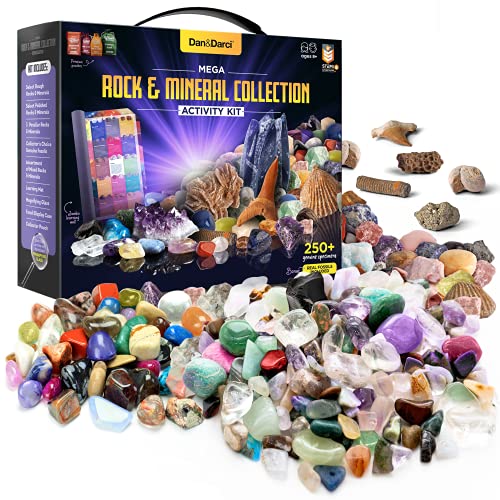
- More than 250 rocks, gems, fossils, and minerals
- Includes magnifying glass and jumbo learning mat
- Adds display case and collector's pouch
Best For: Families and high-volume group exploration
Best Compact Gift

- 30 named rocks, gemstones, and crystals
- Includes guide, brushes, and magnifying glass
- Compact format for beginner collectors
Best For: Gifts and manageable gemstone exploration
Hands-On Geode Discovery – Mystery Crystal Geode Kit
For shoppers comparing mineral collection kits with magnifying glass, this set focuses on the excitement of cracking open real quartz geodes. It includes 10 geodes, safety goggles, a magnifying glass, and display stands for an interactive geology activity.
Best For: Kids ages 8 and up who enjoy hands-on STEM activities, crystal discovery, and displaying specimens.
Pros:
- Includes 10 real quartz geodes to crack open.
- Comes with safety goggles, a magnifying glass, and two display stands.
- Encourages geology learning, patience, precision, and observation.
Cons:
- It centers on geode cracking rather than providing a large assortment of specimens.
- The manufacturer recommends the kit for ages 8 and up.
This is a strong choice when the main appeal is the reveal of crystal interiors. The included viewing and display accessories make it more than a one-time cracking activity.
Largest Specimen Variety – 300+ Rock Collection
Among mineral collection kits with magnifying glass, this National Geographic set stands out for its breadth. It includes more than 300 genuine rocks, minerals, and crystals, two break-open geodes, a learning guide, a magnifying glass, and a storage bag.
Best For: Young collectors who want a large variety of specimens to identify, examine, store, and expand over time.
Pros:
- Includes over 300 genuine specimens from around the world.
- Features two premium geodes for a hands-on crystal reveal.
- Includes a full-color learning guide, magnifying glass, and closable storage bag.
Cons:
- The large number of small specimens may require organized storage and sorting.
- The manufacturer recommends the set for ages 8 and up.
This kit is the most collection-oriented option in the group. It offers substantial variety for examining familiar and unusual materials, while the geodes add an interactive element.
Mineral Testing Starter – Mineral Science Kit
For a more focused option among mineral collection kits with magnifying glass, the Toysmith Mineral Science Kit provides 15 specimens and tools for comparing mineral characteristics. The set includes a magnifying viewer, streak plate, nail, and identification guide.
Best For: Beginners, classroom activities, homeschool lessons, and kids learning basic mineral identification tests.
Pros:
- Includes 15 mineral specimens for hands-on comparison.
- Provides tools for exploring hardness, streak, luster, and crystal shape.
- Compact design requires no batteries and works well for small-group investigations.
Cons:
- It includes fewer specimens than the larger 300-piece collections.
- The notes identify the included viewing tool as a magnifying viewer rather than a traditional glass.
This is the practical pick for learning how minerals are identified rather than simply collecting a large assortment. Its testing tools support structured observation and simple science activities.
Book-Based Earth Science – Rock Collection Box
This National Geographic set combines the appeal of mineral collection kits with magnifying glass and the depth of a reference book. It includes over 300 genuine specimens, two break-open geodes, a storage box, and the 100-plus-page Absolute Expert: Rocks & Minerals hardcover book.
Best For: Kids ages 8 and up who want both a large rock collection and extended reading about rocks, minerals, fossils, and earth science.
Pros:
- Includes more than 300 real rocks, gemstones, and crystals.
- Adds two geodes for an interactive discovery activity.
- Includes a detailed hardcover book with 100-plus pages of earth science content.
Cons:
- The supplied notes do not specifically list a magnifying glass among the included components.
- The book and specimen collection may be more than needed for shoppers seeking a simple starter kit.
This version is best when learning resources matter as much as the specimens. Its book gives the collection a longer-lasting educational use beyond sorting and displaying rocks.
Hands-On STEM Explorer – 30-Piece Rock & Mineral Science Kit
For shoppers comparing mineral collection kits with magnifying glass, this Toysmith set offers a structured introduction to geology. It includes 30 real specimens—15 rocks and 15 minerals—plus tools for viewing, testing, identifying, and storing samples.
Best For: Young geologists ages 8 and up, home STEM learning, and classroom activities.
Pros:
- Includes 30 real rock and mineral specimens.
- Provides a magnifying viewer, streak plate, nail, and other identification tools.
- Durable trays help organize and store the collection.
- Supports hands-on comparison, classification, and observation.
Cons:
- Recommended for ages 8 and up, so it may be less suitable for younger children.
- Its compact size may limit the amount of supplementary material included.
This is a well-rounded option when testing and identification matter as much as collecting. The combination of real specimens and basic geology tools gives children several ways to explore the samples beyond simply viewing them.
Classroom Collection – 75-Sample Earth Science Rocks & Minerals Set
Geosciences Industries 13357 Introductory Earth Science Classroom Rocks and Minerals Collection
Check Price On AmazonAmong mineral collection kits with magnifying glass, the Geosciences Industries set stands out for its larger classroom-oriented assortment. It supplies 75 numbered and identified samples, along with reference materials and tools for introductory earth science study.
Best For: Classroom instruction, older students, and learners who want a broad rock and mineral reference collection.
Pros:
- Includes 75 mineral and rock samples measuring approximately 1–2 inches.
- Samples are numbered and matched to a collection index sheet.
- Includes a magnifier, streak plate, magnet, and introductory study guide.
- Reference materials cover rock classification and the rock cycle.
Cons:
- The manufacturer recommends it for ages 11–13, making it less focused on younger children.
- The larger collection may require more storage space than compact kits.
This set is a strong choice for breadth and reference support. Its 75 samples and study guide make it better suited to organized earth science lessons than casual collecting, especially where classification and the rock cycle are part of the learning plan.
Beginner Collector Pick – 15-Piece Rock & Mineral Kit
This Piano Potato kit is a straightforward choice for buyers seeking mineral collection kits with magnifying glass for beginner exploration. It includes 15 authentic rock and mineral specimens, a dedicated storage box, a magnifier, and an identification guide.
Best For: Beginning collectors, children ages 6 and up, and simple home or classroom STEM activities.
Pros:
- Includes 15 authentic rock and mineral specimens.
- Individual storage cells help keep each specimen organized.
- Comes with a magnifier and rock identification sheet.
- Compact, lightweight design is easy to handle and give as a gift.
Cons:
- It has fewer specimens and testing tools than larger geology sets.
- The supplied notes identify a magnifier but do not list a streak plate or magnet.
This kit favors simplicity and accessibility over a large sample count. It is a practical starting point for young learners who want to examine specimens, use a basic identification guide, and keep a small collection neatly stored.
Best Starter Set – 54-Piece Rock & Mineral Collection
For shoppers comparing mineral collection kits with magnifying glass, this 54-piece starter set combines labeled specimens, study materials, and organized storage. It includes polished gemstones, raw crystals, rocks, minerals, a magnifier, identification cards, and a learning book for guided exploration.
Best For: Beginners, kids ages 6 and up, classroom activities, and anyone starting a compact mineral collection.
Pros:
- Includes 54 assorted rocks, crystals, and minerals, including nine polished gems.
- Reference cards and a learning book cover identification, hardness, origins, and mining locations.
- Compartment storage box with a transparent lid keeps specimens organized and visible.
- Magnifier supports closer observation during rock-study activities.
Cons:
- Specimens are approximately 1 to 1.5 inches, so individual pieces may be relatively small.
- The set is designed for beginners rather than advanced collectors seeking specialized specimens.
This is a well-rounded entry point if you want an educational kit with clear organization and multiple ways to identify and examine specimens. The cards also add a group-game element for family or classroom use.
Best for Variety – 250+ Rock, Fossil & Mineral Kit
If quantity is your priority when shopping for mineral collection kits with magnifying glass, this Dan&Darci set offers more than 250 rocks, gemstones, crystals, fossils, and minerals. The large learning mat and multiple display and storage accessories make it suited to extended sorting and discovery activities.
Best For: Families, group activities, and kids or adults who want a high-volume geology and paleontology collection.
Pros:
- Includes more than 250 pieces across rocks, minerals, gemstones, and genuine fossils.
- Jumbo learning mat helps users compare specimens and learn related facts.
- Comes with a magnifying glass, fossil display case, collector’s pouch, and mixed specimens.
- Supports individual play or group STEM activities.
Cons:
- The large assortment may be less focused for shoppers seeking a small, curated starter set.
- The supplied details do not specify a separate reference book or individual identification cards.
This kit stands out for breadth rather than compactness. Choose it when the excitement of sorting through a substantial assortment—and the inclusion of fossils—is more important than having a tightly curated specimen list.
Best Compact Gift – 30-Piece Gemstone Study Kit
This 30-piece option is a practical choice among mineral collection kits with magnifying glass when you want a defined selection of named gemstones and crystals. It pairs the specimens with a full-color guide, cleaning brushes, and a magnifier for hands-on examination.
Best For: Kids ages 6 to 18, beginner collectors, and gift shoppers looking for a manageable gemstone-focused set.
Pros:
- Includes 30 named rocks, gemstones, and crystals such as amethyst, quartz, obsidian, and tiger’s eye.
- Full-color learning guide provides information about the included gems.
- Magnifying glass and brushes encourage detailed inspection and specimen care.
- Compact 13.5-by-11.5-by-2.3-inch box suits straightforward storage and gifting.
Cons:
- With 30 pieces, it offers less variety than the larger 54-piece and 250-plus-piece kits.
- The supplied details do not mention a display case or identification cards.
This set is a good middle ground for a first gemstone collection: it offers enough variety to compare colors and textures without the volume of a bulk kit. The guide, brush, and magnifier give the collection a clear study-oriented purpose.
How We Picked the Best Mineral Collection Kits with Magnifying Glass
We evaluated these Mineral Collection Kits with Magnifying Glass by looking at the quality and variety of specimens, the usefulness of identification materials, and how well each set supports independent exploration. We also considered age recommendations, storage, safety accessories, display features, and whether the kit encourages more than simple collecting.
Specimen counts can be misleading: a larger assortment is not automatically better if pieces are very small, poorly labeled, or difficult to identify. Kits with clear names, reference guides, testing tools, or activity instructions generally offer stronger educational value.
Quick Comparison
| What to Compare | Best For |
|---|---|
| Geode-focused kits | Hands-on discovery and memorable activities |
| Large bulk collections | Sorting, trading, classroom use, and extended play |
| Identification-focused sets | Learning mineral names and basic geology |
| Compact labeled kits | Beginners, gifts, and easy storage |
| Classroom collections | Structured lessons and repeated demonstrations |
Key Buying Factors for Mineral Collection Kits with Magnifying Glass
Specimen Variety and Authenticity
Look for a balanced assortment of rocks, minerals, crystals, gemstones, and, where relevant, fossils. “Real” specimens are preferable for educational use, but natural pieces can vary in color, size, and appearance. Check whether the listing specifies approximate piece sizes and total weight.
Magnifier and Identification Tools
A magnifying glass is useful for examining crystal structure, grain, inclusions, and surface details. Some kits add streak plates, hardness tools, viewing containers, or identification charts. These extras make the set more useful than a collection that only includes unlabeled samples.
Age, Safety, and Supervision
Follow the stated age range, especially for kits containing small parts, sharp edges, or tools. Younger children should use mineral kits with adult supervision. Safety goggles are valuable for geode-opening activities, while sealed or pre-cracked specimens may be better for children who are not ready for hammering.
Storage and Presentation
Boxes, specimen labels, display stands, and compartments help prevent pieces from being lost and make sorting easier. If the kit is intended as a long-term collection, prioritize durable packaging and a guidebook that can be used as the collection grows.
Who Should Buy Which Mineral Collection Kits with Magnifying Glass?
Choose a geode kit for children who enjoy surprises and active experiments. A large 250- or 300-piece collection suits families, clubs, or classrooms that want many specimens for sorting and comparison. Sets with expert books or identification guides are better for children who want to learn mineral names and geological facts. Compact 15- or 30-piece kits are practical starter gifts, while classroom-oriented collections make more sense for structured lessons and repeated group use.