Finding the best mesh Wi-Fi system with PoE nodes means balancing coverage, wired installation, wireless performance, and long-term manageability. Power over Ethernet can simplify placement by carrying data and power through one cable, while mesh features help extend coverage across larger homes, offices, and outdoor areas.
This roundup includes consumer mesh kits, business-class access points, outdoor hardware, and newer Wi-Fi 7 options. Use the guide below to narrow the choices by installation type, speed, management needs, and budget.
Best 10 Mesh Wi Fi System with Poe Nodes Picks for 2026
Best Overall
TP-Link Deco X50-PoE WiFi 6 Mesh

- 6,500 sq. ft. coverage for up to 150 devices
- PoE+ or standard power installation
- Wi-Fi 6 AX3000 with dual 2.5Gbps ports
Best For: Large homes needing fast, flexible PoE mesh coverage
Best Wall-Plate Option

- Wi-Fi 6 speeds up to 1,800Mbps
- PoE-powered wall-plate design
- Three Gigabit downlink ports with PoE pass-through
Best For: Room-by-room office, hotel, or home installations
Best Outdoor Coverage
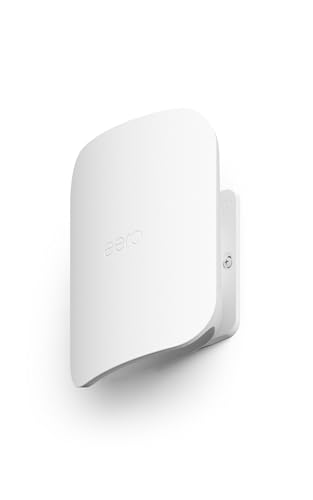
- Up to 15,000 sq. ft. of outdoor coverage
- IP66 weatherproof construction
- Wi-Fi 7 with AC or PoE+ power
Best For: Extending an eero network across outdoor areas
Best Value Access Point

- AC1350 dual-band Wi-Fi 5 performance
- PoE support with included PoE adapter
- Omada mesh and roaming management
Best For: Affordable PoE expansion for business or home networks
Outdoor Wi-Fi 7 Pick

- Wi-Fi 7 speeds up to 5,000 Mbps
- IP65 weather-resistant enclosure
- PoE or AC power with dual 2.5G PoE-in ports
Best For: Outdoor ASUS AiMesh coverage
Flexible Management Pick

- AX3000 Wi-Fi 6 with 160MHz channels
- 2.5GbE PoE+ uplink over Cat5e
- Local or free Nebula cloud management
Best For: Multi-gig home and small-business networks
High-Capacity Business Pick
EnGenius EWS276-FIT Wi-Fi 6 AP

- 4x4 Wi-Fi 6 with up to 3,548 Mbps combined
- 2.5GbE PoE+ installation up to 328 feet
- Cloud, app, or on-premises management
Best For: Small businesses and high-client-load networks
Best Wi-Fi 7 Upgrade

- Tri-band Wi-Fi 7 for 300+ clients
- 10G SFP+ and 2.5G PoE connectivity
- Enterprise security and zero-touch provisioning
Best For: High-density business and campus networks
Best Outdoor Value

- IP65 weatherproof outdoor enclosure
- 802.3af/at and passive PoE support
- Omada mesh and cloud management
Best For: Outdoor coverage and mixed indoor-outdoor networks
Best Multi-Node Bundle

- Five AC1750 ceiling-mount access points
- Mesh and seamless roaming support
- Passive PoE adapters included
Best For: Multi-room indoor business deployments
Best Overall – TP-Link Deco X50-PoE WiFi 6 Mesh
The TP-Link Deco X50-PoE is a strong all-around mesh wi fi system with poe nodes for homes that want broad coverage, Wi-Fi 6 speed, and flexible installation. Its nodes can use PoE+ or standard power, while dual 2.5Gbps ports help support high-throughput wired backhaul and connected devices.
Best For: Larger homes and users building a high-performance PoE-backed Wi-Fi 6 mesh network.
Pros:
- Up to 6,500 square feet of coverage and support for up to 150 devices
- PoE+ or standard power options allow ceiling or flexible placement
- Wi-Fi 6 AX3000 speeds with two 2.5Gbps Ethernet ports per node
- App management, AI-driven mesh, and basic HomeShield security features
Cons:
- PoE+ switch is not included
- A modem is required for most internet service providers
Choose the Deco X50-PoE when you want a purpose-built mesh system rather than individual access points. It offers the most complete combination of coverage, speed, management, and PoE installation flexibility in this group.
Best Wall-Plate Option – TP-Link Omada EAP615-Wall
The TP-Link Omada EAP615-Wall is a compact Wi-Fi 6 access point for room-by-room installations. For buyers considering a mesh wi fi system with poe nodes, it offers PoE power, Omada management, roaming and mesh support, plus three downstream Gigabit ports for wired devices.
Best For: Offices, hotel rooms, cubicles, and homes that need discreet wall-mounted network coverage.
Pros:
- Wi-Fi 6 dual-band speeds up to 1,800Mbps
- Powered through an 802.3af/at PoE uplink
- Three Gigabit downlink ports, including PoE pass-through on one port
- Omada SDN, app control, cloud access, mesh, and roaming support
Cons:
- Coverage is listed at approximately 538 square feet
- It is a single access point, not a complete multi-node kit
This is a practical choice when each room needs its own wired network endpoint and clean installation. It is better suited to an Omada-managed deployment than to shoppers seeking a simple plug-and-play home mesh bundle.
Best Outdoor Coverage – Amazon eero Outdoor 7
The Amazon eero Outdoor 7 extends a compatible eero network into outdoor spaces, making it a specialized option for a mesh wi fi system with poe nodes. It supports PoE+ power, Wi-Fi 7 speeds up to 2.1Gbps, and weather protection for year-round patio, yard, or outbuilding coverage.
Best For: Outdoor Wi-Fi coverage across patios, yards, and other exposed areas.
Pros:
- Up to 15,000 square feet of outdoor coverage and 100-plus connected devices
- IP66 weatherproof rating and operating range from -40°F to 131°F
- Supports AC or PoE+ power
- Point-to-point wireless bridge operation up to 1,000 feet with clear line of sight
Cons:
- AC power adapter is not included
- Designed as an outdoor extension for an eero network rather than a general indoor mesh kit
- Advanced security features require an optional eero Plus subscription
The eero Outdoor 7 stands out when weather resistance and outdoor range matter more than indoor whole-home coverage. Its app-guided setup and eero compatibility make it especially appealing for households already using the eero ecosystem.
Best Value Access Point – TP-Link Omada EAP225
The TP-Link Omada EAP225 is an economical business access point for buyers assembling a mesh wi fi system with poe nodes. It supports 802.3af or passive PoE, includes a PoE adapter, and adds Omada management, mesh capability, and seamless roaming support to a Wi-Fi 5 deployment.
Best For: Budget-conscious business or home networks that can use Wi-Fi 5 instead of Wi-Fi 6 or Wi-Fi 7.
Pros:
- AC1350 dual-band wireless performance with Gigabit Ethernet
- Supports 802.3af PoE and passive PoE, with a PoE adapter included
- Built-in mesh and roaming support for flexible expansion
- Omada SDN provides centralized app and cloud management
Cons:
- Uses older Wi-Fi 5 technology
- Only one Ethernet port is listed
- Business-oriented management may be more involved than a consumer mesh app
The EAP225 remains a sensible lower-cost starting point for an Omada network, particularly where wired PoE placement and centralized management are priorities. Choose a newer model if maximum wireless capacity or Wi-Fi 6 features are important.
Outdoor Wi-Fi 7 Pick – ASUS ZenWiFi BD5 Outdoor
For shoppers seeking a mesh wi fi system with poe nodes that can extend outdoors, the ASUS ZenWiFi BD5 Outdoor combines dual-band Wi-Fi 7 performance with flexible PoE or AC power. Its weather-resistant enclosure and mounting options make it especially practical for exterior installations.
Best For: Outdoor coverage, patios, yards, and installations that need weather protection and flexible power.
Pros:
- Wi-Fi 7 speeds up to 5,000 Mbps with MLO and 4K-QAM.
- Supports PoE and AC power, with two 2.5G PoE-in ports.
- IP65 water- and dust-resistant design with ESD and surge protection.
- Can be wall-mounted, pole-mounted, or placed on a flat surface.
Cons:
- This is a single outdoor unit rather than a complete multi-node kit.
- Its advanced Wi-Fi 7 features may exceed the needs of basic networks.
The BD5 Outdoor is the most purpose-built option here for extending a compatible ASUS AiMesh network beyond the walls of your home. It stands out when outdoor durability and PoE installation matter as much as wireless speed.
Flexible Management Pick – Zyxel NWA50AXPRO Wi-Fi 6 AP
The Zyxel NWA50AXPRO is a strong fit for a mesh wi fi system with poe nodes when you want a Wi-Fi 6 access point with a 2.5GbE uplink and flexible management. It can run from PoE or DC power and supports either local control or Zyxel’s free Nebula cloud platform.
Best For: Home or small-business networks upgrading to multi-gig Ethernet without replacing existing Cat5e cabling.
Pros:
- AX3000 Wi-Fi 6 performance with 160MHz channel support.
- 2.5GbE uplink helps avoid a 1Gbps bottleneck.
- Supports mesh, VLAN tagging, WPA3, and seamless roaming.
- Offers standalone local management or free Nebula cloud management.
Cons:
- It is an access point rather than a complete router system.
- Only one network port is listed.
Choose the NWA50AXPRO if practical deployment and management flexibility are priorities. Its PoE support and multi-gig uplink make it easy to place where coverage is needed, while its Wi-Fi 6 feature set suits busy home and professional networks.
High-Capacity Business Pick – EnGenius EWS276-FIT Wi-Fi 6 AP
For a mesh wi fi system with poe nodes serving many users, the EnGenius EWS276-FIT offers dual-band Wi-Fi 6 with a 4×4 antenna design and a 2.5GbE PoE+ port. Its cloud, app, and on-premises control options also make it adaptable as a network grows.
Best For: Small businesses and demanding networks that need high-capacity wireless, centralized control, and flexible deployment.
Pros:
- Up to 2,400 Mbps on 5GHz and 1,148 Mbps on 2.4GHz.
- 4×4 Wi-Fi 6 design with OFDMA, MU-MIMO, spatial reuse, and BSS coloring.
- PoE+ supports installation up to 328 feet from the power source.
- Offers FitXpress, FitController, or Fit Cloud-lite management without AP licensing fees.
Cons:
- It is a single access point, not a bundled mesh system.
- Its business-oriented management options may be more than casual users need.
The EWS276-FIT is the strongest performance-focused choice in this group for networks with heavier client loads. Its 4×4 radio design, 2.5GbE PoE+ connection, and scalable management options make it well suited to structured installations.
Best Wi-Fi 7 Upgrade – Cudy BE11000 AP11000
If you need a mesh wi fi system with poe nodes for a busy office, campus, or multi-floor deployment, the Cudy AP11000 is the most advanced option here. Its tri-band Wi-Fi 7 design, 2.5G PoE connectivity, and 10G SFP+ fiber backhaul are built for high client counts and multi-gigabit network infrastructure. Note that no power adapter is included.
Best For: High-density business networks, campuses, and installations with an existing PoE switch or fiber backbone.
Pros:
- Tri-band Wi-Fi 7 with 320 MHz channels and support for 300+ clients
- 10G SFP+ fiber backhaul plus 2.5G RJ45 connectivity
- Zero-touch provisioning, remote control, multi-SSID, and WPA3 Enterprise with RADIUS
Cons:
- No power adapter is included
- Its advanced networking features may be more than a small home needs
The AP11000 stands out when throughput, centralized deployment, and enterprise security matter more than simplicity. It is especially compelling if your network already provides PoE power and fiber uplinks.
Best Outdoor Value – TP-Link EAP225-Outdoor
The TP-Link EAP225-Outdoor is a practical choice for a mesh wi fi system with poe nodes when coverage must extend beyond the building. It combines dual-band AC1200 performance, flexible PoE options, and an IP65 weatherproof enclosure for outdoor deployments, while still supporting Omada centralized management.
Best For: Patios, courtyards, gardens, outdoor work areas, and mixed indoor-outdoor networks.
Pros:
- IP65 weatherproof construction for rain, dust, and varied temperatures
- Supports 802.3af/at PoE and passive PoE
- Omada mesh, seamless roaming, cloud access, and app management
- Outdoor range is rated up to 200m+ at 2.4GHz and 300m+ at 5GHz
Cons:
- Wi-Fi 5 is slower and less future-ready than newer Wi-Fi generations
- Its listed LAN port bandwidth is 10/100 Mbps
This is the strongest fit when weather resistance and installation flexibility are priorities. It offers useful mesh and management features, but demanding users should account for its older Wi-Fi 5 platform and 10/100 Ethernet specification.
Best Multi-Node Bundle – TP-Link EAP245 5-Pack
For buyers building a mesh wi fi system with poe nodes across a business, the TP-Link EAP245 5-pack provides five ceiling-mount access points in one bundle. Its dual-band AC1750 hardware supports mesh networking, seamless roaming, MU-MIMO, and Omada management, with Gigabit connectivity and included passive PoE adapters.
Best For: Offices, schools, hospitality spaces, and other sites that need several coordinated indoor access points.
Pros:
- Five AC1750 access points simplify multi-room deployment
- Supports mesh, seamless roaming, and MU-MIMO
- Includes Gigabit passive PoE adapters, mounting kits, and power cords
- Omada app and remote control support centralized management
Cons:
- Wi-Fi 5 lacks the capacity and efficiency of newer Wi-Fi generations
- Designed for indoor business coverage rather than outdoor use
The EAP245 bundle is a sensible expansion package when you need several indoor nodes and want consistent Omada control. It is less suitable if you require Wi-Fi 6 or Wi-Fi 7 performance, but the five-unit format can simplify larger deployments.
How We Picked the Best Mesh Wi Fi System with Poe Nodes
We selected products that combine mesh or seamless-roaming capabilities with PoE support, making them suitable for installations where running Ethernet is practical or preferred. The list spans Wi-Fi 5, Wi-Fi 6, and Wi-Fi 7 hardware, along with indoor wall-plate units, ceiling-style access points, outdoor models, and complete multi-node kits.
We also considered practical specifications such as wireless class, Ethernet speed, PoE standard, weather resistance, management options, warranty coverage, and whether a PoE injector is included. Because these products serve different use cases, the fastest model is not automatically the best choice for every buyer.
Quick Comparison
- Best for straightforward home coverage: A multi-node system such as the TP-Link Deco X50-PoE is easier for many households to configure.
- Best for business networks: Omada, Zyxel, and EnGenius access points offer more structured management and deployment flexibility.
- Best for outdoor coverage: Look at weatherproof options such as eero Outdoor 7, ASUS ZenWiFi BD5 Outdoor, or Omada outdoor access points.
- Best for maximum throughput: Wi-Fi 7 hardware with 2.5GbE, 10G SFP+, or multi-gigabit uplinks is better suited to demanding networks.
- Best for simpler PoE installation: Models that include a PoE injector can work without immediately buying a PoE switch.
Key Buying Factors for a Mesh Wi-Fi System with PoE Nodes
PoE Standard and Power Budget
Check whether the node requires 802.3af PoE, 802.3at PoE+, or another power source. Your switch must support the correct standard and provide enough total wattage for every connected access point. If an injector is included, installation may be simpler, but expansion can still require a PoE switch.
Ethernet and Wireless Capacity
Wi-Fi 6 is usually sufficient for everyday streaming, video calls, and smart-home traffic. Wi-Fi 7 makes more sense for newer client devices, multi-gigabit internet, local media servers, or networks with many simultaneous users. Also check the wired uplink: a high wireless rating can be limited by a 1GbE port.
Coverage and Node Placement
Manufacturers’ coverage estimates are best treated as starting points. Walls, floors, interference, construction materials, and outdoor obstacles affect real-world range. Wired PoE backhaul is generally preferable when available because it preserves wireless capacity for client devices.
Management and Compatibility
Confirm whether the system uses a central controller, cloud service, mobile app, or standalone interface. Staying within one ecosystem can simplify roaming, firmware updates, VLANs, guest networks, and troubleshooting. Mixing brands may work, but it often requires more manual configuration.
Who Should Buy Which Mesh Wi Fi System with Poe Nodes?
Choose a consumer mesh kit if you want a simpler setup for a home or small property. Choose Omada, Zyxel, or EnGenius hardware if you need centralized controls, VLAN support, business monitoring, or multiple access points. Choose an outdoor-rated model for patios, yards, detached buildings, or weather-exposed installations, and verify its temperature and mounting requirements.
Choose Wi-Fi 7 when you are building for long-term performance and already own compatible devices. For ordinary broadband plans and mixed older devices, a well-placed Wi-Fi 6 system can deliver better value. Finally, confirm the included accessories, controller requirements, warranty, and return policy before buying.