Large format resin printers make it easier to produce bigger prototypes, detailed models, and multiple parts in a single build. The right choice depends on more than screen resolution: heating, resin handling, leveling, print speed, and everyday usability matter just as much.
We compare 10 standout options across professional, workshop, and desktop categories so you can match capacity and features to your projects without paying for capabilities you will not use.
Best 10 Large Format Resin Printers Picks for 2026
Best for Maximum Capacity
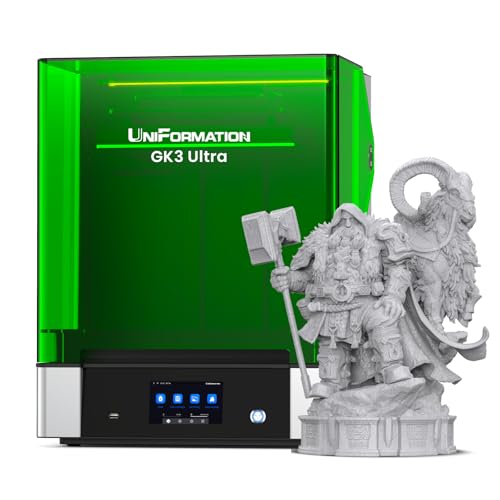
- 300 × 160 × 300mm build volume
- 16K detail with a rigid precision Z-axis
- Automatic resin heating and feeding
Best For: Large models, batch production, and professional workflows
Best for Fast Detailed Printing

- 170mm/h maximum stated speed
- 14K LighTurbo 3.0 optical system
- Temperature-controlled vat and auto refill
Best For: Fast, detailed production with convenient resin management
Best for Industrial Resin Compatibility

- Handles resins up to 8,000cps viscosity
- 14K precision with stable ball-screw motion
- Auto-leveling and AI-assisted monitoring
Best For: Advanced users working with high-viscosity or industrial resins
Easy-Setup Detail Pick
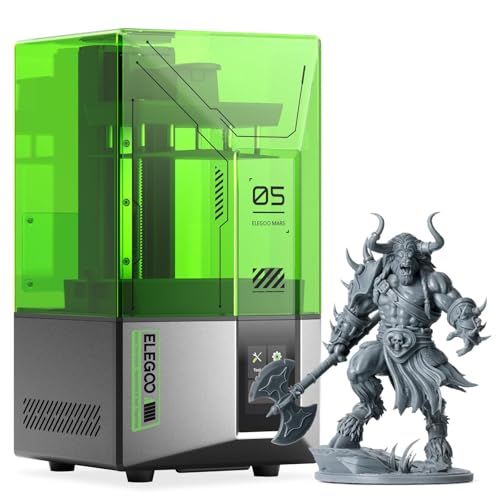
- One-click automatic leveling
- 4K mono LCD for detailed prints
- Built-in residue and overheat protection
Best For: Beginners and desktop hobbyists needing detailed small-to-medium prints
Multi-Material Pro Pick

- Dual-color and dual-material printing
- Supports resins up to 8,000 cps
- Automatic leveling and AI monitoring
Best For: Advanced users working with specialty resins and multi-material designs
Best Beginner-Friendly Pick

- 7-inch 10K screen with 17 × 17 μm XY pixels
- Moderate 153.4 × 87 × 165 mm build volume
- Simple four-point leveling and power-loss resume
Best For: Beginners and hobbyists seeking detailed, easy-to-set-up resin printing
Best High-Output Choice

- Large 8.77 × 4.96 × 9.05-inch build volume
- 14K detail with 16.8 × 24.8 μm XY resolution
- Up to 170 mm/h with high-speed resin
Best For: Makers needing larger prints, faster production, and automated resin handling
Best Value Detail Printer

- 10K mono screen with 17 × 17 μm XY pixels
- 1.5-second single-layer exposure times
- Calibrated and tested before shipment
Best For: Users wanting detailed, stable resin printing with a straightforward setup
Best for Maximum Capacity – UniFormation GK3 Ultra
The UniFormation GK3 Ultra is one of the strongest options here for large format resin printers when build capacity and unattended workflow matter. Its 300 × 160 × 300mm build volume supports large models or multiple parts, while the 16K screen targets fine surface detail.
Best For: Industrial prototyping, professional studios, small and medium-sized businesses, and high-volume model production.
Pros:
- Large 300 × 160 × 300mm build volume.
- 16K LCD with 20 × 26μm pixel size for detailed prints.
- Automatic resin heating and feeding support longer print jobs.
- Rigid KK60 Z-axis module with repeat positioning accuracy up to ±0.003mm.
Cons:
- Large 85.8-pound chassis requires substantial workspace.
- The feature set may be more than casual hobbyists need.
Choose the GK3 Ultra if your priority is scaling up production without giving up detailed output. Automatic temperature control, resin replenishment, a quick-release vat, and a carbon filter make its large footprint easier to manage.
Best for Fast Detailed Printing – ANYCUBIC Photon Mono M7 Pro
The ANYCUBIC Photon Mono M7 Pro suits buyers comparing large format resin printers who want a generous build area without overlooking speed. Its 14K optical system, 170mm/h claimed maximum speed with high-speed resin, and temperature-controlled vat create a productivity-focused setup.
Best For: Creators who need detailed prints, faster production, and convenient resin handling in cooler environments.
Pros:
- Large 223 × 126 × 230mm build volume.
- 14K LighTurbo 3.0 optical system for fine detail.
- Maximum stated speed of 170mm/h with high-speed 2.0 resin.
- Temperature-controlled vat, automatic refill, and odor filtration support.
Cons:
- The 170mm/h figure depends on high-speed resin and stated test conditions.
- Its build volume is smaller than the two largest printers in this roundup.
The M7 Pro is a practical middle ground: faster and more automated than a basic resin printer, while still offering enough room for sizable models or grouped parts. It is especially appealing where cold-weather consistency and reduced odor are priorities.
Best Connected Large-Format Workhorse – ELEGOO Jupiter 2
The ELEGOO Jupiter 2 is a compelling choice among large format resin printers for buyers who want a very large platform plus monitoring and fleet-oriented features. Its 302.4 × 161.98 × 300mm build volume pairs with 16K resolution, automatic leveling, tank heating, and Wi-Fi cluster management.
Best For: Larger studios, production users, and teams managing multiple printers or extended print jobs.
Pros:
- 302.4 × 161.98 × 300mm build volume for large or batch printing.
- 16K resolution with 20 × 26μm XY resolution.
- Automatic leveling, tank heating, and resin feeding simplify setup.
- Dual-band Wi-Fi, camera monitoring, and Wi-Fi cluster management.
Cons:
- Its 63.8-pound weight and nearly 28-inch depth demand dedicated space.
- The broad feature set may take time to configure and learn.
Jupiter 2 stands out when capacity is only part of the buying decision. Safety sensors, power-loss recovery, quick-swap release film, and remote monitoring make it well suited to repeatable production rather than occasional one-off prints.
Best for Industrial Resin Compatibility – ANYCUBIC Photon P1
The ANYCUBIC Photon P1 is a capable pick for large format resin printers when material flexibility and reliable setup are more important than maximum build volume. It combines a 14K LCD with ball-screw stability, factory-calibrated auto-leveling, AI monitoring, and support for resins up to 8,000cps viscosity.
Best For: Advanced creators and makers using high-viscosity or industrial-style resins who want automated checks and stable motion.
Pros:
- Supports ultra-high-viscosity resins up to 8,000cps.
- 14K screen with 16.8 × 24.8μm XY pixel size.
- Ball screws and precision rails help reduce motion vibration.
- Auto-leveling, resin monitoring, residue detection, and AI inspection add workflow safeguards.
Cons:
- Its 8.78 × 4.96 × 9.05-inch build area is smaller than the largest options here.
- Advanced resin compatibility may be unnecessary for standard-resin users.
The Photon P1 is best viewed as a material-focused workhorse rather than the biggest printer in the group. Wave Release Technology and automated inspection aim to improve repeatability, while the 14K display preserves fine detail for demanding applications.
Easy-Setup Detail Pick – ELEGOO Mars 5
The ELEGOO Mars 5 is a compact resin printer for shoppers who want dependable detail without a complicated setup. Its 4K mono LCD, automatic leveling, self-check function, and safety monitoring make it a practical choice for desktop projects, though its build area is smaller than that of most large format resin printers.
Best For: Beginners and hobbyists who prioritize easy setup, detailed small-to-medium models, and a compact desktop footprint.
Pros:
- One-click automatic leveling helps reduce setup time.
- 4K mono LCD and COB lighting support detailed prints with clear textures.
- Residue detection, resin shortage alerts, and leveling-failure alarms help prevent wasted materials.
- Overheat protection can stop printing if LED temperature exceeds 80°C.
Cons:
- The 5.65 × 3.53 × 5.91-inch print size is relatively limited for large props or oversized models.
- Its desktop-oriented capacity may require splitting larger designs into multiple parts.
The Mars 5 is best viewed as an accessible, detail-focused resin printer rather than a true large-format machine. Choose it when straightforward operation and reliable safeguards matter more than maximum build volume.
Maximum Build Volume Pick – ANYCUBIC Photon Mono M7 Max
The ANYCUBIC Photon Mono M7 Max is the strongest fit here for shoppers specifically comparing large format resin printers. Its 298 × 164 × 300 mm build volume accommodates masks, cosplay props, game terrain, and other large models, while dynamic heating and automatic resin management are designed to simplify longer print jobs.
Best For: Creators making full-size props, masks, terrain, and large models with fewer cuts and assemblies.
Pros:
- Large 298 × 164 × 300 mm build volume supports oversized projects.
- 7K resolution, COB lighting, Fresnel lens technology, and over 90% light uniformity support precise results.
- Maximum speed of 60 mm/h with Intelligent Release 2.0.
- Dynamic resin heating, auto-fill, and one-key recycling improve resin handling.
Cons:
- Its large 20.47 × 20 × 31-inch dimensions require substantial workspace.
- At 52.8 pounds, it is less convenient to move than a compact desktop printer.
- The large capacity and feature set may be more than needed for small models.
For genuinely large resin prints, the M7 Max offers the most useful capacity in this group. Its footprint and weight are trade-offs, but the spacious vat, temperature control, and resin automation make it well suited to ambitious projects.
Multi-Material Pro Pick – ANYCUBIC Photon P1
The ANYCUBIC Photon P1 combines a sizable 8.78 × 4.96 × 9.05-inch build area with dual-color or dual-material printing. For buyers exploring large format resin printers for more specialized work, its ball-screw motion system, automatic calibration, AI monitoring, and compatibility with resins up to 8,000 cps add practical production-oriented features.
Best For: Advanced hobbyists and professional users who need dual-material experimentation or engineering-grade, high-viscosity resin support.
Pros:
- Dual-color or dual-material printing expands design options and can reduce resin consumption for small models.
- Stable ball screw and precision guide rails help minimize vibration and support consistent details.
- Factory-calibrated Smart Leveling 3.0 performs self-checks and provides pressure feedback.
- Supports ultra-high-viscosity resins up to 8,000 cps and includes AI inspection features.
Cons:
- Its build size is larger than compact printers but smaller than the M7 Max’s large-format capacity.
- The advanced dual-material and engineering-resin features may be unnecessary for basic single-resin projects.
- The 28-inch product length may require careful workspace planning.
The Photon P1 stands out when material flexibility and process monitoring matter as much as build size. It is a compelling specialized option, but shoppers seeking the largest possible models should look to the M7 Max instead.
Best Beginner-Friendly Pick – ANYCUBIC Photon Mono 4
If you want a compact entry point into large format resin printers, the ANYCUBIC Photon Mono 4 offers a practical balance of detail, print space, and straightforward setup. Its 7-inch 10K screen and 153.4 × 87 × 165 mm build volume suit detailed models and everyday projects without taking up excessive space.
Best For: Beginners and hobbyists who want high-resolution resin printing with simple leveling and a moderate build volume.
Pros:
- 7-inch 10K LCD delivers 9024 × 5120 resolution and 17 × 17 μm XY pixels.
- LighTurbo matrix lighting helps provide stable, uniform exposure and smoother surfaces.
- Four-point leveling is designed to remain set after the initial setup.
- Power-loss resume can help reduce wasted resin and print time.
Cons:
- Its build volume is smaller than the M7 Pro’s.
- The Anycubic app is not supported.
The Mono 4 is a sensible choice when detail and ease of use matter more than maximum scale or advanced automation. Its laser-engraved platform is designed to improve adhesion while keeping print removal manageable.
Best High-Output Choice – ANYCUBIC Photon Mono M7 Pro
For shoppers comparing large format resin printers for larger models and faster production, the ANYCUBIC Photon Mono M7 Pro stands out with its 8.77 × 4.96 × 9.05-inch build volume. It combines a 14K display with speeds up to 170 mm/h using high-speed resin and adds temperature control and resin-handling automation.
Best For: High-volume hobbyists and makers who prioritize larger prints, fine detail, fast output, and automated workflow features.
Pros:
- Large build volume supports bigger models and batch printing.
- 14K resolution and 16.8 × 24.8 μm XY resolution support fine details, including holes as small as 0.3 mm.
- Reaches up to 170 mm/h with high-speed resin and 130 mm/h with standard resin.
- Dynamic resin heating, auto-fill, and six detection systems simplify operation.
Cons:
- At 33.3 pounds, it is substantially heavier than the Mono 4 models.
- Some of its speed claims depend on using high-speed resin.
The M7 Pro is the strongest option here for users who can take advantage of its larger capacity and intelligent features. Its COB LighTurbo 3.0 system is designed for consistent exposure, while resin temperature management can support more controlled printing.
Best Value Detail Printer – ANYCUBIC Photon Mono 4 10K
The ANYCUBIC Photon Mono 4 10K is a practical contender among large format resin printers for buyers who want sharp detail and dependable everyday printing. Its 7-inch 10K mono screen, 153.4 × 87 × 165 mm print area, and improved platform design provide a capable setup for detailed models and routine projects.
Best For: New and experienced users looking for high-resolution prints, stable adhesion, and a ready-to-use printer at a manageable size.
Pros:
- 10K LCD provides 9024 × 5120 resolution and 17 × 17 μm XY pixels.
- LighTurbo matrix lighting and 1.5-second exposure times support detailed, efficient printing.
- Redesigned laser-engraved platform helps mitigate lifting and warping.
- Ships assembled, calibrated, tuned, and tested, with power-loss resume support.
Cons:
- The build volume is moderate rather than truly large for oversized models.
- It requires initial leveling before printing.
This version makes a strong case for buyers who value detail and a smoother setup over maximum capacity. It offers the same useful print dimensions as the other Mono 4 entry while emphasizing calibrated-out-of-the-box convenience and print stability.
How We Picked the Best Large Format Resin Printers
We evaluated this group by comparing usable build volume, LCD resolution, light-source design, rated print speed, resin compatibility, and automation features. We also considered practical ownership factors such as automatic leveling, vat or resin heating, feeding systems, sensors, connectivity, and platform stability. Since the lineup ranges from compact desktop machines to substantially larger 16K models, our recommendations focus on the best fit for different types of users rather than a single overall specification.
Advertised performance can vary with resin type, layer height, exposure settings, model geometry, and ambient temperature. Treat headline speed and resolution as useful reference points, not guarantees for every print.
Quick Comparison
- Largest capacity: The UniFormation GK3 Ultra and ELEGOO Jupiter 2 are designed for substantial parts and high-volume batch work.
- High-resolution large-format printing: The GK3 Ultra and Jupiter 2 pair generous build areas with 16K-class detail.
- Fast, heated workflows: The ANYCUBIC Photon Mono M7 Pro models emphasize high speed and dynamic heating.
- Balanced mid-size choices: The ANYCUBIC Photon P1 and Photon Mono M7 MAX offer useful capacity without requiring the largest footprint.
- Compact desktop printing: The ELEGOO Mars 5 and ANYCUBIC Photon Mono 4 are better suited to smaller models and limited workspaces.
Key Buying Factors for Large Format Resin Printers
Build Volume and Printer Footprint
Measure the tallest, widest, and deepest parts you expect to print, then leave room around the machine for ventilation, maintenance, and resin handling. A larger build area can also improve productivity by allowing several smaller parts to print together.
Resolution and Detail
Higher pixel counts can improve fine detail, but resolution is only one part of surface quality. Optical uniformity, calibration, resin settings, layer height, and mechanical stability also affect the final result. Choose 14K or 16K hardware when small features and close-up presentation matter; a lower-resolution machine may be sufficient for larger functional forms.
Heating, Resin Feeding, and Leveling
Tank heating can make resin more consistent in cooler environments, while automatic feeding reduces interruptions during long jobs. Automatic leveling and rigid motion systems help simplify setup, particularly on larger printers where a small alignment error can affect a larger area.
Speed, Reliability, and Maintenance
Fast printing is valuable for production, but dependable release, exposure control, film replacement, cleaning access, and spare-part availability matter over time. Look for sensors, stable light sources, useful connectivity, and a workflow you can repeat without constant adjustment.
Who Should Buy Which Large Format Resin Printers?
- Choose the UniFormation GK3 Ultra or ELEGOO Jupiter 2 if you need maximum capacity, high detail, and automated features for large models or batch production.
- Choose the ANYCUBIC Photon Mono M7 Pro if speed, heating, and a large but manageable format are central to your workflow.
- Choose the ANYCUBIC Photon P1 or Photon Mono M7 MAX for a balanced workshop printer with strong resolution and practical capacity.
- Choose the ANYCUBIC Photon P1 dual-color or dual-material model if specialized multi-material or engineering-resin experiments justify its added complexity.
- Choose the ELEGOO Mars 5 or ANYCUBIC Photon Mono 4 for smaller parts, entry-level use, hobby projects, or a tighter workspace.
Before ordering, confirm the printer’s external dimensions, operating temperature range, compatible resins, replacement film and screen availability, and the ventilation and safety equipment required for resin printing.