The best robotics sets with sensors turn abstract coding concepts into hands-on experiments. These kits combine components such as ultrasonic, color, line-tracking, or motion sensors with programmable controllers, motors, and guided projects.
Our roundup includes beginner Arduino starter kits, app-controlled robot cars, modular building systems, robotic arms, and advanced multi-function platforms. The right choice depends on the builder’s age, coding experience, preferred project type, and how much room there is to grow.
Best 10 Robotics Sets with Sensors Picks for 2026
Best All-in-One Robot Car
ELEGOO UNO R3 Smart Robot Car V4

- Ultrasonic and line-tracking sensors
- FPV camera with app and IR control
- Arduino programming and guided wiring
Best For: Sensor-based robot-car projects and STEM learners ages 12+
Best Beginner Coding Robot

- Builds in about 15 minutes
- Scratch-to-Arduino learning path
- Supports line following and obstacle avoidance
Best For: Young beginners learning coding and sensor-based robotics
Best Sensor Expansion Kit

- 37 modules for varied experiments
- Works with Arduino, ESP-32, and STM32
- Includes tutorials and wiring references
Best For: Makers with a compatible controller building custom sensor projects
Best Build-and-Rebuild Set

- 12 robots from 600-plus building blocks
- Color and infrared sensors included
- Drag-and-drop app coding
Best For: Younger builders who prefer creative, app-guided robotics
Best All-Around Sensor Starter
UNO R3 Project Super Starter Kit

- 22+ guided Arduino projects
- Ultrasonic and DHT11 sensors included
- Solderless beginner-friendly setup
Best For: Beginners and STEM learning
Best Kid-Friendly Build-and-Play Set
Sillbird 5-in-1 Programmable Robot Kit
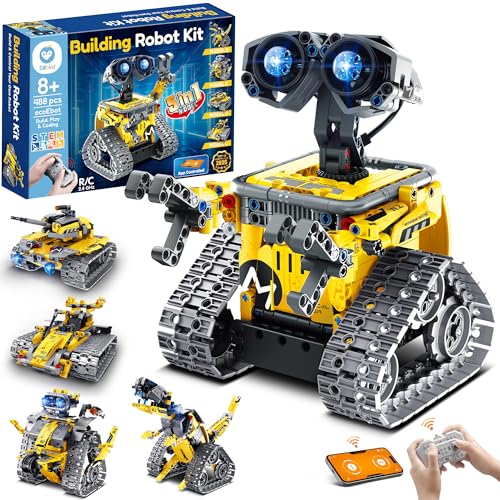
- Build five different robot models
- App and remote control options
- 488 pieces with rechargeable play
Best For: Kids ages 8+ and family STEM activities
Best for Advanced Sensor Expansion
miniArm 5DOF Arduino Robot Arm

- Open-source Arduino-compatible platform
- Five-axis aluminum robotic arm
- Expansion ports for multiple sensors
Best For: Adult makers and advanced robotics learners
Best Modular Pick

- Four build configurations, including arm and tank designs
- 5DOF arm with ESP32, Arduino, and Scratch support
- App and remote control with 16 guided tutorials
Best For: Older kids and teens wanting expandable robotics projects
Best Multi-Model Value
6-in-1 Space Robot Building Kit

- 780 pieces build six space-themed models
- App includes path coding and STEM programming modes
- Rechargeable battery and remote control included
Best For: Younger builders who value variety and rebuildable designs
Best Beginner Arm Car

- Beginner-friendly manual and pre-burned program
- Supports Arduino, Python, Blockly, and ESP32 coding
- Mecanum wheels enable diagonal and drifting movement
Best For: Beginners and families seeking guided robot-arm projects
Best All-in-One Robot Car – ELEGOO UNO R3 Smart Robot Car V4
For shoppers seeking robotics sets with sensors, the ELEGOO UNO R3 Smart Robot Car Kit combines hands-on assembly with several programmable behaviors. Its ultrasonic and line-tracking sensors support obstacle avoidance and line following, while the camera adds FPV video and app-based control.
Best For: Beginners, family STEM projects, coding clubs, and learners ages 12 and up who want a sensor-equipped Arduino robot car.
Pros:
- Includes ultrasonic, line-tracking, and camera-based features.
- Keyed connectors and an illustrated tutorial help reduce wiring mistakes.
- Supports Arduino IDE, app control, IR control, and rechargeable battery operation.
Cons:
- Adult guidance is recommended for first-time builders.
- The kit is more focused on robot-car projects than general-purpose sensor experimentation.
This is a strong choice when you want a complete, interactive vehicle rather than a collection of standalone modules. It offers a clear path from assembly to modifying code and testing autonomous behaviors.
Best Beginner Coding Robot – Makeblock mBot
The Makeblock mBot is one of the more approachable robotics sets with sensors for children learning electronics and programming. It can be assembled in about 15 minutes and supports line following, obstacle avoidance, Scratch-based coding, and progression toward Arduino.
Best For: Children ages 8 to 12 who need a simple introduction to coding, robotics, and sensor-driven movement.
Pros:
- Quick build with clear instructions.
- Offers Scratch and Arduino learning paths with tutorials and coding cards.
- Expandable with more than 100 electronic modules and 500 parts from the Makeblock platform.
Cons:
- Four AA batteries are required but not included.
- The remote controller requires a CR2025 battery, also not included.
Choose the mBot if ease of entry matters most. Its structured software resources make it suitable for guided learning, while the open-source platform leaves room for later expansion.
Best Sensor Expansion Kit – ELEGOO 37-in-1 Sensor Modules
For builders who already own a compatible controller, this ELEGOO kit provides a broad collection of robotics sets with sensors and electronics modules. The 37 pieces cover motion, distance, light, sound, temperature, touch, displays, timing, and control for custom Arduino and STM32 experiments.
Best For: Makers, students, and robotics learners ages 13 and up who want to prototype many sensor-based projects rather than assemble one finished robot.
Pros:
- Includes a wide range of commonly used input, display, and control modules.
- Compatible with UNO R3, MEGA, Nano, ESP-32, and STM32 projects.
- Provides tutorials, datasheets, wiring diagrams, and example code.
Cons:
- Controller board, USB cable, breadboard, and jumper wires are not included.
- Requires careful attention to power and pin requirements when wiring modules.
This is the most flexible option for experimentation, but it is not a standalone robot kit. It makes the most sense for buyers who already have a compatible board and want a varied sensor lab.
Best Build-and-Rebuild Set – Apitor Robot X 12-in-1
The Apitor Robot X is a block-based option among robotics sets with sensors, giving children 12 robot designs to build from more than 600 pieces. Its color and infrared sensors support graphical coding activities such as line following, distance detection, obstacle avoidance, and LED control.
Best For: Children ages 8 to 12 who enjoy construction toys and want an accessible app-based introduction to programmable robotics.
Pros:
- Offers 12 buildable robot configurations from 600-plus blocks.
- Includes two infrared sensors, a color sensor, and motorized modules.
- Drag-and-drop app coding supports guided projects and remote control.
Cons:
- Three AA batteries are required but not included.
- An iOS or Android phone or tablet is required for app control and coding.
Robot X is a good fit when creative rebuilding is as important as programming. Its familiar block format and graphical app can make sensor concepts less intimidating for younger learners.
Best All-Around Sensor Starter – UNO R3 Project Super Starter Kit
If you want robotics sets with sensors that also teach core electronics, this ELEGOO kit is a practical starting point. Its UNO R3 board, ultrasonic and DHT11 sensors, motors, display, joystick, and 22+ guided projects let beginners move from simple circuits to responsive builds without soldering.
Best For: Beginners, homeschool projects, coding clubs, and STEM classrooms that want broad Arduino practice.
Pros:
- Includes ultrasonic and temperature/humidity sensors alongside motors, displays, and input modules.
- Provides 22+ guided projects covering sensing, motor control, displays, and basic automation.
- Solderless breadboard, plug-in components, pre-soldered LCD header, and downloadable code simplify setup.
Cons:
- Requires a computer, Arduino IDE setup, and careful attention to wiring and component polarity.
- The power module should not be used with input above 9V.
- Younger learners may need experienced adult supervision.
This is the most versatile choice of the three for learning sensor-driven Arduino fundamentals. It is less of a ready-to-run robot and more of an electronics and control platform, making it especially useful when experimentation matters more than a finished robotic body.
Best Kid-Friendly Build-and-Play Set – Sillbird 5-in-1 Programmable Robot Kit
For children who want robotics sets with sensors and interactive controls, this Sillbird kit emphasizes building, coding, and play. The 488-piece set supports five buildable models, app or remote control, basic programming, path play, and rechargeable operation.
Best For: Kids and young teens who prefer guided construction, multiple robot designs, and screen-free STEM play.
Pros:
- Five buildable forms, including a robot, dinosaur, car, and tank, provide variety.
- Supports both Bluetooth app control and remote control, with basic programming and path functions.
- Colorful step-by-step instructions and rechargeable operation encourage independent building and repeat play.
Cons:
- The supplied notes do not identify specific sensor modules or provide detailed sensor-based projects.
- Play time is listed as up to 40 minutes per charge.
- Assembly involves 488 pieces and may still benefit from family assistance despite the instructions.
This is a strong choice when the goal is an approachable, gift-ready robot kit rather than open-ended electronics development. Choose it for model variety and dual control; choose an Arduino-focused kit if named sensors and deeper circuit work are the priority.
Best for Advanced Sensor Expansion – miniArm 5DOF Arduino Robot Arm
Among robotics sets with sensors, the miniArm stands out as an open-ended platform for advanced users. Its Atmega328 and Arduino compatibility, five-axis aluminum arm, Bluetooth module, knob controller, and expansion ports support projects involving touch, acceleration, ultrasonic ranging, and camera-based development.
Best For: Older teens, adults, and experienced makers who want an expandable robotic arm for programming and secondary development.
Pros:
- Arduino-compatible Atmega328 platform with open-source programs, tutorials, and development examples.
- Five-axis arm, digital servos, Bluetooth, and six-channel knob controller support varied control methods.
- Expansion ports accommodate optional sensors and modules such as touch, acceleration, ultrasonic, and ESP32-CAM hardware.
Cons:
- The Starter Kit does not include the listed glowing ultrasonic, touch, acceleration, or ESP32-CAM modules.
- Adding sensor capabilities requires separate expansion hardware.
- Its recommended age of 17+ and programming focus make it unsuitable for most young beginners.
This is the best fit for users who specifically want to develop a sensor-enabled robotic arm over time. Confirm which kit version you are buying, since the supplied notes distinguish the Starter Kit from a Standard Kit that includes additional sensor hardware and cables.
Best Modular Pick – ACEBOTT 4-in-1 Robot Arm Tank
For shoppers seeking robotics sets with sensors and room to grow, this ACEBOTT kit combines a programmable 5DOF robotic arm with multiple vehicle configurations. Its ESP32 controller, Arduino and Scratch compatibility, guided tutorials, and app or remote control make it suited to hands-on building and coding.
Best For: Kids and teens ages 12 and up who want modular robot builds, arm-control practice, and STEM project flexibility.
Pros:
- Supports four configurations, including a robot arm car, tank robot, and combined arm tank.
- Includes a 5DOF programmable arm for grabbing, lifting, and placing objects.
- Offers 16 guided tutorials, HD assembly videos, Arduino and Scratch compatibility, and app or IR remote control.
- Tank treads are designed for grass, gravel, slopes, and carpet.
Cons:
- The manufacturer recommends it for ages 12 and up, making it less suitable for younger beginners.
- Its many configurations may require substantial assembly and rebuilding time.
This is the strongest choice for learners who want more than a single robot model. The combination of a robotic arm, tracked chassis, and structured tutorials offers a broad introduction to mechanics, navigation, and programming.
Best Multi-Model Value – 6-in-1 Space Robot Building Kit
This 780-piece set is a flexible option among robotics sets with sensors for families prioritizing construction variety and app-based play. It can be rebuilt into six space-themed models and adds remote control, path coding, gravity control, and STEM programming modes.
Best For: Kids ages 8 and up who enjoy rebuilding models, basic coding activities, and remote-controlled robot play.
Pros:
- 780 pieces can be assembled into six different robot and vehicle designs.
- Includes both a 2.4GHz remote and a mobile app with path coding and programming modes.
- Rechargeable battery, powerful motor system, and lighting add convenience and play appeal.
- Supports hands-on construction, logical thinking, and creative problem-solving.
Cons:
- Only one model can be built at a time.
- The notes do not identify specific physical sensors, so it may be less suitable for sensor-focused experimentation.
Choose this kit when model variety matters more than advanced electronics. Its rebuildable designs and app activities provide an approachable introduction to engineering and programming, while the rechargeable power system supports repeated play.
Best Beginner Arm Car – ACEBOTT 5DOF Robot Arm Kit
For beginners comparing robotics sets with sensors, this ACEBOTT robot arm car emphasizes approachable assembly and progressive coding. The ESP32 platform, pre-burned program, 16 tutorials, and app or IR remote control help learners start building before moving into more advanced programming.
Best For: Beginners ages 8 and up, families, and students who want a robot arm car with multiple coding pathways.
Pros:
- 5DOF robotic arm teaches users to grab, lift, and place objects.
- Includes a paper manual, uniform screws, and a pre-burned program for a more accessible start.
- Supports ESP32, Arduino, Python, and Blockly coding approaches.
- Mecanum wheels enable diagonal movement, drifting, and precise turning.
Cons:
- Batteries are required but not included.
- Expandable components such as cameras, tank tracks, and solar panels are sold separately.
- The manufacturer’s age information is inconsistent, so buyers should review the listing before purchase.
This is a practical entry point for learners who want guided assembly without giving up long-term coding potential. Its omnidirectional wheels and programmable arm create engaging projects, while optional add-ons can extend the kit later.
How We Picked These Robotics Sets with Sensors
We focused on kits that offer more than a simple remote-controlled toy. Each selection provides some combination of programmable hardware, sensors, motors, coding support, building components, or structured projects. We also considered the learning curve, platform compatibility, included documentation, control options, expandability, and whether the design suits children, beginners, hobbyists, or more advanced learners.
Because product configurations can vary, check the current listing for the exact sensor modules, accessories, software support, age guidance, and required extras before buying.
Quick Comparison
| Best For | Look For | Typical Choice |
|---|---|---|
| First coding projects | Guided lessons and simple wiring | Arduino starter or mBot-style kit |
| Interactive driving robots | Line tracking, obstacle avoidance, or follow modes | Robot car kit |
| Creative construction | Many pieces and multiple build plans | Modular building set |
| Mechanical engineering | Servos, articulated joints, and open programming | Robotic arm |
| Experimentation | Broad sensor selection and tutorials | Sensor module bundle |
Key Buying Factors for Robotics Sets with Sensors
Sensor Variety and Usefulness
Identify which sensors are included and what they enable. Line, distance, color, light, touch, and infrared sensors support different projects. A large module count is less valuable if instructions are unclear or the controller cannot use the components easily.
Controller and Coding Platform
Arduino compatibility offers a large learning ecosystem, while Scratch, Blockly, and dedicated apps can make early projects easier. ESP32-based systems may add wireless features and more advanced programming options. Confirm whether software works with the intended computer, tablet, or phone.
Build Quality and Expansion
Look for secure connectors, durable frames, reliable motors, and parts that can be reused in new designs. Kits with standard headers, spare components, and accessible wiring are easier to repair and expand.
Age, Guidance, and Project Difficulty
Young learners generally benefit from graphical coding, color-coded parts, and step-by-step projects. Older students may prefer open-ended builds, Python or Arduino programming, and mechanisms that require calibration. Adult supervision may be needed for small parts, tools, batteries, or computer setup.
Power and Included Accessories
Check whether batteries, a USB cable, a charger, and mounting hardware are included. Also confirm the expected battery type and runtime, since some kits require separate power supplies before the first project can begin.
Who Should Buy Which Robotics Sets with Sensors?
Choose an Arduino starter or sensor kit for a learner who wants to understand circuits, inputs, and code from the ground up. Pick a robot car for immediate motion-based projects such as obstacle avoidance, line following, or app control. A modular building kit is better for children who enjoy rebuilding and experimenting with several robot designs.
Robotic arms suit learners interested in servos, motion sequences, and mechanical engineering, but they often require more patience and calibration. For older students who want a longer-term challenge, select a platform with open programming, multiple control methods, and room to add sensors or redesign the chassis. In every case, prioritize clear tutorials and compatible software over an impressive parts count alone.