Choosing the right telescope for astrophotography is about more than aperture alone. You need the right mix of optics, mount stability, tracking accuracy, and camera compatibility to capture sharp, detailed images of the night sky.
Below, we’ve rounded up 10 strong options for different budgets and skill levels, from smart imaging systems to traditional telescope setups built for long-exposure success.
Best 10 Telescopes for Astrophotography Picks for 2026
Smart Home Observatory
Celestron Origin Intelligent Home Observatory

- 6-inch RASA optics with f/2.2 speed
- Real-time AI stacking and processing
- StarSense auto setup and app control
Best For: Home users who want a fully automated astroimaging system
Portable APO Refractor

- 71mm ED quadruplet APO refractor
- Lightweight OTA for portable setups
- 360-degree rotating focus for framing
Best For: Travel-friendly imaging rigs and compact deep-sky setups
Classic GoTo EQ
Celestron Advanced VX 8-inch SCT

- 8-inch SCT with StarBright XLT coatings
- Computerized EQ mount with GoTo tracking
- Includes tripod, diagonal, eyepiece, and controller
Best For: Users wanting a traditional imaging platform with tracking
Smart Portable Imager
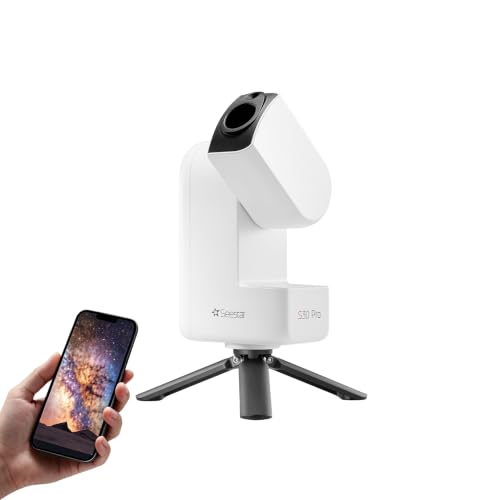
- App-controlled auto tracking and GoTo
- Dual-camera 4K imaging and one-tap modes
- Lightweight 3.6 lb portable design
Best For: Beginners and travelers who want effortless astroimaging
Deep-Sky Imaging Pick
SVBONY SV503 80ED with 0.8X Flattener

- 0.8X flattener speeds imaging and widens the field.
- ED glass helps reduce chromatic aberration.
- Light 2.5 kg OTA is easier on your mount.
Best For: Deep-sky imagers wanting a portable refractor kit with a matched flattener
Portable Smart Choice
DWARFLAB Dwarf 3 App Telescope

- Only 3 lb and easy to pack for travel.
- Dual-lens design handles day and night use.
- App control with cloud processing simplifies imaging.
Best For: Travelers and beginners who want a compact, automated astrophotography setup
Planetary GoTo Pick

- GoTo mount locates and tracks 40,000+ objects.
- 127 mm Maksutov optics favor high-contrast views.
- Compact build is easy to take to the backyard or campsite.
Best For: Observers who want a portable computerized telescope for Moon and planets
Editor's Choice
SVBONY SV555 APO Astrophotography Telescope

- Petzval triplet optics for flatter wide-field imaging
- Full-frame compatible with no vignetting claims
- EAF-ready and includes filter holder plus mount kit
Best For: Portable deep-sky imaging with full-frame cameras
Budget Pick
Gskyer 130EQ Professional Astronomical Reflector
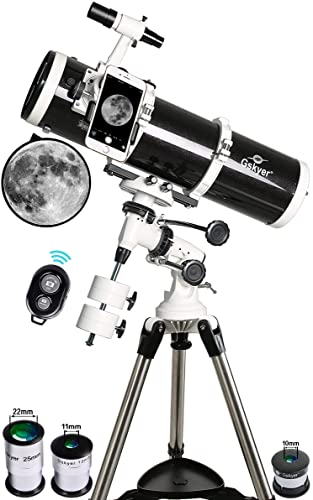
- 130mm aperture with high-transmission coatings
- German EQ mount for more precise tracking
- Bluetooth remote supports smartphone photos and videos
Best For: Budget-friendly viewing and basic smartphone astrophotography
Smart Navigation Pick
Celestron StarSense Explorer 130mm Tabletop Telescope

- StarSense app helps locate targets with smartphone guidance
- 130mm reflector optics for Moon and bright deep-sky views
- Compact tabletop base is easy to transport
Best For: Beginners who want app-guided object finding
Smart Home Observatory – Celestron Origin Intelligent Home Observatory
If you want telescopes for astrophotography that feel more like a complete imaging system than a traditional scope, the Celestron Origin is built around that idea. Its 6-inch RASA optics, fast f/2.2 focal ratio, and built-in AI stacking make it especially appealing for users who want bright deep-sky images with very little setup or manual processing.
Best For: Observers who want an automated all-in-one smart telescope for home use and real-time astroimaging.
Pros:
- 6-inch RASA optical design with a fast f/2.2 focal ratio
- AI algorithms stack and process frames in real time
- StarSense-based setup can get you observing in about two minutes
- iOS and Android app control with planetarium-style interface
Cons:
- Heavy 42-pound system is not meant for grab-and-go travel
- Designed around automated imaging, not traditional manual observing
- Requires AC or battery power for operation
The Origin stands out if your priority is convenience and immediate image capture rather than learning a complex imaging workflow. For buyers comparing telescopes for astrophotography, it offers a highly automated path to bright galaxies and nebulae with minimal intervention.
Portable APO Refractor – Askar 71F Flat-Field OTA
The Askar 71F is a compact refractor aimed at buyers who want a lightweight option among telescopes for astrophotography without giving up field quality. Its 71mm aperture, ED glass quadruplet APO design, and flat-field performance make it a practical choice for deep-sky imaging and general visual use.
Best For: Astrophotographers who want a lightweight, versatile refractor OTA for travel or smaller setups.
Pros:
- Lightweight design at about 2.5 kg for the OTA
- Quadruplet air-spaced APO with ED glass and flat-field optics
- 360-degree rotatable focus helps with photographic framing
- Works for both imaging and visual observing
Cons:
- OTA only, so you still need to supply mount and imaging gear
- 71mm aperture is modest compared with larger deep-sky systems
- Manual focus and manual mechanical operation may not suit everyone
This is a strong pick if you value portability, clean star fields, and a simpler refractor workflow. It is especially attractive for users building a compact astrophotography rig around a camera or smartphone.
Classic GoTo EQ – Celestron Advanced VX 8-inch SCT
If you want telescopes for astrophotography with a more traditional imaging platform, the Celestron Advanced VX 8″ Schmidt-Cassegrain is built around a computerized German equatorial mount. The 8-inch aperture, StarBright XLT coatings, and 2032mm focal length give you the kind of reach many users look for when imaging detailed celestial targets.
Best For: Buyers who want a serious GoTo equatorial telescope for tracking and future astrophotography upgrades.
Pros:
- 8-inch Schmidt-Cassegrain optics with StarBright XLT coatings
- Computerized EQ mount with NexStar+ and 40,000+ object database
- Stable stainless steel tripod with 2-inch legs
- Includes key accessories to get started
Cons:
- Large, heavy setup at over 80 pounds
- Long 2032mm focal length is less forgiving for beginners
- Manual focus and setup are more involved than smart telescopes
This model makes sense if you want a more conventional astrophotography route with strong tracking and room to grow. It is less compact and less automatic than smart options, but it offers the kind of mount and optics many serious users prefer.
Smart Portable Imager – ZWO Seestar S30 Pro
For buyers comparing telescopes for astrophotography, the ZWO Seestar S30 Pro is a compact smart telescope that emphasizes app control and one-tap imaging. It is designed to automatically target and track objects, then help you capture deep-sky, Moon, Sun, and wide-field shots with minimal setup.
Best For: Beginners and travelers who want a small, app-driven telescope for easy astrophotography.
Pros:
- Automatic GOTO targeting and tracking through the app
- Dual-camera 4K imaging with one-tap capture modes
- Built-in light pollution filters and apochromatic optics
- Very portable at 3.6 pounds with battery power
Cons:
- Not intended for planetary observation
- Best results require stationary use during deep-sky imaging
- Smaller 30mm aperture limits light-gathering compared with larger scopes
The Seestar S30 Pro is a strong choice if you want easy, mobile astrophotography rather than a traditional telescope workflow. It favors convenience, portability, and automated image capture over manual control and large-aperture performance.
Deep-Sky Imaging Pick – SVBONY SV503 80ED with 0.8X Flattener
If you want telescopes for astrophotography that prioritize clean stars and efficient deep-sky capture, this SVBONY SV503 80ED kit is built around that job. The included 0.8X field flattener shortens effective exposure times, widens the field of view, and helps keep stars sharp across the frame, which is especially useful with larger sensors.
Best For: Deep-sky imagers who want a lightweight refractor package with a matched flattener for sharper edge-to-edge results.
Pros:
- 0.8X reducer/flattener helps speed up imaging and expand the field of view.
- ED glass is designed to reduce chromatic aberration for cleaner, higher-contrast stars.
- 2-inch dual-speed focuser with 1:10 micro-adjustment supports precise focusing.
- Light 2.5 kg OTA is easier to carry and puts less load on your mount.
Cons:
- Manual focus means you’ll be doing the fine-tuning yourself.
- Designed as an OTA kit, so you’ll still need the rest of an imaging setup.
This is a strong pick if your priority is a portable refractor that’s already paired for astrophotography. The combination of ED optics, a flattener, and a dual-speed focuser makes it feel purpose-built for deep-sky work rather than casual visual observing.
Portable Smart Choice – DWARFLAB Dwarf 3 App Telescope
For shoppers looking at telescopes for astrophotography with minimal setup, the DWARFLAB Dwarf 3 leans heavily into automation and portability. Its 3 lb design, dual-lens system, 4K auto-tracking, and app-based cloud processing make it a practical option for travel, quick sessions, and beginners who want results without a PC.
Best For: Beginners and travelers who want a compact smart telescope with app control and automatic image processing.
Pros:
- Very portable at about 3 lb, with a backpack-friendly design.
- Dual imaging system supports both daytime subjects and night sky targets.
- 4K auto-tracking helps keep stars, planets, and wildlife centered.
- Cloud-powered processing through the app removes the need for complex software.
Cons:
- Smaller 35 mm objective lens is more limited than larger optical tubes.
- Heavily dependent on the app and automated workflow.
This is the easiest route in the group if you value convenience over manual control. It stands out for fast setup and built-in processing, making it a strong travel-friendly choice for casual astrophotography.
Planetary GoTo Pick – Celestron NexStar 127SLT
If you’re comparing telescopes for astrophotography and want a compact computerized option, the Celestron NexStar 127SLT offers fast object locating and high-contrast optics. Its 127 mm Maksutov-Cassegrain design is well suited to detailed views of the Moon and planets, while the GoTo mount and 40,000-object database reduce the time spent hunting targets.
Best For: Backyard observers who want a portable GoTo telescope with strong Moon and planet performance.
Pros:
- Computerized GoTo system includes a database of 40,000+ objects.
- 127 mm Maksutov-Cassegrain optics are described as high-contrast and high-resolution.
- SkyAlign setup is designed to get you observing in minutes.
- Compact and portable enough for backyard, campsite, or dark-sky trips.
Cons:
- Manual focus means it is not a fully automated imaging system.
- Its strengths are more focused on lunar and planetary observing than wide-field deep-sky imaging.
This model makes sense if you want locating help and crisp high-contrast views in a relatively compact package. It is less specialized for wide-field astrophotography than a refractor or smart imaging scope, but it’s a capable all-around GoTo option for bright targets.
Editor's Choice – SVBONY SV555 APO Astrophotography Telescope
If you want a telescope for astrophotography that prioritizes flat-field performance and clean wide-field framing, the SVBONY SV555 is built for exactly that job. Its Petzval triplet optics, full-frame compatibility, and upgraded precision focus system make it a strong pick for deep-sky imaging and travel-ready setups.
Best For: Astrophotographers who want a portable APO refractor with full-frame support and precise focusing.
Pros:
- Petzval triplet design helps reduce coma and chromatic aberration.
- Supports 44mm full-frame sensors without vignetting.
- Variable aperture from F4.5 to F22 adds flexibility for different shooting conditions.
- Includes EAF adapter support, filter holder, and mount kit for easier rigging.
Cons:
- Manual focus may not suit users who want a fully automated setup.
- Designed as an OTA-style astrophotography tool, so you’ll need the rest of the imaging rig.
- More specialized than a general-purpose beginner telescope.
Overall, this is the most imaging-focused option in the group, especially if you care about wide-field results and sensor coverage. It looks like a smart choice for serious telescope for astrophotography buyers who want cleaner stars and a more refined capture workflow.
Budget Pick – Gskyer 130EQ Professional Astronomical Reflector
The Gskyer 130EQ is a reflector-style telescope for astrophotography buyers who want a large aperture and an equatorial mount at a more approachable price point. With a 130mm aperture, 650mm focal length, and smartphone remote support, it offers a practical path into lunar, planetary, and brighter deep-sky viewing.
Best For: Beginners and budget-minded users who want a large-aperture reflector with EQ tracking and phone photo support.
Pros:
- 130mm aperture and high-transmission coatings support bright views.
- German equatorial mount helps with more precise tracking.
- Includes three eyepieces, a 3X Barlow lens, a finderscope, and tripod.
- Bluetooth remote works with iPhone or Android for photos and videos.
Cons:
- Bulky at 30.1 pounds, so it is less convenient to move around.
- Manual focus and a beginner-friendly design may limit advanced imaging control.
- Best suited to brighter targets rather than demanding long-exposure astrophotography.
This is a sensible entry-level pick if you want aperture, accessories, and basic photo convenience without jumping into a more complex imaging setup. For telescope for astrophotography shoppers on a budget, it offers a lot of hardware for the money.
Smart Navigation Pick – Celestron StarSense Explorer 130mm Tabletop Telescope
The Celestron StarSense Explorer 130mm is a smart, beginner-friendly telescope for astrophotography and visual observing when object finding is the main hurdle. Its smartphone-powered StarSense system guides you to targets, while the 130mm reflector optics provide sharp views of the Moon, planets, and brighter deep-sky objects.
Best For: New observers who want app-guided target finding in a compact 130mm reflector.
Pros:
- StarSense app uses sky recognition to help locate objects.
- Curated target list adjusts to your time and location.
- 130mm reflector with high-reflectivity coatings delivers solid visual performance.
- Compact tabletop Dobsonian-style base is travel-friendly and simple to use.
Cons:
- Manual altazimuth mount is not designed for advanced long-exposure imaging.
- Tabletop design may require a stable surface or additional support.
- Most benefits focus on navigation and observing rather than dedicated astrophotography features.
If you want a telescope for astrophotography mainly to make finding and framing targets easier, this model stands out. It is especially appealing for beginners who want guidance, portability, and a well-known brand backing the purchase.
How We Picked These Telescopes for Astrophotography
We focused on systems that make imaging easier and more rewarding, not just larger or more powerful on paper. That means prioritizing mount type, tracking performance, optical design, field flattening, portability, and how beginner-friendly each telescope is for real-world use.
We also considered whether each model is better suited to planetary detail, wide-field deep-sky work, or fully automated imaging. For Telescopes for Astrophotography, those differences matter more than raw magnification.
Quick Comparison: Which Type Fits Your Goal?
Smart Telescopes
Best for beginners, convenience seekers, and anyone who wants fast results with minimal setup. These are ideal if you want app control, automatic framing, and simple sharing.
Refractors and Astrograph-Style Scopes
Best for wide-field, high-contrast imaging. These are typically the easiest optical systems for clean stars and less demanding post-processing, especially when paired with a field flattener or designed as an astrograph.
Schmidt-Cassegrain and Maksutov Designs
Best for smaller targets like the Moon, planets, and compact deep-sky objects. They offer long focal lengths in a compact package, but they usually require a solid mount and more careful setup.
Reflectors and Starter Systems
Often the most affordable entry point, but they can be more demanding for imaging and may need extra accessories or tuning to perform well for astrophotography.
Key Buying Factors for Telescopes for Astrophotography
- Mount stability: A good mount is often more important than a larger aperture. Tracking accuracy and vibration control directly affect image sharpness.
- Optical design: Refractors are usually easier for wide-field imaging, while SCTs and Maksutovs are better for higher magnification targets.
- Focal ratio: Faster optics can help gather light more efficiently, especially for deep-sky imaging and shorter exposure times.
- Field flatness: A flat field keeps stars sharp across the frame, which matters a lot for modern astro cameras and APS-C or larger sensors.
- Portability and setup time: If you plan to image often, a lighter and simpler system may get used more than a heavier, more capable one.
- Smart features: App control, plate solving, and automated alignment can dramatically shorten the learning curve.
Who Should Buy Which Telescopes for Astrophotography?
If you want the easiest route into imaging, choose a smart telescope with app-based alignment and automatic target finding. If you want the best balance of image quality and flexibility, a flat-field refractor is usually the safest choice.
If your goal is planets, the Moon, and small bright targets, a long-focal-length SCT or Maksutov can be a smart pick. If you’re shopping on a tighter budget, starter reflector systems can still be useful, but expect a steeper learning curve and fewer imaging conveniences.
In short, the best Telescopes for Astrophotography are the ones that match your goals, your patience level, and the kind of sky photos you actually want to take.