Choosing between stereo microscopes with cameras can be surprisingly difficult once you factor in zoom range, stand style, lighting, and how well the camera integrates with your workflow.
This roundup focuses on practical picks for electronics, soldering, inspection, and general lab use, with an emphasis on image quality, working distance, and overall value.
Best 10 Stereo Microscopes with Cameras Picks for 2026
Professional Boom-Stand Trinocular Choice
AmScope SM-4TZ-144A boom stand stereo microscope

- Trinocular head supports camera use
- 0.7X-4.5X continuous zoom range
- Double-arm boom stand for large workpieces
Best For: electronics, dental, and other large-item inspection
High-Resolution Repair Imaging Pick
TBK-701A 48MP stereo microscope for repair
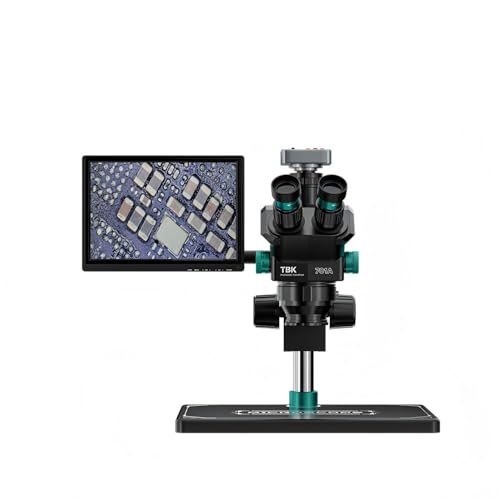
- 48MP camera with external display support
- 7X-60X continuous zoom for repair work
- Heavy metal base for stable inspection
Best For: mobile phone repair, PCB work, and training labs
Digital Trinocular Workhorse
AmScope SM-3T-54S-5M USB camera stereo microscope

- 5MP USB camera for capture and display
- Trinocular head with long working distance
- 54-bulb LED ring light with intensity control
Best For: computer-connected inspection and teaching
Standalone Camera Kit Value
HAYEAR 14MP HDMI microscope camera kit

- 14MP camera with HDMI and USB outputs
- Includes big stereo stand and 144-LED light
- Supports image capture and video recording
Best For: inspection workstations that need flexible camera output
Lab-Ready Boom Zoom
Trinocular Stereo Zoom Microscope 3.5X-90X

- Simul-Focal trinocular port for camera or HD touch screen
- 3.5X-90X range with 0.5X and 2X auxiliary lenses
- Double-arm boom stand with 144-LED ring light
Best For: Workbench users needing camera support and flexible boom positioning
Repair Bench Camera Scope
Kaisi Trinocular Stereo Microscope

- Camera-friendly trinocular design keeps eyepiece viewing usable
- WF10x23 eyepieces and 0.7X-5X zoom objective
- Includes LED ring light, solder fan, and work mat
Best For: Electronics repair and soldering with camera attachment
Classic Trinocular Zoom
SWIFT Stereo Microscope with LED Ring Light
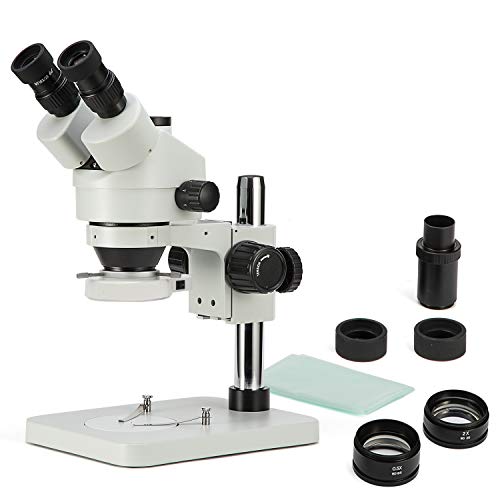
- Vertical trinocular port for photo or camera attachment
- 3.5X-90X range with 0.5X and 2.0X objectives
- 56-bulb LED ring light and sturdy metal stand
Best For: General inspection and documentation with a camera-ready bench microscope
Lab-Ready Trinocular Zoom
Swift S7-TGL-CA05 7X-45X Stereo Microscope

- Trinocular head supports camera attachment
- 7X-45X zoom with 4-inch working distance
- Dual LED lighting with gooseneck and transmitted light
Best For: bench inspections and users who want camera-ready viewing
Heavy-Duty Imaging Zoom
ZTEEERS Trinocular Stereo Microscope with Boom Stand

- Trinocular port supports camera and electronic eyepieces
- 3.5X-90X range with auxiliary lenses
- Boom stand and dimmable LED ring light
Best For: larger workspaces and camera-based documentation
Compact Camera-Ready View
ZTEEERS 6X-45X Trinocular Stereo Microscope

- Trinocular head supports camera attachment
- 6X-45X zoom with 0.5X CTV adapter
- 56-bulb LED ring light and stable pillar stand
Best For: compact bench setups and basic imaging needs
Professional Boom-Stand Trinocular Choice – AmScope SM-4TZ-144A boom stand stereo microscope
If you need one of the more flexible stereo microscopes with cameras for bench work, the AmScope SM-4TZ-144A is built around a trinocular head, long working distance, and smooth 0.7X-4.5X zoom control. The boom stand makes it easier to position over larger items like circuit boards or dental appliances, while the 144-bulb four-zone LED ring light helps you tune illumination for the task.
Best For: Users who want a professional stereo microscope for electronics, dental work, or other large-item inspection with camera-ready trinocular viewing.
Pros:
- Trinocular head supports camera integration while keeping dual-eyepiece viewing available
- Continuous 0.7X-4.5X zoom and Barlow lens options expand inspection flexibility
- Double-arm boom stand offers broad X, Y, and Z positioning over larger workpieces
- Four-zone 144-LED ring light gives more control over brightness and direction
Cons:
- Set up is more elaborate than a basic table-top microscope
- 110V-240V corded design is better suited to fixed workstations than portable use
This model stands out if you need a camera-capable stereo microscope with serious reach and lighting control. It is especially well matched to repair and inspection jobs where working distance matters as much as magnification.
High-Resolution Repair Imaging Pick – TBK-701A 48MP stereo microscope for repair
For buyers comparing stereo microscopes with cameras, the TBK-701A is aimed squarely at inspection and repair workflows. Its 48MP camera module, external display support, and 7X-60X continuous zoom make it practical for moving from board-level overview to close-up component work without changing tools.
Best For: Electronics repair technicians, training labs, and inspection stations that want high-resolution camera viewing and external display support.
Pros:
- 48MP camera delivers high-resolution imaging for detailed inspection
- Supports external display connection for real-time viewing
- 7X-60X continuous zoom covers overview and micro-level repair tasks
- Heavy-duty metal base and adjustable column add stability during delicate work
Cons:
- Best suited to a dedicated workstation because it is built as a heavy setup
- Focused on repair and inspection use rather than general hobby scanning
The TBK-701A is a strong fit if your priority is camera-assisted inspection with a stable, workstation-friendly design. It emphasizes resolution, viewing flexibility, and comfort for long repair sessions.
Digital Trinocular Workhorse – AmScope SM-3T-54S-5M USB camera stereo microscope
This AmScope model is a practical option if you want stereo microscopes with cameras for everyday bench inspection. The 5MP USB 2.0 camera lets you capture or display images on a computer or projector, while the trinocular head, long working distance, and 0.7X-4.5X zoom objective support hands-on work with circuit boards and similar items.
Best For: Users who want a computer-connected stereo microscope for inspection, teaching, or bench work with live image capture.
Pros:
- 5MP camera with USB 2.0 output for computer or projector use
- Trinocular head keeps binocular viewing available alongside imaging
- 0.7X-4.5X continuous zoom supports flexible inspection ranges
- 54-bulb LED ring light provides bright, cool illumination with intensity control
Cons:
- Uses a single boom arm rather than a larger double-arm support system
- Maximum magnification is lower than some higher-zoom repair-focused setups
Overall, this is a solid digital stereo microscope for users who value a straightforward imaging workflow and reliable bench visibility. It balances camera capture, working distance, and adjustable lighting well for practical use.
Standalone Camera Kit Value – HAYEAR 14MP HDMI microscope camera kit
If you want a camera-first setup among stereo microscopes with cameras, this HAYEAR kit centers on a 14MP HDMI/USB microscope camera with recording support and a big stereo stand. It is designed for lab, industry, and PCB work, with output options that make it easier to view, capture, and share inspection images.
Best For: Buyers who want a microscope camera kit for electronics inspection, recording, or external display use.
Pros:
- 14MP CMOS camera supports high-resolution imaging and recording
- HDMI and USB outputs provide flexible display connections
- Includes a big stereo stand and 144-LED light for setup support
- Compatible with PC use across Windows and Mac systems
Cons:
- Sold as a component kit, so setup depends on the included parts working together
- More camera-and-stand focused than a complete all-in-one stereo microscope package
This kit is best viewed as a flexible imaging solution for inspection environments that need HDMI output and recording capability. It should appeal most to users building a workstation around camera viewing rather than a simple standalone scope.
Lab-Ready Boom Zoom – Trinocular Stereo Zoom Microscope 3.5X-90X
If you want stereo microscopes with cameras for lab or industrial work, this Vision Scientific model is built around a trinocular head with a Simul-Focal port for adding a digital camera or HD touch screen. Its 3.5X-90X range, long working distance, and stable double-arm boom make it a flexible choice when you need room to work and sharp images across the zoom range.
Best For: Users who want a stable boom-style stereo microscope for camera capture, lab tasks, and industrial inspection.
Pros:
- Simul-Focal trinocular port supports camera or HD touch screen use.
- Wide 3.5X-90X magnification range with included 0.5X and 2X auxiliary lenses.
- Double-arm boom stand offers long reach and flexible positioning.
- 144-LED ring light provides cool, adjustable illumination.
Cons:
- Large boom setup may take more bench space than a simple stand.
- Best suited to workstations that can accommodate a heavy-duty base.
This is the most workstation-oriented option in the group, combining camera support with a highly adjustable boom platform and strong lighting. It makes sense when you need both viewing flexibility and a setup that can stay put for repeated inspection tasks.
Repair Bench Camera Scope – Kaisi Trinocular Stereo Microscope
For stereo microscopes with cameras in soldering and electronics repair, this Kaisi trinocular model is tuned for bench work. It offers a 0.7X-5X zoom objective, a wider WF10x23 eyepiece setup, and a trinocular design that fixes the usual left-eyepiece loss issue when using the camera, which helps keep observation comfortable during detailed repair tasks.
Best For: Electronics repair users who want camera-friendly viewing, wider eyepieces, and built-in soldering accessories.
Pros:
- Trinocular upgrade is designed to avoid losing the left eyepiece when using a camera.
- WF10x23 eyepieces provide a wider field of view than WF10x20 designs.
- Includes LED ring light and solder fan for clearer, cleaner work.
- Comes with a large work floor, silicone soldering mat, and small parts trays.
Cons:
- Maximum magnification is lower than some broader-range stereo zoom models.
- Working distance setup needs to be adjusted correctly for focus clarity.
This is a practical repair-focused microscope for users who want the camera workflow to stay usable while soldering. The included accessories and wider eyepieces make it especially appealing for electronics benches where visibility, heat protection, and parts organization all matter.
Classic Trinocular Zoom – SWIFT Stereo Microscope with LED Ring Light
If you’re comparing stereo microscopes with cameras for inspection work, this SWIFT trinocular model offers a straightforward mix of zoom range, camera-ready viewing, and stable bench support. It pairs 10X eyepieces with a 0.7X-4.5X zoom objective, plus 0.5X and 2.0X additional objectives, giving you a broad 3.5X-90X span for detailed viewing and documentation.
Best For: Researchers, jewelers, collectors, and electronics users who want a camera-capable stereo microscope with a simple bench setup.
Pros:
- Vertical trinocular port supports photo capture and camera attachment.
- 3.5X-90X total magnification range with included auxiliary objectives.
- 56-bulb LED ring light gives bright, shadow-free illumination.
- 45-degree head and 360-degree rotation improve viewing comfort.
Cons:
- Pillar stand is less flexible than a boom-style setup.
- More traditional bench design may not suit oversized workpieces.
This SWIFT model is a strong all-around choice when you want camera support without moving into a more complex boom system. Its combination of broad magnification, shadow-free lighting, and stable construction makes it a practical option for precision inspection and documentation.
Lab-Ready Trinocular Zoom – Swift S7-TGL-CA05 7X-45X Stereo Microscope
If you’re comparing stereo microscopes with cameras for inspection, repair, or documentation, the Swift S7-TGL-CA05 is built around a trinocular head so you can keep both eyepieces free while adding imaging gear. Its 7X-45X zoom range, 4-inch working distance, and dual LED lighting make it a practical pick for close-up viewing with flexible illumination.
Best For: users who want a trinocular stereo microscope with comfortable viewing, long working distance, and flexible top-and-bottom lighting.
Pros:
- Trinocular head supports camera or device attachment while preserving binocular viewing
- 7X-45X zoom and 4-inch working distance suit a wide range of close inspection tasks
- Upper gooseneck LED and transmitted LED lights provide adaptable, shadow-reducing illumination
- 45-degree tilt and 360-degree rotation help reduce neck strain and improve positioning
Cons:
- Uses a corded 110V/120V setup, so it is not portable
- Pillar stand is less flexible than boom-style stands for some work surfaces
- Lighting and camera hardware are limited to what you add or connect separately
Overall, this is a solid all-around trinocular option if you want a straightforward stereo microscope with camera compatibility and easy-to-manage illumination. It leans more toward practical bench use than advanced imaging customization.
Heavy-Duty Imaging Zoom – ZTEEERS Trinocular Stereo Microscope with Boom Stand
For buyers shopping stereo microscopes with cameras, this ZTEEERS model stands out for its trinocular port and included adapter configurations for digital cameras or electronic eyepieces. The 0.7X-4.5X zoom system combines with 0.5X and 2.0X auxiliary lenses to reach a broad 3.5X-90X range, while the boom stand and ring light make it better suited to larger work areas.
Best For: users who need a camera-ready stereo microscope with a flexible boom stand and expanded magnification options.
Pros:
- Trinocular viewing head includes adapter configurations for cameras and electronic eyepieces
- 0.7X-4.5X zoom plus 0.5X and 2.0X auxiliary lenses expand to 3.5X-90X
- Heavy-duty steel base and single-arm boom stand provide stable, flexible positioning
- 56S LED ring light includes a dimmer for adjustable shadow-free illumination
Cons:
- More specialized setup than a basic bench-top microscope
- Large, heavy stand may take up more workspace
- Maximum practical magnification will depend on the auxiliary lens combination you use
This is the strongest pick here if your workflow centers on documentation, shared viewing, and a wider working envelope. The boom stand and camera-ready trinocular design give it a more advanced feel than basic pillar-mounted alternatives.
Compact Camera-Ready View – ZTEEERS 6X-45X Trinocular Stereo Microscope
This ZTEEERS trinocular stereo microscope is a straightforward choice if you want camera compatibility without moving into a bulky setup. With 6X-45X magnification, a 0.6X-4.5X zoom objective, and a 0.5X CTV adapter, it is designed for clear specimen viewing and simple documentation on a stable pillar stand.
Best For: buyers who want a compact trinocular stereo microscope with included adapter support for imaging and everyday inspection.
Pros:
- Trinocular head allows binocular viewing plus camera attachment
- 6X-45X magnification covers common inspection and documentation needs
- 56-bulb LED ring light provides bright, uniform illumination
- Aluminum alloy frame and pillar stand add stability in a compact footprint
Cons:
- Less magnification range than the higher-end 3.5X-90X option
- Pillar stand offers less reach than a boom-style setup
- Best matched to standard bench use rather than large or awkward specimens
For users who want a no-fuss stereo microscope with camera support, this model keeps the package compact while still covering the essentials. It is a sensible middle-ground choice when you value simplicity, stability, and a clean viewing setup.
How We Picked the Best Stereo Microscopes with Cameras
We prioritized Stereo Microscopes with Cameras that offer trinocular flexibility, useful magnification ranges, stable focusing, and lighting that supports close-up work without washing out detail. We also looked at stand design, since boom and pillar setups can dramatically affect workspace access.
Quick Comparison
The strongest all-around choices tend to be trinocular zoom models with wide magnification ranges and adjustable LED illumination. If you need the simplest setup for soldering or bench inspection, a package with a built-in or bundled camera and a sturdy stand is often the easiest path. For larger parts or more workspace clearance, boom-arm configurations are especially useful.
Key Buying Factors for Stereo Microscopes with Cameras
Magnification and Zoom
Look for a practical zoom range rather than the highest number on the spec sheet. For electronics and inspection, mid-range zoom with a smooth transition is usually more useful than extreme magnification you cannot hold steady.
Camera Output and Compatibility
Not all cameras are equally convenient. Check whether the system supports HDMI, USB, or direct display output, and confirm whether you want live viewing, recording, or both. Higher megapixel counts help, but good optics and lighting matter just as much.
Working Distance and Stand Type
A stereo microscope should leave enough room for tools, soldering irons, and part handling. Boom stands provide the most flexibility, while pillar stands are often simpler and more compact.
Lighting
Integrated ring lights, transmitted light, and gooseneck lighting each solve different problems. For PCB work and surface inspection, adjustable reflected light is usually essential; for translucent samples, transmitted illumination becomes more important.
Who Should Buy Which Stereo Microscopes with Cameras?
If you work in electronics repair, PCB soldering, or lab inspection, choose a trinocular model with strong zoom control and a camera-ready port for easy documentation. If your priority is occasional viewing or teaching, a simpler setup with dependable lighting may be enough. For users who need to capture images or stream live to a monitor, prioritize Stereo Microscopes with Cameras that include clean video output and a stand that matches your bench space.
In short, the best choice is the one that balances optical clarity, camera convenience, and enough working room for the tasks you do most often.