Finding the right solar system model for a preschooler means balancing curiosity, simplicity, durability, and age-appropriate play. The best options turn planets and space vocabulary into hands-on activities children can explore independently or with an adult.
This roundup compares 10 solar system models for preschoolers, from wooden puzzles and magnetic planet sets to project-style kits. Use the guide below to match the format, features, and learning goals to your child.
Best 10 Solar System Models for Preschoolers Picks for 2026
Hands-On Magnetic Learning
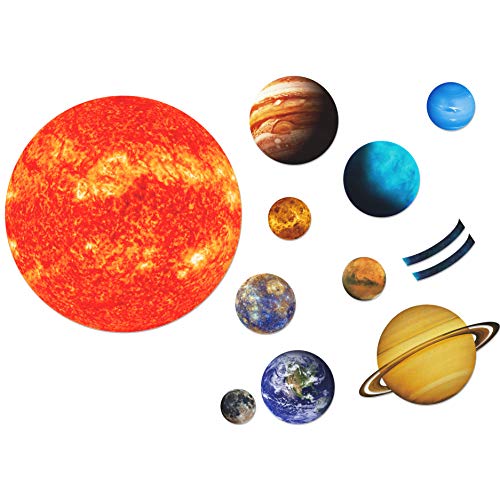
- 24-piece magnetic set with planets, belts, Moon, and facts
- Large 10-inch Sun and vivid satellite imagery
- Designed for ages 3+ and durable everyday use
Best For: Toddlers who enjoy arranging and matching magnetic pieces
Montessori-Style 3D Play

- Eight wooden planet balls with explanatory flashcards
- Three puzzle pieces form a cartoon solar system
- Smooth, rounded pieces for tabletop play
Best For: Preschoolers who enjoy tactile puzzles and 3D planet models
Creative Space Project
National Geographic Magnetic Art Kit

- Paint and assemble nine 3D solar-system magnets
- Includes six colors, two brushes, poster, and cards
- Recommended for ages 6 and up
Best For: Older children who enjoy space-themed painting projects
Travel-Friendly Fine-Motor Practice
Wooden Planet Puzzle for Ages 3–5

- Ten realistic wooden planet pieces
- Smooth, easy-grip design for fine-motor practice
- Lightweight and suitable for travel
Best For: Preschoolers needing quiet, portable tabletop play
Best DIY Project

- Paint-and-build foam planet activity
- Movable planets with orbital track
- Finished project hangs as décor
Best For: Supervised crafts and space-themed displays
Best Multi-Use Toy
Planet Stress Balls and Flashcards

- Includes 11 soft space-themed balls
- Adds 12 planet learning flashcards
- Works for sensory and pretend play
Best For: Tactile learning and flexible preschool play
Best Wooden Model

- Wooden Sun and eight-planet set
- Rotating base demonstrates movement
- Includes planet learning cards
Best For: Structured home or classroom STEM play
Best Hands-On Starter

- Eight wooden planets, three puzzles, and eight flashcards
- Smooth, burr-free pieces for little hands
- Builds matching, memory, and spatial skills
Best For: Preschoolers who enjoy tactile matching and puzzle play
Best Complete Learning Set

- Includes planets, astronauts, board, and double-sided cards
- CPC-tested, smooth wooden pieces according to the notes
- Encourages early STEM and planet-recognition skills
Best For: Preschool classrooms and guided parent-child learning
Best Natural-Wood Option

- Natural beech-wood board and planet pieces
- Includes astronauts and double-sided learning cards
- Supports color recognition and hands-on exploration
Best For: Preschoolers who enjoy Montessori-style matching activities
Hands-On Magnetic Learning – Giant Magnetic Solar System
For families comparing solar system models for preschoolers, this magnetic set offers a large, visual way to arrange planets and discuss space. It includes 24 pieces covering the Sun, planets, Moon, asteroid belt, Kuiper belt, and matching description magnets.
Best For: Toddlers ages 3 and up who learn well through large, hands-on magnetic pieces.
Pros:
- Includes 12 solar-system entities plus 12 corresponding description magnets.
- The pieces can be lined up in order or paired with fact magnets.
- The 10-inch Sun and vivid satellite imagery make the display easy to see.
- Laminated PET film is described as water- and dust-resistant.
Cons:
- It is a flat magnetic learning set rather than a freestanding 3D model.
- The large format may need considerable wall, floor, or refrigerator space.
This is a strong pick when you want an accessible introduction to planetary order and basic space vocabulary, especially for shared parent-child learning.
Montessori-Style 3D Play – Wooden Solar System Puzzle
This wooden option stands out among solar system models for preschoolers by combining eight graspable planet balls, explanation flashcards, and a three-piece puzzle board. Children can place the planets while exploring their positions and appearances.
Best For: Preschoolers ages 3 to 7 who prefer tactile tabletop puzzles and 3D pieces.
Pros:
- Includes eight wooden planet models, eight explanatory flashcards, and three puzzle pieces.
- Smooth, rounded wooden spheres are designed for easy grasping.
- Supports observation, imagination, exploratory skills, and STEM learning.
- The assembled board provides a visual, hands-on space activity.
Cons:
- The set focuses on eight planets and does not list the Sun or smaller solar-system bodies.
- Hand-painted wooden pieces may require careful storage to keep the set together.
Choose this set if you want a more tactile alternative to flat charts, with flashcards that can extend play into simple planet discussions.
Creative Space Project – National Geographic Magnetic Art Kit
For older children considering solar system models for preschoolers, this National Geographic kit adds a painting activity to space learning. Children paint and assemble nine 3D magnets, then display the finished Sun and planets on a magnetic surface.
Best For: Children ages 6 and up who enjoy crafts more than traditional preschool-style model play.
Pros:
- Includes eight planet pieces, the Sun, nine magnets, six paint colors, and two brushes.
- Four constellation cards and a poster add space facts beyond the planets.
- Finished pieces can be displayed on a refrigerator or other magnetic surface.
- Combines painting, assembly, and science-related learning.
Cons:
- The recommended age is 6 and up, so it is less suitable for younger preschoolers.
- Painting requires adult preparation or supervision and creates a craft cleanup task.
This is best viewed as an art-and-learning project rather than a simple early-years model. It makes more sense for school-age children or families seeking an activity with a finished display.
Travel-Friendly Fine-Motor Practice – Wooden Planet Puzzle for Ages 3–5
This compact wooden puzzle is one of the simpler solar system models for preschoolers, with easy-grip planet pieces printed with actual planet photographs. Its thin profile and 180-gram weight also make it practical for quiet play during travel.
Best For: Children ages 3 to 5 who need a portable tabletop activity for matching, grasping, and placing.
Pros:
- Uses 10 wooden planet pieces with realistic planet imagery.
- Sanded, burr-free edges and toddler-sized pieces support comfortable handling.
- Encourages hand-eye coordination and fine-motor practice without batteries.
- Lightweight, thin design suits car rides, flights, and restaurant play.
Cons:
- The supplied details do not list flashcards or separate astronomy explanations.
- It is a manual puzzle board rather than a large, display-style solar-system model.
If portability and straightforward fine-motor play matter most, this puzzle is a practical choice. Its realistic imagery can also give adults a starting point for naming and comparing planets.
Best DIY Project – Felt Board Solar System Kit
For families comparing solar system models for preschoolers, this felt-board kit offers an artistic, hands-on way to build and arrange the planets. Children can paint foam pieces, attach them with hook-and-loop tape, and display the finished project on a wall.
Best For: Supervised craft projects, early space exploration, and children who enjoy painting and making room decorations.
Pros:
- Includes foam planet pieces, paints, brushes, felt board, labels, and project accessories.
- Movable planets can be arranged along the illustrated orbital tracks.
- Finished model can be hung as a decorative learning display.
- Supports hand-eye coordination, concentration, spatial awareness, and creative play.
Cons:
- Manufacturer recommends it for ages 6 and up, so younger preschoolers need close adult supervision.
- Requires painting and assembly rather than offering immediate ready-to-play use.
This is a strong choice when the activity matters as much as the finished model. It is less suitable for independent preschool play, but appealing for a guided family or classroom project.
Best Multi-Use Toy – Planet Stress Balls and Flashcards
Among solar system models for preschoolers, this set stands out for combining soft planet balls with educational flashcards. Children can handle the 11 space-themed balls while using the cards to explore planet images and facts.
Best For: Preschoolers who enjoy tactile toys, simple planet learning, and flexible play that can include quiet sensory activities.
Pros:
- Includes 11 planet-themed balls, including the Sun, planets, Pluto, and Moon.
- Comes with 12 educational flashcards featuring planet images and facts.
- Soft balls can be used for squeezing, imaginative play, model-building activities, or themed events.
- Gift box provides convenient storage.
Cons:
- Soft balls do not provide a fixed orbital structure or rotating solar system display.
- Flashcard-based learning may require an adult or older child to guide the activity.
- The set is described as having no manufacturer warranty.
This option works well when versatility and tactile play are priorities. Choose a structured model instead if you want children to practice planet order or orbital motion directly.
Best Wooden Model – Rotating Planet Learning Set
This wooden model is a practical pick for shoppers seeking solar system models for preschoolers that can support both play and early STEM learning. Its colorful planets attach to a rotating base, allowing children to name, arrange, and compare the planets around the Sun.
Best For: Preschool classrooms, home learning, and children who benefit from sturdy, screen-free models with a clear physical structure.
Pros:
- Includes a Sun, eight planets, connecting rods, rotating base, and learning cards.
- Rotating rods help demonstrate orbital movement in a simple, hands-on way.
- Chunky wooden pieces with smooth edges are designed for easy handling.
- Supports planet naming, ordering, matching, memory, language, fine motor skills, and early STEM thinking.
Cons:
- Adult supervision is recommended because the set contains small parts.
- Assembly and handling the connecting rods may be challenging for some younger children.
- The supplied notes do not provide specific dimensions.
With its stable base and reusable wooden pieces, this is the most structured choice of the three for repeated learning. It can grow from simple naming games into more detailed demonstrations as children get older.
Best Hands-On Starter – Wooden Planet Puzzle Kit
Planets Toys, Solar System Model Kit for Kids Ages 3, Space Science Toys for Toddlers
Check Price On AmazonFor families seeking solar system models for preschoolers, this wooden kit combines graspable planet pieces, matching puzzles, and planet flashcards in a compact learning set. Its colorful, puzzle-based format gives young children a simple way to explore planet names, positions, and basic space concepts.
Best For: Preschoolers age 3 and up who enjoy matching, sorting, and hands-on puzzles.
Pros:
- Includes eight wooden planet-themed balls, three solar system puzzles, and eight explanatory flashcards.
- Smooth, burr-free wooden spheres are designed for easy toddler grasping.
- Supports matching, memory, spatial awareness, imagination, and early science learning.
Cons:
- The set is recommended for ages 3 and up, so it may not suit younger children.
- It focuses on puzzles and flashcards rather than a mechanical or rotating model.
This is a straightforward introductory option when you want a tactile activity rather than a display-focused model. The three puzzles and flashcards add variety for guided parent-child learning or independent matching play.
Best Complete Learning Set – Astronaut Solar System Board
This solar system model for preschoolers pairs a wooden puzzle board with eight planets, three resin astronauts, and double-sided knowledge cards. It is suited to families and classrooms that want a structured activity with added visual references for discussing the planets and space.
Best For: Preschool learning, parent-child activities, and space-themed educational play.
Pros:
- Includes a wooden board, eight wooden planets, three astronaut figures, and eight double-sided education cards.
- Large spherical planet pieces are designed for grasping and matching.
- Notes state that the set passed CPC safety tests and has a smooth, burr-free surface free of heavy metals.
- Supports color recognition, concentration, imagination, hands-on skills, and early STEM exploration.
Cons:
- Its 17.7-by-8.8-inch footprint requires more storage space than a compact kit.
- The manufacturer recommends it for ages 3 and up.
With its astronauts and reference cards, this is the most feature-rich choice of the three for guided conversations about space. The board can also serve as a themed room decoration after play.
Best Natural-Wood Option – Montessori Planet Board
For shoppers comparing solar system models for preschoolers, this Montessori-style board offers eight wooden planets, three resin astronauts, and double-sided learning cards. Its natural beech-wood construction and large planet pieces make it a tactile choice for basic color, matching, and planet-recognition activities.
Best For: Preschoolers who benefit from simple, hands-on Montessori-inspired matching play.
Pros:
- Made from natural beech wood with a smooth surface, according to the supplied notes.
- Includes eight planets, three astronaut figures, a puzzle board, and eight double-sided knowledge cards.
- Large planet pieces are designed to be easy for children to grasp.
- Supports color recognition, imagination, concentration, and early cosmology exploration.
Cons:
- The manufacturer recommends the set for children age 3 and up.
- The board measures 17.7 by 8.8 inches, so it is not especially compact for storage.
This version is a practical pick when material choice matters and you want a board-based activity with more than just loose planet pieces. Its cards can extend play into simple conversations about each planet.
How We Picked These Solar System Models for Preschoolers
We focused on products designed for young children, prioritizing clear planet identification, hands-on interaction, and materials suited to preschool play. The selection includes wooden puzzles, magnetic boards, model kits, and larger planet sets so families can choose between open-ended play and more structured learning.
We also considered the likely age range, number and size of pieces, ease of storage, adult supervision needs, and whether the toy supports skills such as matching, sequencing, fine-motor control, and early science vocabulary. Product descriptions and manufacturer information should be checked before purchase, especially for exact dimensions and safety guidance.
Quick Comparison
| Type | Best For | What to Look For |
|---|---|---|
| Wooden puzzle | Quiet, guided learning | Chunky pieces, smooth edges, sturdy board |
| Magnetic set | Repositionable play | Strong magnets, easy-grip pieces, secure storage |
| Model kit | Building and projects | Simple assembly, clear instructions, adult help |
| Loose planet set | Open-ended imaginative play | Durable finish, manageable piece size, organization |
Key Buying Factors for Solar System Models for Preschoolers
Age Fit and Safety
Choose a product clearly labeled for preschool-age children. Avoid sets with small detachable parts if a child still puts objects in their mouth, and follow all warnings about magnets, choking hazards, and supervision. Larger, chunky pieces are generally easier for small hands to grasp.
Materials and Durability
Wood can provide a sturdy, tactile feel, while plastic or foam may be lighter and easier to handle. Look for smooth surfaces, securely attached details, strong paint or printing, and construction that can tolerate repeated rearranging.
Learning Style
Puzzles work well for matching and fine-motor practice. Magnetic boards encourage repeated placement and conversation. Model kits are better for children who enjoy making things with an adult. Loose planet sets offer the most freedom but may require more help with organization and accurate planet order.
Storage and Play Space
Count the pieces and consider where they will be stored. A board or magnetic format is often easier to keep together than a multi-piece kit. For classroom or shared play, choose a set with durable components and a straightforward cleanup routine.
Who Should Buy Which Solar System Models for Preschoolers?
Choose a wooden puzzle for a preschooler who benefits from calm, structured activities or is developing matching and fine-motor skills. Pick a magnetic solar system for children who like to move pieces around, ask questions, and revisit the activity frequently.
A project or model kit suits families seeking a guided parent-child activity and an introduction to building. For imaginative learners who prefer handling and arranging objects freely, a loose planet set may offer the most versatile play. If you are buying for a classroom, prioritize durability, easy cleanup, and pieces large enough for group handling.