The best smart home hubs for families make everyday routines easier without turning setup and troubleshooting into another household chore. The right hub can connect lights, locks, sensors, thermostats, cameras, and voice assistants in one manageable system.
This roundup compares 10 leading options, from beginner-friendly Alexa controllers and starter kits to powerful platforms for local automation and multi-brand device support. Consider compatibility, reliability, privacy, and how much control your household actually needs before choosing.
Best 10 Smart Home Hubs for Families Picks for 2026
Best for Flexible Automation

- Preinstalled Home Assistant OS for easier setup
- Private, local data storage with advanced automation
- USB-expandable for Zigbee, Z-Wave, and Thread
Best For: Families wanting customizable, privacy-focused smart home control
Best for Family-Friendly Touch Control

- Customizable 8-inch dashboard for shared control
- Supports Wi-Fi, Zigbee, Matter, Thread, and more
- Handles cameras, routines, security, and media
Best For: Alexa households wanting an easy visual control panel
Best for Local, Advanced Routines

- Runs automations locally for fast outage-resistant response
- Supports Matter, Z-Wave, Zigbee, and Bluetooth
- Works with Alexa, Google Home, and Apple HomeKit
Best For: Families needing reliable automation across a large device collection
Best for Whole-Home Lighting
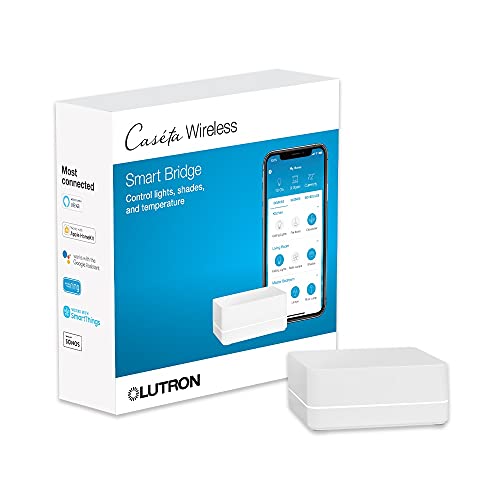
- Controls up to 75 Caseta devices
- Works with Alexa, Apple HomeKit, and Google Assistant
- Clear Connect avoids competing with Wi-Fi devices
Best For: Families building a dependable Caseta lighting system
Long-Range Family Coverage

- Up to 2,034-foot listed range
- Voice-control support
- Compact wired plug-in design
Best For: Families prioritizing long-range coverage
Flexible Family Automation

- Matter, Zigbee, and SmartThings support
- Wi-Fi or Ethernet connectivity
- Local automations can work offline
Best For: Families expanding a Matter- or Zigbee-based SmartThings home
Easy Alexa Family Starter

- Includes hub, plug, and four bulbs
- Guided setup for beginners
- Alexa routines and broad device compatibility
Best For: Families wanting an easy Alexa-centered starter setup
Best Compact Matter Bridge
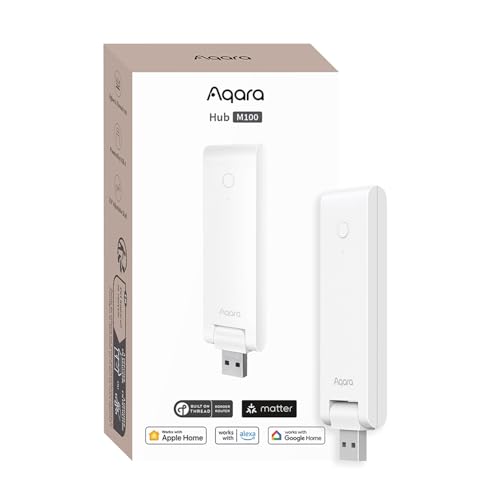
- Bridges Aqara Zigbee devices to Matter ecosystems
- Supports Thread and local automations
- Compact, flexible USB-A-powered design
Best For: Aqara-focused families expanding into Matter
Best AI Camera Hub
- Stores camera events locally with included 16GB card
- Home Assistant pre-installed with Matter Bridge
- Supports up to eight compatible cameras
Best For: Families combining camera storage with SwitchBot automation
Best Multi-Protocol Hub

- Combines seven smart-home technologies
- Supports over 50,000 devices from 1,000+ brands
- Local-first automation with Homey Flow
Best For: Families with large, mixed-brand smart homes
Best for Flexible Automation – Home Assistant Green
Home Assistant Green | Smart Home hub with Advanced Automation | Official Home Assistant Hardware
Check Price On AmazonHome Assistant Green is a strong choice for families seeking smart home hubs for families with broad device control and advanced automation. Home Assistant comes preinstalled, so setup starts by connecting the included power supply and Ethernet cable.
Best For: Families that want privacy-focused, highly customizable automation and do not mind adding USB radios for Zigbee, Z-Wave, or Thread devices.
Pros:
- Home Assistant is preinstalled for a straightforward start.
- Controls the whole home from one hub and supports advanced automations.
- Home data stays on the device, with options to view, share, and export it.
- Compact, fanless, silent, and power efficient.
Cons:
- Ethernet connectivity is required for the initial setup.
- Z-Wave, Zigbee, and Thread support requires compatible USB accessories.
- The extensive customization may be more involved than a basic plug-and-play system.
Green offers a capable foundation for households that want routines tailored to their needs. Its official hardware and expandable design make it particularly appealing for families building a long-term smart home.
Best for Family-Friendly Touch Control – Amazon Echo Hub
The Amazon Echo Hub is designed for families who want smart home hubs for families with an accessible wall-mounted control panel. Its customizable dashboard brings device controls, cameras, routines, and security functions into one on-screen interface.
Best For: Alexa households that want shared, visual control of compatible lights, cameras, locks, alarms, sensors, and routines.
Pros:
- Customizable dashboard can be arranged around how the family uses its devices.
- Built-in support for Wi-Fi, Bluetooth, Zigbee, Matter, Sidewalk, and Thread devices.
- Provides on-screen access to cameras, routines, security, and media controls.
- Can be wall mounted and includes a microphone-off privacy control.
Cons:
- Power-over-Ethernet, in-wall cable pass-throughs, and tabletop stands are sold separately.
- Some Ring-related features require Alexa+ and a compatible Ring subscription sold separately.
- Its strongest fit is within the Alexa-compatible ecosystem.
Echo Hub stands out when multiple family members need an easy visual way to manage the home. The customizable screen and broad protocol support make it a practical central panel for an Alexa-based household.
Best for Local, Advanced Routines – Hubitat Elevation C-8 Pro
Hubitat Elevation C-8 Pro suits families looking for smart home hubs for families that keep automations running locally. It supports multiple protocols, works with major voice assistants, and can continue handling routines when the internet is unavailable.
Best For: Larger or device-dense homes that need responsive local automations, broad compatibility, and no required subscription.
Pros:
- Local processing keeps automations working during internet outages.
- Supports Matter, Z-Wave 800 Series, Zigbee 3.0, and Bluetooth.
- Compatible with Alexa, Google Home, and Apple HomeKit.
- Advanced Rule Machine and AI-assisted routine building support complex family routines.
Cons:
- Advanced features and Rule Machine may require a learning curve.
- It is a hub-focused platform rather than a built-in touchscreen control panel.
- Its active community and documentation may be especially valuable during setup.
The C-8 Pro is a compelling choice for families prioritizing speed, reliability, and control over simplicity. Its external antennas and multi-protocol design are useful in larger homes with many connected devices.
Best for Whole-Home Lighting – Lutron Caseta Smart Hub
The Lutron Caseta Smart Hub is a focused option among smart home hubs for families, especially households building around dependable lighting control. It connects Caseta devices to Alexa, Apple HomeKit, Google Assistant, Ring, Serena shades, and Sonos.
Best For: Families prioritizing simple, reliable Caseta lighting control with voice assistants and selected connected-home integrations.
Pros:
- Supports up to 75 Caseta devices for gradual expansion.
- Works with Alexa, Apple HomeKit, Google Assistant, Ring, Serena shades, and Sonos.
- Uses Clear Connect Technology without competing with Wi-Fi-connected devices.
- Setup involves plugging into an outlet, connecting to a router, and following the app instructions.
Cons:
- Caseta dimmers, switches, and other coordinating accessories are sold separately.
- Its primary strength is Lutron lighting rather than broad multi-brand automation.
- It requires a wired connection to the home Wi-Fi router.
Caseta Smart Hub makes sense for families that want a straightforward lighting backbone with familiar voice-control options. It is less of an all-purpose automation platform, but it can provide a clean foundation for a Caseta-centered home.
Long-Range Family Coverage – YoLink Smart Home Hub
For families comparing smart home hubs for families, the YoLink Smart Home Hub YS1603 is a straightforward wired option with voice control and a listed maximum range of up to 2,034 feet. Its compact design makes it suitable for coordinating compatible smartphone-connected devices.
Best For: Families prioritizing long-range coverage in a simple, compact hub.
Pros:
- Listed maximum range of up to 2,034 feet.
- Supports voice control.
- Compact, lightweight design with plug-in connectivity.
Cons:
- Regular hub version does not include battery backup.
- Supplied details identify smartphone compatibility but do not specify broader platform support.
The YoLink is best considered a focused hub for households that value range and uncomplicated setup. Families needing documented compatibility with specific ecosystems should verify device support before buying.
Flexible Family Automation – Aeotec Smart Home Hub2
For households building smart home hubs for families around a broader ecosystem, the Aeotec Smart Home Hub2 combines SmartThings integration with Matter and Zigbee support. Wi-Fi or Ethernet setup, voice-assistant compatibility, and local automations give families flexible ways to manage lighting, security, climate, and energy routines.
Best For: Families expanding a Matter- or Zigbee-based SmartThings home.
Pros:
- Supports SmartThings, Matter, and Zigbee devices.
- Works with Alexa and Google Assistant.
- Offers Wi-Fi and Ethernet connectivity.
- Local automations can continue during temporary internet outages.
Cons:
- Z-Wave is not supported.
- Its broader feature set may be more than needed for a basic setup.
The Aeotec hub is a strong fit for families that want room to grow and value local automation. Check the protocol requirements of existing devices, particularly if Z-Wave products are part of the household.
Easy Alexa Family Starter – Echo Hub Smart Home Kit
Families new to smart home hubs for families may appreciate this bundled starting point: it includes an Echo Hub, an Amazon Smart Plug, and four Amazon Basics smart bulbs. The guided setup is designed to be simple, while Alexa routines can coordinate multiple devices through voice requests.
Best For: Families wanting an easy Alexa-centered starter setup with lights and a plug.
Pros:
- Includes the Echo Hub, one smart plug, and four smart bulbs.
- Provides a guided unboxing and setup experience.
- Works with thousands of Alexa-compatible devices, including Ring cameras.
- Supports voice-created routines with Alexa+.
Cons:
- The bundle is centered on the Alexa ecosystem.
- Supplied details do not specify compatibility with non-Alexa platforms.
This kit is a practical way to begin with coordinated lighting and plug control without assembling components separately. It is most appealing when Alexa is already the preferred voice and smart-home platform in the household.
Best Compact Matter Bridge – Aqara Smart Hub M100
For families building a connected home gradually, the Aqara Smart Hub M100 is a compact option for smart home hubs for families. It supports Aqara Zigbee and Thread devices, bridges supported Aqara products into Matter ecosystems, and can run many automations locally for quick responses.
Best For: Families using Aqara devices who want Matter compatibility, local automation, and flexible USB-A-powered placement.
Pros:
- Supports Aqara Zigbee and Thread devices, with capacity for up to 20 of each.
- Matter Bridge support works with Apple Home, Amazon Alexa, Home Assistant, and other Matter ecosystems.
- Local automation can continue without Wi-Fi or cloud access for supported routines.
- Adjustable shaft and USB-A power make placement flexible.
Cons:
- Zigbee support is limited to Aqara Zigbee devices rather than third-party Zigbee products.
- A 5V/0.5A power adapter is required but not included.
- Some features, including cloud push notifications, still require a cloud connection.
The M100 is a sensible family hub when your setup centers on Aqara and Matter devices. Its small footprint and local processing are useful for dependable everyday routines, but buyers should account for the restricted Zigbee compatibility and separate power-adapter requirement.
Best AI Camera Hub – SwitchBot AI Hub
The SwitchBot AI Hub gives families a centralized option for smart home hubs for families that also want local camera-event storage. It includes Home Assistant, acts as a Matter Bridge, supports compatible cameras, and can connect camera context with supported AI controls.
Best For: Families managing SwitchBot cameras and devices who want local recordings, Home Assistant, and optional AI-powered camera insights.
Pros:
- Includes a 16GB MicroSD card for local camera-event storage, expandable up to 1TB MicroSD or 16TB external storage.
- Can manage up to eight compatible cameras in one place.
- Home Assistant comes pre-installed, and Matter Bridge support broadens supported setups.
- Edge-hub processing can make select SwitchBot BLE automations up to four times faster under SwitchBot lab conditions.
Cons:
- AI features require an AI+ subscription and compatible cameras.
- Camera and AI capabilities depend on supported SwitchBot, Video Doorbell, or RTSP equipment.
- It does not include IR control for TVs or air conditioners.
This hub stands out for households that prioritize camera awareness and local recording alongside automation. It is less suitable as a universal entertainment-control hub unless you add a SwitchBot hub with IR support, and the most advanced AI functions add a subscription requirement.
Best Multi-Protocol Hub – Homey Pro (2026)
Homey Pro (2026) is designed for families with a varied device collection and is one of the most broadly connected smart home hubs for families. It combines seven communication technologies, supports more than 50,000 devices from over 1,000 brands, and processes automation locally.
Best For: Families with mixed-brand devices who want extensive protocol support, advanced automations, voice control, and local-first operation.
Pros:
- Supports Wi-Fi, Zigbee, Z-Wave Plus, infrared, BLE, Matter, and Thread in one hub.
- Works with more than 50,000 devices from over 1,000 brands, including major smart-home ecosystems.
- Homey Flow and Advanced Flow enable customizable app- and web-based automations.
- Local processing and stored data reduce reliance on cloud services.
Cons:
- The extensive compatibility still depends on checking whether specific brands and models are supported.
- Advanced automations require using the Homey Web App.
- Its broad feature set may be more than needed for a small or single-brand setup.
Homey Pro is the strongest fit for a growing family home that mixes brands, protocols, and automation needs. Its local-first design and energy-monitoring features add practical value, while the wide ecosystem may require more planning than a simpler single-brand hub.
How We Picked the Best Smart Home Hubs for Families
We focused on the factors that matter most in a shared household: straightforward setup, dependable everyday control, broad device compatibility, useful automation, and support for multiple users. We also considered whether each hub can operate locally or continue handling key routines during an internet outage, where applicable.
The selection covers several approaches. Alexa-centered hubs are convenient for voice control and familiar household routines. Home Assistant, Hubitat, Homey, and SwitchBot appeal to buyers who want deeper customization. Lutron and YoLink are especially compelling when reliability in a specific device category—such as lighting or sensors—is the priority.
Quick Comparison
- Best for approachable visual control: Amazon Echo Hub.
- Best for advanced DIY automation: Home Assistant Green or Hubitat Elevation C-8 Pro.
- Best for lighting reliability: Lutron Caseta Smart Hub.
- Best for a simple Alexa setup: Amazon Smart Home Starter Kit.
- Best for long-range sensors: YoLink Smart Home Hub.
- Best for SmartThings-style compatibility: Aeotec Smart Home Hub2.
- Best for compact Matter-based expansion: Aqara Smart Hub M100.
- Best for an all-in-one enthusiast platform: Homey Pro (2026).
Key Buying Factors for Smart Home Hubs for Families
Compatibility and Protocol Support
Check whether the hub supports the devices you already own and the products you plan to add. Zigbee, Z-Wave, Matter, Thread, Wi-Fi, Bluetooth, and infrared each cover different ecosystems. Matter can simplify cross-platform compatibility, but it does not guarantee that every advanced feature will work across every app.
Ease of Use and Household Access
A family hub should make common actions obvious. Touchscreen dashboards, reliable voice control, mobile apps, guest access, and clear permissions can matter more than an impressive list of technical features. Consider whether children, guests, or less technical family members can use the system without your assistance.
Local Control, Privacy, and Reliability
Local processing can improve responsiveness and reduce dependence on cloud services, while cloud connectivity may provide easier remote access and broader integrations. Review subscription requirements, account policies, outage behavior, and whether cameras or sensitive data stay within your home.
Automation Depth and Expansion
Choose a platform that matches your ambitions. Simple schedules and voice commands need little configuration, but presence detection, multi-step scenes, security alerts, and advanced conditions may require a more capable hub and a steeper learning curve.
Who Should Buy Which Smart Home Hubs for Families?
Choose the Echo Hub or the Alexa starter kit if your household wants an approachable system with familiar voice control. Pick Lutron Caseta when dependable smart lighting is the main goal. YoLink suits larger homes or outbuildings where sensor range is important.
For buyers who enjoy tinkering or want maximum customization, Home Assistant Green, Hubitat, or Homey Pro offer stronger automation potential. Aeotec is a practical choice for shoppers seeking SmartThings-oriented compatibility, while Aqara and SwitchBot are attractive for compact setups built around their respective device ecosystems. Before buying, verify exact protocol support and compatibility for every essential device—not just the hub’s headline specifications.