Choosing the right refrigerant identifier testing equipment can help prevent cross-contamination, protect recovery machines, and save expensive service time.
In this roundup, we focus on practical buying decisions: accuracy, supported refrigerants, ease of use, and whether a unit is a true identifier or a leak detector.
Best 10 Refrigerant Identifier Testing Equipment Picks for 2026
Digital HVAC Manifold Tester
AUTOOL LM150 Digital HVAC Manifold Gauges

- Dual pressure and dual temperature readings
- Built-in refrigerant database for calculations
- Pressure hold leak detection for troubleshooting
Best For: Technicians needing a digital manifold with refrigerant ID features
Analyzer with Printer
Robinair R-ID Plus Refrigerant Analyzer

- Checks purity for R134a and R-1234yf
- Built-in printer for final test results
- Large 5-inch color LCD with USB and Bluetooth
Best For: Automotive A/C shops needing printed refrigerant test results
Portable Automotive Identifier
Inficon AST-ID Automotive Refrigerant Identifier

- Identifies R1234yf and R134a
- SAE J2912 approved for service use
- Samples vapor from cylinders or vehicles
Best For: Portable refrigerant verification in automotive A/C work
Advanced Leak Detector
Fieldpiece SRL2(K7) Advanced Refrigerant Leak Detector

- Triggers on CFCs, HFCs, HCFCs, and blends
- Sealed sensor reduces false triggers from oil or moisture
- Starts up in under 30 seconds
Best For: Fast leak detection in contaminated HVAC environments
R-134a Protection Pick
Robinair 16009 DiscovR Refrigerant Identifier

- Pass/fail check for R-134a purity
- Warns when excessive air is present
- Helps protect recovery/recharge equipment
Best For: R-134a shops needing a simple contamination screen
Leak Search Tool
Elitech LD-100+ Refrigerant Leak Detector

- Heated diode sensor for leak detection
- Works with many halogenated refrigerants
- Automatic/manual modes with 3 sensitivity levels
Best For: Technicians needing a versatile halogen leak detector
R1234yf Analyzer
Mastercool 691234YF-MINI Refrigerant Identifier

- NDIR pass/fail testing for R1234yf
- Flags excess air and hydrocarbon blends
- Compact kit includes hose, power cord, and calibration bulb
Best For: Mobile or shop techs working on R1234yf systems
Precision Halogen Leak Finder
Heated Diode Refrigerant Leak Detector

- Three sensitivity levels with up to 0.1 oz./yr detection
- Heated diode sensor for halogen refrigerants and blends
- 20-inch probe and LCD readout for tighter spaces
Best For: General-purpose HVAC and automotive leak checking
Color-Display Service Probe
WISSCOOL Refrigerant Leak Detector
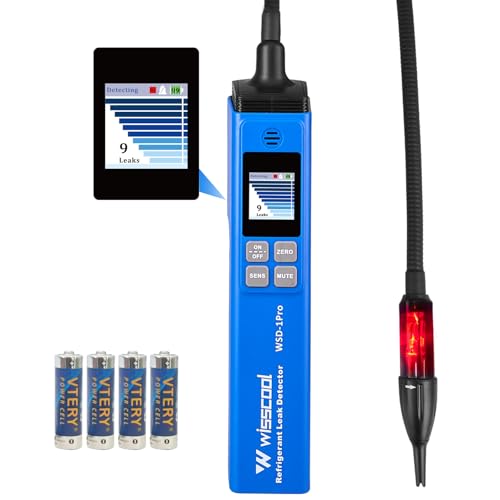
- Three sensitivity modes with up to 0.1 oz./yr detection
- Color LED display plus audible alarm for clear leak feedback
- 20-inch flexible probe and flashing probe light for tight areas
Best For: Portable leak tracing for HVAC and auto service work
3-in-1 Multi-Refrigerant Scanner

- Covers A1, A2L, and A3 refrigerants plus tracer gas
- Rechargeable design with up to 0.14 oz./yr sensitivity
- 2.8-inch TFT display with Peak Mode and Reset Function
Best For: Broader refrigerant compatibility across HVAC and refrigeration systems
Digital HVAC Manifold Tester – AUTOOL LM150 Digital HVAC Manifold Gauges
The AUTOOL LM150 is a refrigerant identifier testing equipment option for technicians who want manifold-style diagnostics plus refrigerant data in one digital tool. It combines dual pressure, dual temperature, and vacuum level detection with a built-in refrigerant database for HVAC and refrigeration work.
Best For: HVAC and automotive techs who want a digital manifold gauge with refrigerant identification features.
Pros:
- Dual pressure and dual temperature measurements for broader system testing
- Built-in refrigerant database supports subcooling and superheating calculations
- Pressure hold leak detection helps compare test pressures for troubleshooting
- Multi-unit support makes it easier to work across different service preferences
Cons:
- Heavier than a basic handheld tester at 3700 g
- Focused on manifold diagnostics, so it may be more tool than some users need
For users who need refrigerant identifier testing equipment with added pressure and temperature monitoring, the LM150 offers a strong all-in-one approach. Its digital display, data storage, and vacuum measurements make it practical for detailed service work rather than quick spot checks.
Analyzer with Printer – Robinair R-ID Plus Refrigerant Analyzer
The Robinair 16995 R-ID Plus is refrigerant identifier testing equipment built for checking R-134a and R-1234yf purity before service. It is designed for technicians who need fast pass/fail results, SAE J2912 compliance, and a convenient way to print test output on the spot.
Best For: Automotive A/C techs who need a refrigerant analyzer with built-in result printing.
Pros:
- Analyzes refrigerant purity for R134a and R-1234yf systems
- Built-in internal printer prints final test results
- Large 5-inch color LCD makes results easy to read
- Supports multiple languages and includes Bluetooth and USB connectivity
Cons:
- Designed specifically around R134a and R-1234yf use cases
- More specialized than a general-purpose HVAC diagnostic tool
If you want refrigerant identifier testing equipment that focuses on service readiness and documentation, the R-ID Plus is a practical choice. Its compliance-oriented design and built-in printer make it well suited for busy professional shops.
Portable Automotive Identifier – Inficon AST-ID Automotive Refrigerant Identifier
The Inficon AST-ID is refrigerant identifier testing equipment designed to identify R1234yf and R134a in automotive service settings. It samples vapor from cylinders or vehicles and is SAE J2912 approved, making it a straightforward option for technicians who need refrigerant verification before proceeding with A/C work.
Best For: Technicians who want a portable refrigerant identifier for R1234yf and R134a systems.
Pros:
- Identifies both R1234yf and R134a refrigerants
- SAE J2912 approved for automotive refrigerant identification
- Can sample vapor from cylinders or vehicles
- Rechargeable lithium-ion battery supports portable use
Cons:
- Limited to two refrigerant types in the supplied notes
- Uses a rechargeable battery system, so it requires charging management
For buyers comparing refrigerant identifier testing equipment, the AST-ID stands out as a focused handheld verifier rather than a multi-function diagnostics platform. Its portability and approved testing approach make it a solid fit for routine A/C service checks.
Advanced Leak Detector – Fieldpiece SRL2(K7) Advanced Refrigerant Leak Detector
The Fieldpiece SRL2(K7) is refrigerant identifier testing equipment for finding refrigerant leaks across CFC, HFC, HCFC, and blended systems. It is built for fast startup, sealed-sensor durability, and use in contaminated environments where other leak detectors may struggle.
Best For: Technicians who need a fast-starting refrigerant leak detector for mixed-system troubleshooting.
Pros:
- Triggers on CFCs, HFCs, HCFCs, and blends
- Sealed sensor helps it avoid false triggers from oil or moisture
- Works in contaminated environments
- Up and running in less than 30 seconds
Cons:
- It is a leak detector, not a refrigerant purity analyzer
- Battery life is listed at about 8 hours, so longer jobs may need planning
If your priority is refrigerant identifier testing equipment that helps locate leaks quickly, the SRL2(K7) is a practical field tool. Its broad refrigerant sensitivity and sealed sensor design make it especially useful when the work environment is less than ideal.
R-134a Protection Pick – Robinair 16009 DiscovR Refrigerant Identifier
If you need refrigerant identifier testing equipment for R-134a service, this Robinair unit is built to help you avoid contaminated refrigerant before it reaches your recovery and recharge machine. It gives a simple pass/fail result and warns when the system contains excessive air, making it a practical front-line check for shop protection.
Best For: Shops that want a straightforward R-134a identifier to help prevent damage from mixed or impure refrigerant.
Pros:
- Pass/fail lights make it easy to judge whether refrigerant is pure enough to recover.
- Helps protect R134a recovery, recycle, and recharge equipment from contaminated refrigerant.
- Notifies you when the system contains excessive air.
- Compact, lightweight unit at 1.5 pounds.
Cons:
- Designed specifically around R-134a service.
- Warranty details are vendor-discretion based rather than a fixed published term.
This is a focused, practical identifier for anyone trying to screen R-134a before service work begins. Its strength is simplicity: clear pass/fail feedback and protection-minded testing in a compact package.
Leak Search Tool – Elitech LD-100+ Refrigerant Leak Detector
When your goal is locating leaks rather than verifying refrigerant purity, this refrigerant identifier testing equipment category pick works as a halogen leak detector with a heated diode sensor. It supports R134A, R410A, R1234YF, R600a, R290, and many other halogenated refrigerants, and it offers both automatic and manual detection modes for tighter or more complex leak searches.
Best For: Technicians who need a versatile halogen leak detector for automotive and refrigeration leak finding.
Pros:
- Heated diode sensor is designed for high precision and longer life.
- Detects a wide range of refrigerants and halogenated gases, including CFCs, HFCs, HCFCs, HCs, HFOs, and blends.
- Automatic and manual modes help in different leak-finding scenarios.
- Fast warm-up and response, with 3 adjustable sensitivity levels.
Cons:
- This is a leak detector, not a refrigerant purity identifier with pass/fail recovery screening.
- Battery-powered operation means you’ll need to manage charge or battery replacement.
This model is a strong fit if your priority is tracing leaks across multiple refrigerants and system types. It emphasizes speed, sensitivity, and broad compatibility more than certification-style purity testing.
R1234yf Analyzer – Mastercool 691234YF-MINI Refrigerant Identifier
For R1234yf service, this refrigerant identifier testing equipment option is aimed at fast pass/fail analysis before recovery begins. It uses NDIR technology to confirm 95%+ purity, flags excess air and illegal hydrocarbon blends, and includes the accessories needed to get into field use quickly.
Best For: Mobile and shop technicians who need a compact R1234yf purity analyzer with contamination screening.
Pros:
- NDIR technology provides fast, reliable pass/fail refrigerant purity results.
- Detects excess air plus illegal hydrocarbon blends like propane or butane.
- Includes sample hose, 12 VDC power cord, and manual calibration bulb.
- Compact, rugged design with molded ABS housing and rubber sleeve.
Cons:
- Built specifically for R1234yf systems rather than a broad multi-refrigerant platform.
- Requires calibration and uses a replaceable brass filter to protect the sensor.
This is a field-friendly choice when you want a portable R1234yf identifier with clear contamination screening and a professional accessory kit. Its compact build and NDIR sensing make it well suited to service work where speed and confidence matter.
Precision Halogen Leak Finder – Heated Diode Refrigerant Leak Detector
If you need refrigerant identifier testing equipment for HVAC troubleshooting, this heated diode leak detector is built for fast spot-checking. It offers three sensitivity levels, a 20-inch probe for tight access, and support for a wide range of halogenated refrigerants, including HFCs, HCFCs, CFCs, HFOs, and common blends.
Best For: Technicians and DIY users who want a battery-powered refrigerant identifier testing tool for general leak detection across many common HVAC and automotive refrigerants.
Pros:
- Three sensitivity settings with max sensitivity up to 0.1 oz./yr.
- Heated diode sensor is designed for precise halogen refrigerant detection.
- 20-inch probe helps reach confined or hard-to-access areas.
- LCD screen shows sensitivity and leak level in real time.
Cons:
- Requires batteries, so runtime depends on battery condition.
- Focused on leak detection rather than full-system refrigerant analysis.
- Best results depend on proper probe placement and sensitivity selection.
Overall, this is a practical refrigerant identifier testing equipment option if your main job is finding leaks quickly and clearly. Its simple controls, visual readout, and broad refrigerant compatibility make it a solid everyday detector for HVAC and auto A/C work.
Color-Display Service Probe – WISSCOOL Refrigerant Leak Detector
For refrigerant identifier testing equipment that balances portability with clear feedback, this WISSCOOL leak detector is aimed at field diagnostics. It uses a heated diode sensor, three sensitivity modes, and a colorful LED display to help locate leaks in HVAC and auto applications, including many HFC, HCFC, CFC, PFC, and HFO refrigerants.
Best For: HVAC technicians and auto repair pros who want a lightweight refrigerant identifier testing tool with visible leak-level feedback.
Pros:
- Three sensitivity levels with max sensitivity up to 0.1 oz./yr.
- Color LED screen shows leakage and sensitivity levels in real time.
- Audible alarm plus flashing red probe light helps in dark or narrow areas.
- 20-inch flexible probe supports access to hard-to-reach spots.
Cons:
- Warm-up time is 35 seconds before use.
- Battery-powered operation means you need to manage AA batteries.
- Like most sniffers, it is for leak location rather than deep system diagnostics.
This model stands out if you want easy-to-read refrigerant identifier testing equipment with clear visual cues. The combination of sound, light, and adjustable sensitivity makes it a useful choice for quick service calls and on-site leak tracing.
3-in-1 Multi-Refrigerant Scanner – Aprvtio ALD-200 Leak Detector
If you want refrigerant identifier testing equipment that covers more refrigerant families, the Aprvtio ALD-200 is designed for A1, A2L, and A3 applications. Its heated diode sensor, rechargeable battery, and color TFT display make it a more feature-rich leak detector for HVAC, refrigeration, and automotive use.
Best For: Professionals and serious DIY users who need a rechargeable refrigerant identifier testing tool with broad refrigerant compatibility and a color display.
Pros:
- 3-in-1 detection for A1, A2L, and A3 refrigerants plus tracer gas.
- Sensitivity adjusts up to 0.14 oz./yr for micro leak detection.
- 2.8-inch TFT color display improves visibility in different lighting conditions.
- Peak Mode and Reset Function help reduce false alarms and capture readings.
Cons:
- Setup requires charging, warm-up, and auto-zero calibration in clean air.
- More features may be more than casual users need for simple leak checks.
- It is still a leak detector, not a complete refrigerant analysis instrument.
This is the most versatile refrigerant identifier testing equipment in the group if compatibility matters most. Its broader refrigerant coverage, rechargeable design, and helpful display features make it well suited to technicians who work across multiple systems and refrigerant types.
How We Picked the Best Refrigerant Identifier Testing Equipment
We prioritized Refrigerant Identifier Testing Equipment that helps technicians make fast pass/fail decisions, reduce the risk of mixed refrigerants, and work efficiently in real-world service environments. Key factors included refrigerant compatibility, detection method, portability, display clarity, and whether the unit offers a clear identification result rather than only leak-finding capability.
Quick Comparison
Not all tools in this roundup serve the same job. Refrigerant identifiers are designed to verify refrigerant type and contamination before recovery or charging, while leak detectors are built to locate escaping gas. Some products here are true identifiers, while others are specialized leak detectors that may still be useful in a broader HVAC toolbox.
Key Buying Factors for Refrigerant Identifier Testing Equipment
Refrigerant Compatibility
Check whether the tool supports the refrigerants you service most often, such as R-134a, R-1234yf, R-410A, R-32, or A2L blends. If you work on newer vehicle systems, compatibility with low-GWP refrigerants is especially important.
Test Method and Result Type
Look for a straightforward pass/fail result if your main goal is protecting recovery equipment from contaminated refrigerant. NDIR-based analyzers are common in premium identifiers because they can help distinguish air or mixed refrigerants more effectively than simple sniffers.
Portability and Workflow
For mobile technicians, compact size, fast warm-up, battery life, and readable output matter. Features like internal printing, easy calibration, and simple menus can reduce downtime during busy service calls.
Durability and Service Protection
The best Refrigerant Identifier Testing Equipment is not just accurate; it also helps safeguard your investment in recovery machines, cylinders, and charging equipment. A reliable pre-check can prevent costly contamination across an entire shop.
Who Should Buy Which Refrigerant Identifier Testing Equipment?
If you need to verify refrigerant purity before recovery or charging, choose a true identifier or analyzer. If your work is mostly diagnostics and locating leaks, a dedicated leak detector may be the better fit. Shops handling mixed fleets should look for flexible, multi-refrigerant support, while specialists servicing one platform can prioritize simplicity, speed, and compact form factor.
In short, match the tool to the task. The right Refrigerant Identifier Testing Equipment should reduce risk, speed up decisions, and fit the way you actually service HVAC systems.