Building a network-attached storage system around your own PC hardware gives you more control over performance, drive capacity, upgrades, and software than most prebuilt solutions. The right enclosure can also make installation, cooling, and future maintenance much easier.
This roundup compares 10 NAS enclosures for PC, including compact multi-bay cases, external USB storage enclosures, rackmount chassis, and complete mini NAS systems. Use the guide below to match bay count, motherboard support, connectivity, and expansion potential to your storage plans.
Best 10 Nas Enclosures for PC Picks for 2026
Best Overall

- Five SATA bays with up to 174TB capacity
- Ryzen 7 255 and up to 96GB DDR5 RAM
- 10GbE, 5GbE, USB4, RAID, and ZFS features
Best For: High-performance home labs, media storage, and multi-user NAS workloads
Best Rackmount Build
Rosewill RSV-L4500U 4U Server Chassis
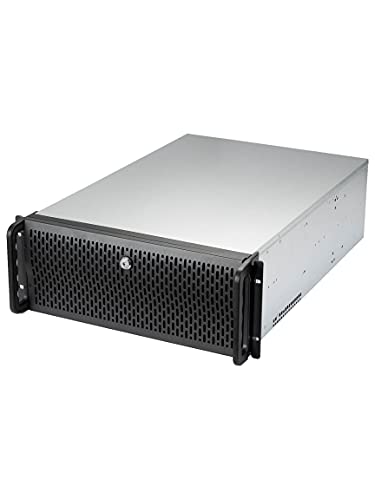
- 15 internal 3.5-inch drive bays
- E-ATX support and seven PCI expansion slots
- Eight pre-installed fans and front status indicators
Best For: Custom, high-capacity NAS and storage-server builds
Best Simple DAS
TERRAMASTER D4-320 4-Bay Enclosure

- Four-bay USB 3.2 Gen 2 DAS
- Up to 120TB total listed capacity
- Hot-swappable, tool-free drive trays
Best For: Direct-attached storage for Windows, Mac, and Linux PCs
Best DIY PC Case
DARKROCK Classico MAX NAS Case

- Supports up to 10 HDDs and 3 SSDs
- ATX, Micro-ATX, and Mini-ITX compatible
- Mesh panels, four fans, and 360mm radiator support
Best For: Custom NAS builds using standard PC components
Best Pocket NVMe NAS
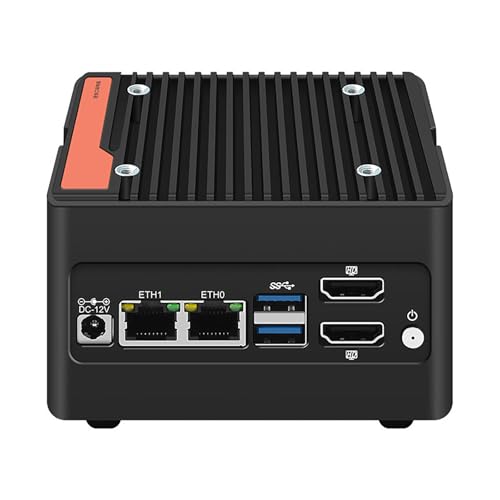
- Four M.2 2280 NVMe storage positions
- Dual 2.5GbE LAN and dual HDMI 2.0
- Compact aluminum chassis with active cooling
Best For: Portable, high-speed NVMe NAS builds
Best High-Capacity DIY NAS Case

- Holds up to 11 3.5-inch hard drives
- Supports ATX, Micro-ATX, Mini-ITX, and BTF
- Mesh front panel with four 140mm PWM fans
Best For: Large DIY NAS and media-server builds
Best Compact Hot-Swap NAS Case

- Four hot-swap bays for 3.5-inch or 2.5-inch drives
- Mini-ITX and Flex PSU compatible
- Includes a 120mm rear cooling fan
Best For: Compact four-drive TrueNAS or OMV builds
Best ATX NAS Case

- Supports up to eight 3.5-inch HDDs
- Fits ATX, Micro ATX, and Mini-ITX boards
- Mesh airflow with four 140mm PWM fans
Best For: Expandable DIY NAS and media server builds
Best External DAS Enclosure
CENMATE 6-Bay Hard Drive Enclosure

- Holds six 2.5-inch or 3.5-inch SATA drives
- Tool-free and hot-swappable drive bays
- USB-A/C 3.0 connectivity up to 5Gbps
Best For: Expandable local storage without RAID or NAS features
Best Simple Pick
8-Bay Mini ITX Micro ATX NAS Case

- Eight hot-swap bays for HDDs or SSDs
- Supports Mini-ITX and Micro-ATX boards
- Separate airflow channels with three quiet fans
Best For: Compact home media servers and backup systems
Best Overall – MINISFORUM N5 Air 5-Bay NAS
For shoppers comparing nas enclosures for pc use, the MINISFORUM N5 Air stands out as a complete, high-performance desktop NAS rather than an empty case. It combines five SATA bays, M.2 expansion, substantial memory support, and fast networking for demanding storage, backup, media, and multi-user workloads.
Best For: Users who want a ready-to-use, expandable NAS with high-speed networking and strong processing performance.
Pros:
- Five SATA bays support up to 174TB, with three M.2 slots for additional SSD storage.
- Ryzen 7 255 processor, up to 96GB DDR5 RAM, and dual 10GbE/5GbE networking support demanding workloads.
- Includes RAID options, ZFS snapshots, Docker support, remote access, and multi-user features.
- Triple 8K display output, USB4, PCIe x16, and OCuLink provide broad expansion potential.
Cons:
- It is a complete NAS system, not a traditional empty PC enclosure.
- OCuLink does not support hot-swapping.
- Its advanced features may be more than a basic home storage setup requires.
The N5 Air is the strongest all-in-one option here for users who value performance, expandability, and built-in NAS software. Its combination of storage capacity and connectivity makes it especially suited to media-heavy or collaborative environments.
Best Rackmount Build – Rosewill RSV-L4500U 4U Server Chassis
The Rosewill RSV-L4500U is a practical choice among nas enclosures for pc builders who want to assemble a rackmount-style storage server. Its 4U format, 15 internal 3.5-inch bays, E-ATX compatibility, and multiple expansion slots leave room for a substantial custom NAS build.
Best For: DIY NAS builders needing many hard-drive bays, full-size motherboard compatibility, and active cooling.
Pros:
- Provides 15 internal 3.5-inch HDD bays for large storage arrays.
- Supports E-ATX motherboards and offers seven PCI expansion slots.
- Eight pre-installed fans are designed to promote airflow around the drives and chassis.
- Front USB 3.0 ports, status LEDs, and a locking front panel add useful server-oriented features.
Cons:
- It is an empty chassis, so the motherboard, storage controller, power supply, and drives must be selected separately.
- Its listed 31-inch depth and 31.1-pound weight may require substantial space.
- The supplied details identify it as a tower-style case, so rack installation requirements should be checked before purchase.
This chassis is best viewed as a high-capacity foundation for a custom NAS or storage server. It offers more drive-bay flexibility than compact enclosures, but setup demands more planning and hardware than a turnkey NAS.
Best Simple DAS – TERRAMASTER D4-320 4-Bay Enclosure
The TERRAMASTER D4-320 is a straightforward alternative for shoppers researching nas enclosures for pc setups but who only need directly attached storage. This diskless four-bay DAS connects over USB-C, supports individual drives without RAID, and works with Windows, Mac, and Linux.
Best For: Users who want expandable USB storage for a computer without configuring a networked NAS.
Pros:
- USB 3.2 Gen 2 provides up to 10Gbps connectivity, with up to 120TB total capacity listed.
- Supports 3.5-inch SATA HDDs, 2.5-inch SATA HDDs, and 2.5-inch SATA SSDs.
- Tool-free trays and hot-swapping simplify drive installation and replacement.
- Temperature-controlled cooling, sound-absorbing panels, and vibration damping target quieter operation.
Cons:
- It is a DAS, not a NAS, so it does not provide network-based storage or built-in RAID.
- The four disks operate individually rather than as a hardware RAID array.
- Drives are not included.
The D4-320 makes sense when simplicity and direct computer access matter more than network sharing. It is easy to expand and manage, but buyers specifically seeking NAS functions should choose a network-capable enclosure instead.
Best DIY PC Case – DARKROCK Classico MAX NAS Case
For builders seeking nas enclosures for pc projects, the DARKROCK Classico MAX provides a full-tower platform for combining ordinary PC components with substantial local storage. It accommodates up to ten 3.5-inch HDDs and three 2.5-inch SSDs, while supporting ATX, Micro-ATX, and Mini-ITX motherboards.
Best For: DIY NAS builders who want a versatile full-tower PC case with extensive drive capacity and cooling options.
Pros:
- Supports up to 13 drives: ten 3.5-inch HDDs and three 2.5-inch SSDs.
- Compatible with ATX, Micro-ATX, and Mini-ITX motherboards.
- Mesh front and side panels, four included 120mm fans, and dust filtering support airflow.
- Supports 360mm radiators and vertical GPU mounting for flexible PC configurations.
Cons:
- It is a PC case rather than a complete NAS, so all computing, networking, and storage components are separate.
- A vertically mounted GPU or large radiator may affect internal drive and component planning.
- The supplied details list USB port counts inconsistently, so front-panel connectivity should be verified.
The Classico MAX is a flexible choice for a custom NAS built around standard PC hardware. Its drive support is substantial, and its cooling features suit powerful components, though the final NAS capabilities depend on the parts and operating system installed.
Best Pocket NVMe NAS – 4-Bay i3-N305 Mini NAS Server
For shoppers comparing nas enclosures for pc setups, this compact Mrroute server combines an i3-N305 processor with four NVMe drive positions in a pocket-sized aluminum chassis. It is supplied without RAM or SSDs, so buyers can configure the storage and memory themselves.
Best For: Users building a compact, high-speed NVMe NAS or portable home server with flexible memory and networking options.
Pros:
- Four M.2 2280 NVMe positions support high-speed storage expansion.
- Intel i3-N305 processor, dual 2.5GbE LAN, and dual HDMI 2.0 outputs.
- Compact 100 × 100 × 58.5mm aluminum design with temperature-controlled cooling.
- Supports up to 48GB of DDR5-4800 memory.
Cons:
- RAM and SSDs are not included.
- NVMe-only storage design is less suitable for users needing multiple 3.5-inch hard drives.
This is a strong choice when speed, size, and connectivity matter more than traditional hard-drive capacity. Remember to budget for compatible DDR5 memory and four M.2 NVMe drives.
Best High-Capacity DIY NAS Case – Rosewill Helium NAS Max Case
The Rosewill Helium NAS Max is a spacious ATX mid-tower option for nas enclosures for pc projects that prioritize conventional hard-drive capacity. Its layout supports up to eleven 3.5-inch HDDs, along with ATX, Micro-ATX, and Mini-ITX motherboards.
Best For: DIY NAS builders, media-server users, and small businesses needing many 3.5-inch drive bays and strong airflow.
Pros:
- Supports up to 11 internal 3.5-inch hard drives.
- Compatible with ATX, Micro-ATX, Mini-ITX, and BTF motherboards.
- Mesh front panel and four 140mm PWM fans support airflow.
- Front USB 3.2 Type-C port provides modern connectivity.
Cons:
- Large mid-tower footprint may not suit compact spaces.
- It is a case only, so the motherboard, storage, and other components must be supplied separately.
Choose this enclosure when drive count and expansion room are the main priorities. Its mid-tower format and built-in fans make it better suited to a stationary NAS or media server than a small desktop build.
Best Compact Hot-Swap NAS Case – K3 Mini-ITX NAS Enclosure
Among nas enclosures for pc builds, the AUDHEID K3 focuses on compact SATA storage and convenient drive access. Its four hot-swap bays accept either 3.5-inch or 2.5-inch drives, while the Mini-ITX chassis is designed for TrueNAS, OpenMediaVault, and similar DIY systems.
Best For: Home users and small media-server builders who want four removable SATA drive bays in a compact Mini-ITX enclosure.
Pros:
- Four tool-free hot-swap bays support 3.5-inch and 2.5-inch drives.
- Compatible with Mini-ITX motherboards and Flex power supplies.
- Included 120mm rear fan and ventilated panels support continuous operation.
- Front USB 2.0 ports and drive indicator lights simplify everyday access.
Cons:
- Limited to Mini-ITX motherboards.
- Motherboard, CPU, power supply, and drives are not included.
- Front USB ports are USB 2.0 rather than a faster USB standard.
The K3 is a practical middle ground for a four-drive private cloud or media server. It offers accessible hot-swap storage without the size of a full tower, but buyers should verify Mini-ITX and Flex PSU compatibility before ordering.
Best ATX NAS Case – Rosewill Helium NAS Duo
If you want a full-size foundation for a DIY storage server, the Rosewill Helium NAS Duo is one of the more flexible nas enclosures for pc builds. This ATX mid-tower supports up to eight 3.5-inch hard drives, multiple motherboard sizes, and a 360mm AIO cooler, making it suitable for high-capacity home servers and media systems.
Best For: DIY NAS, media server, and high-capacity storage builds using ATX, Micro ATX, or Mini-ITX hardware.
Pros:
- Supports up to eight 3.5-inch HDDs for substantial storage capacity.
- Compatible with ATX, Micro ATX, Mini-ITX, and BTF motherboards.
- Mesh front panel and four 140mm PWM fans promote airflow.
- Includes front USB 3.2 Type-C and supports 360mm AIO cooling.
Cons:
- Its mid-tower footprint is larger than compact NAS-specific cases.
- The product notes list six internal bays despite advertising support for eight 3.5-inch drives, so bay configuration should be confirmed before purchase.
The Helium NAS Duo is a strong choice when expandability and standard PC hardware matter more than a small enclosure. Its broad compatibility and cooling support give builders room to create a powerful NAS or media server.
Best External DAS Enclosure – CENMATE 6-Bay Hard Drive Enclosure
The CENMATE 6-Bay enclosure is a practical external storage option for users who need additional drives without building a complete PC. Among nas enclosures for pc shoppers, it stands out as a USB-connected DAS rather than a true NAS, with tool-free trays, hot swapping, and support for both 2.5-inch and 3.5-inch SATA drives.
Best For: Desktop or laptop users who need expandable USB storage and do not require built-in RAID or network access.
Pros:
- Holds up to six 2.5-inch or 3.5-inch SATA HDDs or SSDs.
- Tool-free trays and hot-swappable drive support simplify maintenance.
- USB 3.0 offers transfer speeds up to 5Gbps with USB-A/C connectivity.
- Aluminum construction and two fans help manage heat.
Cons:
- It is explicitly a DAS with no RAID or NAS functionality.
- Fan noise is listed at approximately 40–50 decibels.
- Drive capacity and performance depend on the connected computer and individual disks.
This enclosure makes sense for straightforward, locally attached storage expansion. Choose it for flexible USB access and easy drive replacement, but select a network-capable NAS case if remote access or integrated RAID is essential.
Best Simple Pick – 8-Bay Mini ITX Micro ATX NAS Case
This eight-bay enclosure is designed for builders who want a compact, purpose-built chassis for a home server or backup system. It is one of the more specialized nas enclosures for pc projects, supporting hot-swappable 3.5-inch and 2.5-inch drives, Mini-ITX and Micro-ATX motherboards, and separate airflow paths for the drives and mainboard.
Best For: Compact Plex or Jellyfin servers, private cloud storage, surveillance archives, and small-business backups.
Pros:
- Provides eight hot-swap bays for 3.5-inch HDDs or 2.5-inch SSDs.
- Supports Mini-ITX and Micro-ATX motherboards with 1U or FLEX power supplies.
- Dual air channels and three temperature-controlled fans support continuous operation.
- Drive indicator lights and a front USB 3.0 port improve everyday usability.
Cons:
- CPU cooler clearance is limited to 58mm.
- Motherboard, CPU, and other core components are not included.
- Power-supply compatibility is limited to 1U or FLEX formats.
With eight hot-swap bays and a compact steel chassis, this case offers a capable foundation for a customized storage server. Its restricted cooler and power-supply clearances require careful component planning, but the cooling layout and drive access are well suited to always-on use.
How We Picked These Nas Enclosures for PC
We selected products across several DIY storage categories rather than focusing on one enclosure style. The list includes standalone diskless enclosures, full PC cases for custom NAS builds, rackmount chassis, and compact systems with processors and networking already installed.
Our comparisons emphasize practical factors: the number and type of drive bays, support for 3.5-inch hard drives and 2.5-inch SSDs, motherboard and power-supply compatibility, cooling, hot-swap access, physical size, and networking options. Since storage needs vary widely, no single model is ideal for every home lab or media server.
Quick Comparison
| Type | Best For | Main Advantage | Watch For |
|---|---|---|---|
| Mini NAS system | Compact, ready-to-use builds | Integrated CPU and networking | Less hardware flexibility |
| External USB enclosure | Adding storage to an existing PC | Simple plug-and-play setup | USB bandwidth and software limits |
| Mini-ITX NAS case | Small custom servers | Compact footprint | Restricted component space |
| ATX tower case | Expandable home servers | Broad hardware compatibility | Requires more room and assembly |
| Rackmount chassis | Labs and equipment racks | High bay density | Noise, depth, and rack requirements |
Key Buying Factors for Nas Enclosures for PC
Drive Bays and Drive Compatibility
Count your current drives and leave room for growth. A 3.5-inch bay is generally needed for desktop hard drives, while 2.5-inch support is useful for SATA SSDs. Check whether trays are hot-swappable and whether the enclosure supports both drive sizes without adapters.
Motherboard, PSU, and Expansion Support
DIY cases may support Mini-ITX, Micro-ATX, ATX, or E-ATX boards. Confirm the motherboard standard, power-supply format, CPU cooler height, GPU clearance, and expansion-slot layout before buying. A case with generous internal clearance is easier to upgrade later.
Cooling and Noise
Multiple hard drives generate heat, especially during parity calculations or long transfers. Look for front-to-back airflow, replaceable fans, dust filtration, and sensible cable routing. Rackmount models and high-airflow cases may cool well but can be noticeably louder.
Connectivity and Throughput
USB 3.2 Gen 2 and 10Gbps connections are useful for external enclosures, while 2.5GbE or 10GbE networking can reduce transfer bottlenecks. Remember that real-world speed also depends on the drives, network switches, cables, and NAS operating system.
Who Should Buy Which Nas Enclosures for PC?
Choose a Compact Mini NAS or Mini-ITX Case
These options suit apartments, small offices, and home labs where desk space matters. They are a good fit for a few drives, low-power processors, and efficient always-on storage, but internal expansion is usually limited.
Choose an External Four-Bay Enclosure
Buy one if you already have a capable PC and want additional disk capacity without building a complete server. It is the simplest route for backups, media libraries, and bulk storage, provided your operating system supports the intended RAID or pooling setup.
Choose an ATX Tower or Rackmount Chassis
These are better for large libraries, many-drive arrays, virtualization, and long-term upgrades. ATX towers are generally easier to live with at home, while rackmount cases make more sense in a dedicated rack or equipment room.
Before ordering, verify the enclosure’s exact dimensions, included fans, drive-tray layout, connector type, and required accessories. Also confirm whether the product is diskless or includes a complete computer, because the total cost can differ substantially.