The best smart home hubs without cloud access keep essential automations running locally, reduce latency, and give you more control over your devices and data.
Our 2026 picks range from beginner-friendly hubs to advanced platforms supporting Zigbee, Z-Wave, Matter, local APIs, and complex automation rules.
Best 10 Smart Home Hubs Without Cloud Access Picks for 2026
Best Local-Control Foundation

- Preinstalled Home Assistant OS
- Stores home data locally
- USB expansion for Zigbee, Z-Wave, and Thread
Best For: Local-first automation with room to expand
Best Touchscreen Ecosystem Hub

- Customizable 8-inch control panel
- Supports Matter, Zigbee, and Thread
- Designed for Alexa-compatible homes
Best For: Visual control in an Alexa-based smart home
Best Advanced Local AI Gateway

- Local operation without internet access
- One-click Home Assistant deployment
- Built-in AI agent and Matter bridge
Best For: Advanced users wanting local automation and AI
Best Simple Sensor Hub

- Connects up to 64 Tapo devices
- Low-power links for sensors and buttons
- Built-in chime and 90 dB siren
Best For: Basic Tapo sensor routines and alerts
Best Overall

- Local automation continues during internet outages
- Supports Matter, Z-Wave, Zigbee, and Bluetooth
- No subscription required for full platform functionality
Best For: Mixed-brand smart homes with advanced local routines
Best for Long Range

- Executes synced automations locally
- Local API supports Home Assistant integrations
- LoRa range reaches up to 2,034 feet
Best For: Large properties using YoLink devices and local control
Best for Aqara Ecosystems

- Edge Hub architecture prioritizes local automations
- Bridges Aqara devices to Matter ecosystems
- Adds Thread, PoE, and IR control
Best For: Aqara households adding Matter and local scenes
Best Lighting-Focused Pick
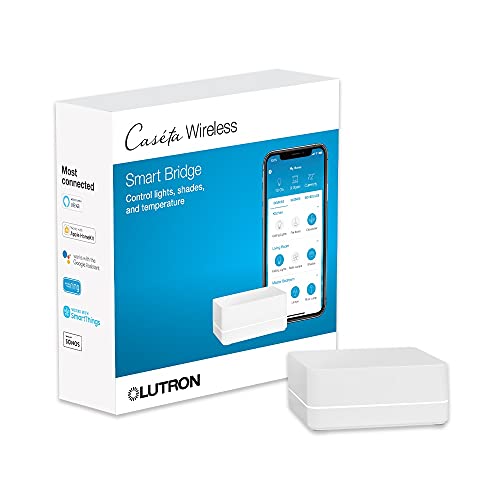
- Supports up to 75 Caseta devices
- Works with Alexa, HomeKit, Google Assistant, Ring, and Sonos
- Uses Clear Connect Technology alongside Wi-Fi
Best For: Lutron Caseta lighting systems needing broad platform compatibility
Best Local-Control Bridge
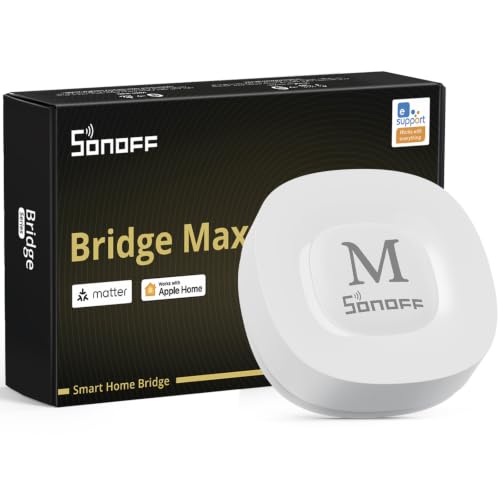
- Local web console with no cloud required
- Bridges Zigbee, BTHome, and eWeLink to Matter platforms
- Supports Home Assistant through MQTT or bridging
Best For: Privacy-focused homes using Zigbee and Home Assistant
Best SmartThings Local-Automation Hub
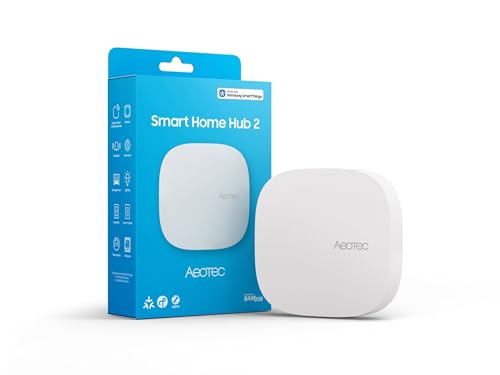
- Supports Matter and Zigbee devices
- Many local automations continue during internet outages
- Connects through Wi-Fi or Ethernet
Best For: SmartThings homes adding Matter and Zigbee devices without Z-Wave
Best Local-Control Foundation – Home Assistant Green
Home Assistant Green | Smart Home hub with Advanced Automation | Official Home Assistant Hardware
Check Price On AmazonFor shoppers seeking smart home hubs without cloud access, Home Assistant Green is a straightforward local-first starting point. Home Assistant comes preinstalled, and the compact, fanless hub stores your home’s data locally while providing room to expand through USB-connected radios.
Best For: Homeowners who want broad automation potential and local data storage in an easy-to-set-up package.
Pros:
- Home Assistant is preinstalled and setup requires connecting power and Ethernet.
- Local data storage lets you view, share, and export your information.
- Supports extensive automation and control from one hub.
- USB expansion supports Zigbee, Z-Wave, and Thread devices with compatible adapters.
Cons:
- Ethernet connectivity is required for the included setup.
- Z-Wave, Zigbee, and Thread connectivity requires separate USB devices.
Green is a strong fit when offline-capable control and flexible automation matter more than a plug-and-play ecosystem tied to one brand. Its preinstalled software reduces the initial setup burden, while USB expansion keeps the platform adaptable.
Best Touchscreen Ecosystem Hub – Amazon Echo Hub
The Echo Hub is a wall-mountable control panel for Alexa-compatible homes, with a customizable dashboard for devices, cameras, routines, and security controls. It supports Wi-Fi, Bluetooth, Zigbee, Matter, Sidewalk, and Thread devices, but buyers prioritizing smart home hubs without cloud access should note its Alexa-centered design.
Best For: Alexa households wanting an at-a-glance touchscreen for controlling compatible smart home devices.
Pros:
- Customizable dashboard with resizable sections and controls.
- Built-in support for Wi-Fi, Bluetooth, Zigbee, Matter, Sidewalk, and Thread devices.
- Can display cameras, activate routines, and manage compatible security systems.
- Offers a mic-off button and multiple privacy controls.
Cons:
- Its features are centered on Alexa-compatible devices and services.
- Ring camera summaries require Alexa+ and a compatible Ring subscription, sold separately.
- Wall-mount cable pass-through hardware, power-over-Ethernet adapter, and tabletop stand are sold separately.
Echo Hub is primarily a convenient visual controller rather than a clearly local-only hub. It makes sense for users already invested in Alexa and compatible devices, but it is a less direct match for a strict no-cloud-access setup.
Best Advanced Local AI Gateway – HomeClaw Smart Home Gateway
HomeClaw is aimed at shoppers comparing smart home hubs without cloud access who also want local automation and AI features. It runs on Linux, can deploy Home Assistant Container with one click, and is designed to keep device data and automation logic on the gateway while continuing to operate without an internet connection.
Best For: Technically confident users who want local Home Assistant control, Matter bridging, remote access, and an integrated AI server.
Pros:
- Local-first processing and storage allow operation without an internet connection.
- One-click Home Assistant Container installation includes HACS, backups, OTA updates, and watchdog restore features.
- OpenClaw AI can create automations from plain-language instructions.
- Matter bridging connects Zigbee, Wi-Fi, and other devices to Apple Home, Alexa, and Google Home.
Cons:
- Z-Wave and Zigbee connectivity requires a USB dongle sold separately.
- Its Linux, Docker, SSH, and AI features may be more complexity than beginners need.
- Remote access uses a built-in peer-to-peer tunnel, so remote control still depends on connectivity outside the home.
HomeClaw stands out for combining local operation with an unusually broad software feature set. It is a compelling choice for users comfortable with a more capable gateway, especially those who want AI-assisted automation alongside Home Assistant.
Best Simple Sensor Hub – Tapo Smart Hub H100
The Tapo H100 is a compact hub for Tapo sensors, switches, and buttons, but it is not a general-purpose option for shoppers seeking smart home hubs without cloud access. It requires a 2.4GHz Wi-Fi connection and focuses on low-power device links, app control, shortcuts, and alerts within the Tapo ecosystem.
Best For: Tapo users who need a simple hub for sensors, buttons, switches, and an integrated chime.
Pros:
- Supports up to 64 Tapo devices per hub.
- Low-power wireless connections can extend compatible device battery life.
- Can trigger shortcuts, control Tapo devices, and activate a siren up to 90 dB.
- Offers a claimed connection range of up to 30 meters under suitable conditions.
Cons:
- Requires a 2.4GHz Wi-Fi connection.
- Works with Tapo sensors, switches, and buttons rather than serving as a broad multi-brand hub.
- Cannot directly connect to Tapo smart plugs or smart lighting according to the supplied product notes.
The H100 is best viewed as a focused Tapo accessory hub, not a local-first replacement for a broad home automation server. Choose it when simple Tapo sensor routines and alerts are the priority; look elsewhere for offline, multi-brand control.
Best Overall – Hubitat Elevation C-8 Pro
For shoppers seeking smart home hubs without cloud access, the Hubitat Elevation C-8 Pro stands out with local processing for automations, broad protocol support, and no required subscription. It is designed to keep routines responsive even when the internet is unavailable.
Best For: Homeowners building a broad, privacy-focused smart home with mixed-brand devices and advanced automations.
Pros:
- Runs automations locally, including during internet outages.
- Supports Matter, Z-Wave 800 Series, Zigbee 3.0, and Bluetooth.
- Works with Alexa, Google Home, and Apple HomeKit without a recurring subscription.
- Dual external antennas help extend wireless range.
Cons:
- Advanced Rule Machine automations may require a learning curve.
- Some integrations, such as voice assistants and Ring, still depend on their respective ecosystems.
The C-8 Pro is the strongest all-around choice here for users who want extensive device compatibility and genuinely local automation. Its active community and continued updates add value for DIY installations.
Best for Long Range – YoLink Local Hub YS1606
The YoLink Local Hub is a practical option among smart home hubs without cloud access, provided you configure its local rules first. It executes synced automations locally and offers a Local API for integrations such as Home Assistant, while its LoRa connection supports devices at extended distances.
Best For: Large properties and power users who want long-range YoLink device coverage with local automations or Home Assistant control.
Pros:
- Runs pre-configured schedules, timers, and automations locally.
- Offers a Local API for third-party local control centers such as Home Assistant.
- LoRa connectivity reaches up to 2,034 feet under suitable conditions.
- Supports Ethernet or Wi-Fi connection to the router.
Cons:
- Internet is required for initial provisioning and for creating or modifying local rules.
- App and Local API access during a blackout require powered network equipment.
- Its local operation is centered on pre-configured YoLink automations and compatible devices.
Choose the YS1606 when range and local YoLink control matter more than broad multi-protocol compatibility. Be sure to plan backup power for the hub, router, and network switch if outage resilience is important.
Best for Aqara Ecosystems – Aqara Smart Home Hub M3
The Aqara Smart Home Hub M3 is a strong fit for shoppers comparing smart home hubs without cloud access within the Aqara ecosystem. Its Edge Hub design prioritizes local automations, while Zigbee, Thread, Matter bridging, IR control, and encrypted local storage expand its capabilities.
Best For: Aqara users who want local scenes, Matter integration, Thread support, and smart control of compatible infrared appliances.
Pros:
- Prioritizes local control and automation through its Edge Hub architecture.
- Supports Aqara Zigbee, Thread, Matter bridging, Wi-Fi, Bluetooth, and PoE.
- Includes a 360-degree IR blaster with feedback and learning.
- Uses 8GB of end-to-end encrypted local storage and includes no microphone or camera.
Cons:
- Some cloud-based notifications still require an internet connection.
- Zigbee support is for Aqara Zigbee devices rather than third-party Zigbee devices.
- A USB-C power adapter is not included, and stable placement is recommended 6 to 19 feet from the router.
The M3 is especially appealing for an Aqara-centered installation that needs local scenes and Matter connectivity. Its IR and PoE features are useful differentiators, but buyers should account for ecosystem limits and internet-dependent notifications.
Best Lighting-Focused Pick – Lutron Caseta Smart Hub
For shoppers comparing smart home hubs without cloud access, the Lutron Caseta Smart Hub is a focused option for building a dependable Caseta lighting system. It connects to your router and uses Lutron’s Clear Connect Technology, which avoids competing with Wi-Fi-connected devices, while also integrating with Alexa, Apple HomeKit, Google Assistant, Ring, Serena shades, and Sonos.
Best For: Homes centered on Lutron Caseta lighting and broad voice-assistant integration.
Pros:
- Supports up to 75 Caseta devices.
- Works with Alexa, Apple HomeKit, Google Assistant, Ring, Serena shades, and Sonos.
- Clear Connect Technology helps keep Caseta communication separate from Wi-Fi traffic.
- Simple setup through a router connection and the Lutron app.
Cons:
- Designed primarily around Lutron Caseta devices rather than a general-purpose radio hub.
- Caseta dimmers, switches, and coordinating accessories are sold separately.
- The supplied details do not specify fully cloud-free operation.
This hub makes the most sense when lighting reliability and compatibility with major voice platforms matter more than broad local-device support. It is a practical replacement for a Wink hub within a Caseta-focused setup, but buyers specifically seeking confirmed cloud independence should verify the required control path.
Best Local-Control Bridge – SONOFF Bridge Max
Among smart home hubs without cloud access, the SONOFF Bridge Max stands out for its explicitly local web console. It can bridge Zigbee, BTHome, and eWeLink devices to Matter platforms, and it supports LAN-based configuration without requiring an app or cloud service.
Best For: Privacy-conscious users who want local bridging, Zigbee support, and Home Assistant flexibility.
Pros:
- Provides a local web interface with no cloud required for configuration and management.
- Bridges Zigbee, BTHome, and eWeLink devices to Alexa, Google Home, and Apple Home.
- Supports Home Assistant through MQTT or Matter bridging.
- Includes a built-in 90 dB alarm and mobile intrusion notifications when paired with Zigbee sensors.
Cons:
- It is a Matter Bridge, not a Matter Hub or Controller, so it cannot add Matter devices directly.
- Compatibility and local automation options may depend on the connected device ecosystem.
The Bridge Max is the clearest fit here for buyers prioritizing local access and reduced cloud dependence. Ethernet and Wi-Fi connectivity, broad Zigbee support, and Home Assistant integration make it flexible, though its Matter Bridge limitation is important for anyone planning to add native Matter devices.
Best SmartThings Local-Automation Hub – Aeotec Smart Home Hub2
The Aeotec Smart Home Hub2 is a strong choice for shoppers seeking smart home hubs without cloud access, but its positioning is more precise: it supports local automation rather than promising that every feature works without the internet. Powered by SmartThings, it combines Matter and Zigbee support with Wi-Fi or Ethernet setup, and many local automations can continue during temporary internet outages.
Best For: SmartThings users who want Matter and Zigbee support with local routine execution.
Pros:
- Runs many automations locally for improved responsiveness and offline continuity.
- Supports Matter and Zigbee devices, including lights, sensors, plugs, switches, and thermostats.
- Works with Alexa, Google Assistant, and the SmartThings app.
- Offers Wi-Fi or wired Ethernet connectivity.
Cons:
- Z-Wave is not supported.
- It operates within the SmartThings ecosystem and uses the SmartThings app for setup and management.
- Local operation is described for many automations, not necessarily every hub feature.
This hub suits households already invested in SmartThings or planning a Matter-and-Zigbee system with local routines. Its local-processing capability can preserve selected automations during internet interruptions, but buyers who require comprehensive cloud-free control should distinguish that from full offline operation.
How We Picked the Best Smart Home Hubs Without Cloud Access
We focused on hubs that can perform at least some core functions locally, including device control, automation routines, and integrations that do not depend entirely on a remote server. We also considered protocol support, setup difficulty, reliability, privacy features, ecosystem breadth, and long-term flexibility.
“Local” does not always mean completely cloud-free. Some hubs require an account for initial setup, firmware updates, voice assistants, remote access, or optional integrations. Check each manufacturer’s documentation before buying if offline operation is a strict requirement.
Quick Comparison
| Priority | Look for |
|---|---|
| Maximum flexibility | Home Assistant or Hubitat support with broad protocol compatibility |
| Simple setup | A focused hub with a polished app and limited configuration |
| Privacy and local control | Local automations, local APIs, and clear offline documentation |
| Legacy device support | Zigbee, Z-Wave, or a proprietary radio supported by your devices |
| Future-proofing | Matter and Thread support, plus an active update policy |
Key Buying Factors for Local-First Hubs
Protocol Compatibility
Match the hub to the devices you already own. Zigbee and Z-Wave can provide dependable local control, while Matter improves cross-platform compatibility. Wi-Fi-only devices may still rely on a manufacturer cloud unless the hub offers a documented local integration.
Offline Behavior
Look beyond marketing claims. Confirm whether schedules, scenes, sensors, and security-related automations continue working when the internet is disconnected. Also check whether mobile control and voice commands remain available locally.
Automation Depth
Basic routines may be enough for lights and plugs, but advanced users should compare triggers, conditions, variables, presence detection, dashboards, scripting, and event-based rules. More powerful platforms often require more configuration.
Network and Reliability Requirements
Most hubs need wired Ethernet or 2.4GHz Wi-Fi during setup, and some depend on a stable local network. Consider backup power, radio range, mesh repeaters, firmware support, and whether the hub can be restored easily after a failure.
Remote Access and Privacy
If you need control away from home, determine whether remote access uses a vendor relay, a subscription, or your own secure connection. Avoid exposing a hub directly to the internet, and review account, telemetry, and data-retention policies.
Who Should Buy Which Smart Home Hubs Without Cloud Access?
Choose Home Assistant Green or HomeClaw if you want deep customization, extensive integrations, and advanced automation potential. These options suit technically confident users who value control over simplicity.
Choose Hubitat Elevation if you want powerful local rules with a more appliance-like experience and support for common smart-home radios. It is a strong fit for experienced users who prefer less maintenance than a fully self-managed platform.
Choose Aqara, Tapo, Lutron, SONOFF, or YoLink when your home is centered on that brand’s devices and you want straightforward control within a focused ecosystem. Verify local capabilities for each device category before expanding.
Choose Amazon Echo Hub or Aeotec Smart Home Hub2 if display control, voice assistants, or mainstream platform compatibility matters most. These are better for buyers who want convenient ecosystem access alongside selected local functions.