The best memory card readers for Windows make it easy to move photos, videos, and other files without relying on a camera’s slower connection or carrying multiple adapters.
This roundup compares 10 practical options, including USB-A and USB-C models, multi-card readers, and compact adapters for modern laptops, desktops, tablets, and camera workflows.
Best 10 Memory Card Readers for Windows Picks for 2026
Best 4-in-1 Windows Card Reader

- Reads four card types simultaneously
- USB-C and USB 3.0 connectivity
- Up to 160MB/sec in UHS-I mode
Best For: Mixed card formats and USB-A/USB-C Windows devices
Best Dual-Slot Windows Card Reader

- Simultaneous two-card read/write
- Up to 5Gbps USB 3.0 transfers
- No drivers required for supported Windows versions
Best For: USB-A computers using SD and microSD cards
Best Plug-and-Play Windows Card Reader

- Four formats: SD, microSD, MS, and CF
- Works without drivers on Windows
- Blue LED shows power status
Best For: USB-A users sharing a reader across Windows, Mac, and Linux
Best USB-C Windows Card Reader

- USB-C connector with detachable USB adapter
- Supports four major card formats
- Plug-and-play across Windows and other systems
Best For: Mixed USB-C and USB computers handling varied card formats
Best Dual-Interface Pick
UGREEN USB C/USB A Card Reader

- USB 3.0 speeds up to 5Gbps
- Reads SD and microSD simultaneously
- USB-C and USB-A connections
Best For: Photographers and Windows users needing flexible connectivity
Best Compact Dual-Slot Option

- USB 3.0 speeds up to 5Gbps
- Simultaneous SD and microSD access
- USB-C and USB-A compatibility
Best For: Mobile SD and microSD transfers on Windows devices
Best Multi-Format Pick
UGREEN 4-Slot USB 3.0 Card Reader
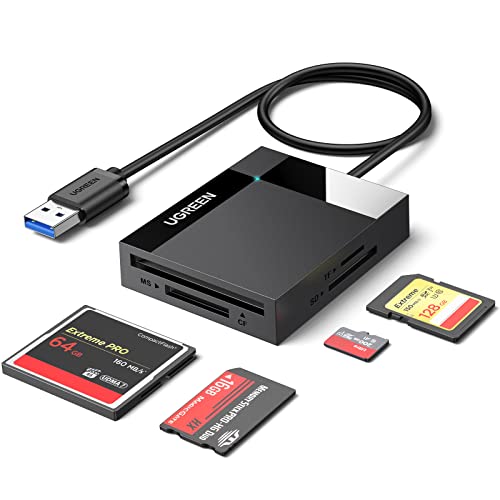
- Supports SD, microSD, CF, and MS cards
- Reads and writes four cards simultaneously
- USB 3.0 transfers up to 5Gbps
Best For: Photographers using multiple card formats
Best Compact Dual-Interface Option
uni USB-C and USB-A Card Reader

- USB-C and USB 3.0 connectivity
- Simultaneous SD and microSD transfers
- Driver-free Windows compatibility
Best For: Users switching between USB-C and USB-A devices
Best Seven-in-One Value
Rocketek USB-C Multi Card Reader

- Seven slots cover modern and legacy card formats
- Reads and writes five cards simultaneously
- Includes USB-C and USB-A connectors
Best For: Windows users with varied memory card collections
Best 4-in-1 Windows Card Reader – BENFEI USB 3.0/USB-C
For shoppers comparing memory card readers for windows, the BENFEI 4-in-1 model stands out for its dual USB-C and USB 3.0 connectivity. It supports SD, microSD, MS, and CF cards, with simultaneous reading and writing across all four slots.
Best For: Windows users who need broad card compatibility and both USB-A and USB-C connections.
Pros:
- Reads and writes four card types at the same time.
- Works with USB-C, USB 3.0, USB 2.0, and USB 1.1 ports.
- Supports transfer rates up to 160MB/sec in UHS-I mode, depending on the card and port.
- Includes an 18-month warranty.
Cons:
- Not compatible with standard Memory Stick, Memory Stick Micro (M2), or CF Type I cards.
- Older Windows versions may not support exFAT-formatted SDXC cards.
This is a versatile choice for Windows laptops with mixed port types and users who regularly handle several card formats. Its integrated dual-connector design also makes it useful across newer USB-C and older USB-A computers.
Best Dual-Slot Windows Card Reader – Anker USB 3.0
If you want a straightforward option among memory card readers for windows, this Anker reader offers a simple USB-A design with SD and microSD support. Its two slots can read and write simultaneously, helping reduce cable and card swapping.
Best For: Windows laptops and desktops with USB-A ports that mainly use SD and microSD cards.
Pros:
- Simultaneously reads and writes two cards.
- USB 3.0 supports transfer rates up to 5Gbps and remains backward compatible.
- Plug-and-play operation requires no drivers for Windows 10, 8, 7, or Vista.
- Powered directly through the USB port.
Cons:
- Uses USB-A rather than USB-C.
- Provides two card slots instead of four.
This compact Anker model is a practical pick when your Windows setup has USB-A ports and your workflow centers on SD and microSD media. It keeps operation simple without requiring a separate power supply or driver installation.
Best Plug-and-Play Windows Card Reader – SmartQ C368 USB 3.0
The SmartQ C368 is a practical four-slot choice for shoppers seeking memory card readers for windows without driver installation. It supports SD, microSD, MS, and CF cards, while its USB 3.0 connection provides a familiar setup for laptops and desktops.
Best For: Windows users who want a plug-and-play USB-A reader with four card formats and a visible status light.
Pros:
- Supports Micro SD, SD, MS, and CF cards.
- Compatible with Windows, macOS, and Linux without additional drivers.
- USB 3.0 supports transfer speeds up to 5Gbps.
- Blue LED indicates when the reader is powered.
Cons:
- Uses a USB-A connection.
- Does not include a memory card.
With four card slots and broad operating-system compatibility, the C368 suits users who share one reader between Windows and other computers. The LED indicator and included cable organizer add useful convenience for travel or desk use.
Best USB-C Windows Card Reader – RRSITIAU 4-in-1
For newer Windows laptops and flexible cross-device use, this RRSITIAU model combines a USB-C connector with a detachable USB adapter. It supports SD, microSD, CF, and Memory Stick cards, making it a versatile option among memory card readers for windows.
Best For: Windows users who need USB-C compatibility plus an adapter for older USB ports.
Pros:
- Supports SD, microSD, CF, and Memory Stick cards.
- Dual-connector design works with USB-C and USB ports.
- Plug-and-play operation requires no additional driver or software.
- Supports Windows, macOS, Android, and iOS devices.
Cons:
- Listed data transfer rate is up to 480Mbps.
- Does not support Wi-Fi SD cards.
- USB-C-to-USB adapter must be attached for older USB ports.
This reader is a good fit for households or workspaces with a mix of current USB-C and legacy USB computers. Its four card slots and cross-platform support make it especially useful for moving photos, videos, and files between devices.
Best Dual-Interface Pick – UGREEN USB C/USB A Card Reader
For shoppers comparing memory card readers for windows, the UGREEN reader stands out for its combination of USB-C and USB-A connectivity, USB 3.0 speeds, and support for two cards at once. It is a compact option for moving photos, videos, and project files between compatible devices.
Best For: Photographers, travelers, and Windows users who need both USB-C and USB-A connections.
Pros:
- USB 3.0 supports data transfer speeds up to 5Gbps.
- Reads SD and microSD cards simultaneously.
- Plug-and-play operation without drivers or external power.
- Supports Windows, macOS, Linux, Chrome OS, and Android.
Cons:
- Supports SD and microSD formats rather than a broad range of legacy card types.
- Its USB-C connection may require an adapter for devices with neither USB-C nor USB-A.
The UGREEN is a practical all-around choice when fast transfers and flexible port compatibility matter more than legacy-media support. Its small design and dual-slot layout also suit mobile workflows.
Best Legacy-Format Value – onefavor All-in-One Card Reader
Among memory card readers for windows, this onefavor model is geared toward users with older cameras and a wide mix of removable media. Its four-slot design supports formats including CompactFlash, SmartMedia, xD, Memory Stick, SD, MMC, and MicroDrive through a USB-A connection.
Best For: Windows users who need access to legacy camera cards and multiple card formats.
Pros:
- Supports an unusually broad range of legacy and current card formats.
- Four slots can work simultaneously.
- Plug-and-play operation with no extra driver installation.
- USB-powered pocket-sized design includes a 23-inch cable.
Cons:
- Uses USB 2.0 rather than USB 3.0.
- Connects through USB-A only.
- Cannot read 1M, 2M, 4M, or 5V cards.
This reader makes the most sense for archiving files from older cameras or maintaining access to varied media collections. Its broad format support is useful, though transfer speeds and connectivity are less modern than newer USB 3.0 readers.
Best Compact Dual-Slot Option – Acer USB-C SD Card Reader
This Acer model is a strong contender among memory card readers for windows if you want fast transfers, dual-card access, and both USB-C and USB-A connections. It handles SD and microSD media, making it suitable for cameras, GoPros, security cameras, and other compatible devices.
Best For: Windows laptop users, photographers, and editors transferring SD and microSD files on the go.
Pros:
- USB 3.0 provides data transfer speeds up to 5Gbps.
- Reads and writes SD and microSD cards simultaneously.
- Works with USB-C and USB-A devices without driver installation.
- Compact aluminum design includes protective port covers and an attached cord.
Cons:
- Does not support CF Express, CF, XQD, MS, or Memory Stick cards.
- Not compatible with Lightning-port devices.
- Thick device cases may prevent full insertion.
The Acer reader offers a balanced mix of speed, portability, and modern device compatibility. It is a good fit for SD and microSD workflows, but users with legacy or professional card formats should choose a more specialized reader.
Best Multi-Format Pick – UGREEN 4-Slot USB 3.0 Card Reader
For shoppers comparing memory card readers for windows, the UGREEN 4-slot reader is a versatile choice when you need broad card support and fast USB 3.0 transfers. It accepts SD, microSD, CompactFlash, and Memory Stick formats, and can read and write four cards simultaneously.
Best For: Photographers, creators, and Windows users who regularly work with several card formats.
Pros:
- Supports SD, microSD, CF, MS, and related card types.
- Reads and writes four cards at the same time.
- USB 3.0 offers transfer speeds up to 5Gbps.
- Plug-and-play compatibility with Windows, MacOS, Linux, and ChromeOS.
Cons:
- Uses a USB connection rather than a direct wireless workflow.
- Its four-slot design is larger than a simple single-card adapter.
Choose this model if flexibility matters more than minimal size. Its wide format support and simultaneous access make it especially useful for moving files from multiple cameras or storage cards to a Windows computer.
Best Compact Dual-Interface Option – uni USB-C and USB-A Card Reader
The uni reader is a practical option for memory card readers for windows when you want both USB-C and USB-A connectivity. Its two slots handle SD and microSD cards, while simultaneous reading and writing helps streamline photo, video, and other file transfers.
Best For: Windows laptop users who also move files between USB-C phones, tablets, cameras, and computers.
Pros:
- USB-C and USB 3.0 interfaces support transfers up to 5Gbps.
- Supports simultaneous SD and microSD card access.
- Works without drivers on Windows 11, 10, 8, 7, and Vista.
- Compact design includes protective covers and a tethered cord.
Cons:
- Does not support CF Express, XQD, MS, or Memory Stick cards.
- Lightning devices are not compatible.
- Limited to SD and microSD card formats.
This is a strong fit for everyday SD and microSD transfers, particularly if your setup includes both older USB-A computers and newer USB-C devices. It is less suitable for users who need CF or legacy Memory Stick support.
Best Seven-in-One Value – Rocketek USB-C Multi Card Reader
For buyers seeking memory card readers for windows with extensive format coverage, this Rocketek 7-in-1 adapter is built for variety. It combines USB-C and USB-A connectors with slots for CF, SD, microSD, XD, and MS cards, including simultaneous access for up to five cards.
Best For: Windows users managing a mix of modern and legacy memory cards.
Pros:
- Seven-slot design supports CF, SD, microSD, XD, MS, and related formats.
- Can read and write five cards simultaneously.
- USB-C and USB 3.0 connectors work with many computers, tablets, and phones.
- Plug-and-play compatibility with Windows and several other operating systems.
Cons:
- Its many slots may be unnecessary for users with only SD or microSD cards.
- Compatibility and performance depend on the available USB port.
This reader stands out when card-format coverage is the priority. It is a convenient workstation accessory for users who handle cards from cameras and other devices, while its dual connector design helps accommodate newer and older hardware.
How We Picked the Best Memory Card Readers for Windows
We focused on compatibility, card-format support, connection type, transfer performance, and everyday usability. The selection includes readers for common SD and microSD cards as well as models that support CF, MS, MMC, XD, or other legacy formats. We also considered whether each design suits newer USB-C laptops, older USB-A computers, or both.
Features such as simultaneous card access, plug-and-play operation, compact construction, and included adapters can make a meaningful difference. A reader does not need the highest advertised speed to be useful, but it should match the cards and ports you already use.
Quick Comparison
- Best for broad format support: Choose a multi-slot reader that handles SD, microSD, CF, and additional legacy formats.
- Best for USB-C laptops: Look for a direct USB-C reader or a model with a USB-C connection and reliable device compatibility.
- Best for older PCs: USB-A readers remain convenient and work with many Windows desktops and laptops without a hub.
- Best for portability: Compact single- or dual-slot adapters are easier to keep in a camera bag or travel pouch.
- Best for multiple cards: A reader with simultaneous read/write support can simplify transfers between several cards.
Key Buying Factors for Memory Card Readers for Windows
Connection and Windows Compatibility
Check whether your computer has USB-A, USB-C, or both. USB 3.0 and newer connections can provide faster transfers than USB 2.0, but actual performance also depends on the card, reader controller, computer, and file sizes. Plug-and-play support is preferable because it minimizes setup and driver concerns.
Card Formats and Slot Layout
SD and microSD are the most common formats for cameras, phones, drones, and action cameras. Photographers using professional equipment may also need CF support, while older devices can require MS, MMC, or XD compatibility. Confirm the exact format and capacity standards before buying. If you regularly use more than one card, verify whether the reader can access cards simultaneously rather than merely offering several slots.
Speed and File-Transfer Needs
For occasional documents or a few photos, a basic reader is usually sufficient. Large RAW photo libraries, 4K video, and frequent backups benefit from USB 3.0 or faster connectivity and a reader that supports your card’s rated speed. Advertised maximum speeds are not guarantees, so treat them as best-case figures.
Build, Cable, and Portability
A short integrated cable or compact plug-in design reduces clutter, while a longer detachable cable can be more convenient with desktops. Look for sturdy connectors, clearly labeled slots, and enough spacing to remove cards easily. Avoid forcing cards into shared or tightly arranged slots.
Who Should Buy Which Memory Card Readers for Windows?
Choose a compact USB-C adapter if you use a newer Windows laptop and mainly transfer SD or microSD files. Choose a USB-A reader for a traditional desktop or older laptop. Choose a 4-in-1 or universal reader if you work with several camera formats or want one accessory for multiple devices. Choose a multi-card hub if you frequently manage several cards or need broader format coverage.
Before ordering, compare the reader’s connector with your computer, confirm support for your card type and capacity, and decide whether simultaneous transfers are genuinely useful for your workflow.