The right memory card reader for videographers can reduce offload times, simplify backups, and keep your camera media workflow moving between shoots. The best choice depends on your card formats, computer ports, transfer-speed needs, and whether you edit from multiple locations.
We selected 10 practical options ranging from fast CFexpress Type B readers to versatile multi-card adapters, so you can match your reader to your cameras and production setup.
Best 10 Memory Card Reader for Videographers Picks for 2026
Versatile 4-Card Workhorse

- Reads SD, microSD, MS, and CF cards
- Simultaneous four-card read/write
- USB-C and USB 3.0 connectivity
Best For: Mixed-format media workflows
High-Speed Pro Workflow
ProGrade CFexpress Type B & SD Reader
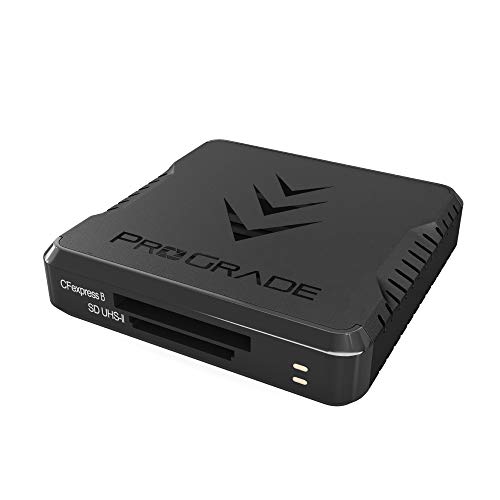
- Supports CFexpress Type B and SD
- Up to 1.25GB/s claimed transfer speed
- Simultaneous dual-card transfers
Best For: Fast professional CFexpress offloads
Expandable Mobile Hub

- Supports SD, microSD, and CFexpress cards
- USB-C with USB 3.2 capability
- Includes extensive card and SIM storage
Best For: Traveling multi-format production kits
Simple USB-C Transfer Tool
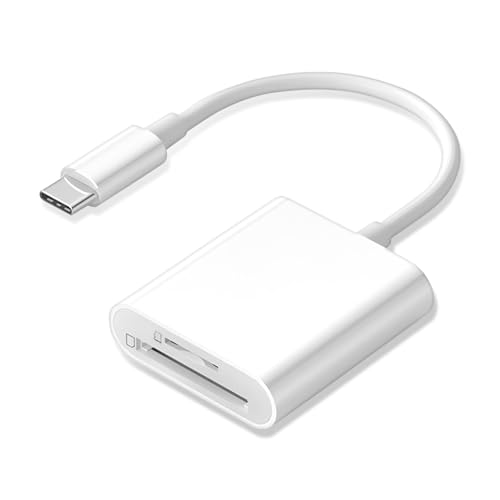
- Supports SD and microSD formats
- Bidirectional plug-and-play transfers
- Compact built-in USB-C cable
Best For: Basic SD workflows on USB-C devices
Fast Workflow Pick
CFexpress Type B & SD 2-in-1 Reader

- 10Gbps USB 3.2 Gen 2 interface
- CFexpress Type B and SD slots
- Built-in USB-C and USB-A connectors
Best For: Videographers using CFexpress Type B and SD cards
Format Flexibility Pick

- Supports seven card-slot options
- Reads and writes up to five cards at once
- USB-C and USB-A connectivity
Best For: Mixed-camera workflows with varied memory card formats
Best Multi-Format Workhorse

- Reads and writes seven cards simultaneously
- Supports SD, CF, MS, MMC, XD, and more
- Includes USB-A and USB-C cables
Best For: Multi-camera workflows with varied card formats
Best Compact Option
Anker USB-C Dual-Slot Card Reader
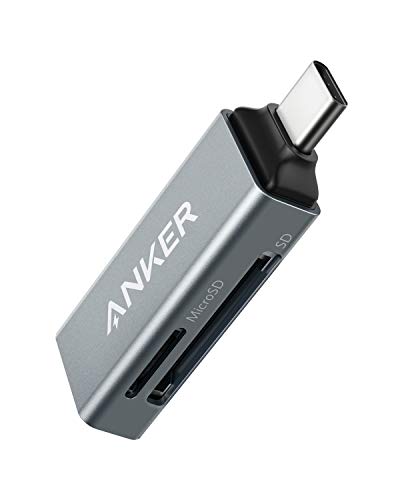
- Lightweight 9g design
- Dedicated SD and microSD slots
- USB-C connection with up to 5Gbps transfer
Best For: Portable SD and microSD workflows
Best USB-C Multi-Card Adapter

- Seven ports with SD, TF, CF, MS, and XD support
- Reads up to five cards simultaneously
- Works with USB-C phones, tablets, and laptops
Best For: USB-C production workflows spanning cameras and mobile devices
Versatile 4-Card Workhorse – BENFEI 4-in-1 Card Reader
For videographers working with mixed media, this memory card reader for videographers supports SD, microSD, Memory Stick, and CompactFlash cards. Its USB-C and USB 3.0 connections make it practical for laptops and other compatible devices, while four cards can be read and written simultaneously.
Best For: Videographers who regularly move footage from several card formats and want broad device compatibility.
Pros:
- Supports SD, microSD, MS, and CF cards.
- Reads and writes four cards at the same time.
- Offers USB-C and USB 3.0 connectivity with claimed UHS-I speeds up to 160MB/s.
- Includes an 18-month warranty.
Cons:
- Not compatible with standard Memory Stick, Memory Stick Micro, or CF Type I cards.
- Actual transfer speed depends on the card and USB port.
- Older operating systems may not support exFAT SDXC cards.
The BENFEI is a flexible choice for crews handling varied camera media. Its simultaneous four-card design is especially useful for organizing or transferring footage from multiple sources, though professionals should confirm their exact card types and host-device ports first.
High-Speed Pro Workflow – ProGrade CFexpress Type B & SD Reader
For high-volume footage transfers, this memory card reader for videographers combines CFexpress Type B and SD support with USB 3.2 Gen 2 connectivity. It is rated for transfers up to 1.25GB/s and can transfer from both cards simultaneously, helping reduce download time during post-production.
Best For: Professional video workflows using CFexpress Type B and SD cards where fast offloads matter.
Pros:
- Supports CFexpress Type B and SD cards.
- Advertises transfer speeds up to 1.25GB/s or 10Gb/s.
- Can transfer data from both cards simultaneously.
- Includes a magnetic mounting system and a two-year warranty.
Cons:
- Only provides two card slots.
- Its performance depends on compatible cards and the host connection.
- The supplied notes specify compatibility with many USB 3.0 Type-A devices, so port requirements should be checked.
The ProGrade stands out for videographers prioritizing rapid CFexpress and SD offloads. Its magnetic mounting plate also suits mobile editing setups, while the two-slot layout keeps the design focused rather than universally compatible.
Expandable Mobile Hub – Freewell USB 3.2 Duo Reader
The Freewell is a versatile memory card reader for videographers who use several card formats and devices. Along with SD and microSD support, its storage-oriented design accommodates CFexpress Type A and Type B cards and includes extra card and SIM storage spaces.
Best For: Traveling photographers and videographers who want a durable, multi-format reader with organized card storage.
Pros:
- Supports SD, microSD, CFexpress Type A, and CFexpress Type B cards.
- Provides USB-C connectivity and USB 3.2 transfer capability up to 10Gb/s.
- Works with Windows, macOS, Linux, Android, and iPadOS.
- Aluminum-alloy construction is compact and portable.
Cons:
- The supplied notes do not provide a specific warranty.
- Its many storage positions may be more than a simple two-card workflow requires.
- Actual speeds vary with the card and connected device.
Freewell’s Duo Reader is aimed at demanding, mobile workflows rather than minimal setups. Its broad format support and built-in storage features can simplify a videographer’s kit, especially when moving between cameras and operating systems.
Simple USB-C Transfer Tool – LBSC Dual-Slot SD Reader
For straightforward camera-to-device transfers, this memory card reader for videographers offers dedicated SD and microSD slots in a compact USB-C design. It supports bidirectional file transfers and plug-and-play use with compatible phones, tablets, laptops, and operating systems.
Best For: Videographers who mainly use SD or microSD cards and want an easy reader for USB-C devices.
Pros:
- Supports SD, SDHC, SDXC, microSD, microSDHC, and microSDXC cards.
- Enables bidirectional transfers for importing and saving files.
- Works without drivers on macOS, Windows, Linux, and Chrome.
- Built-in USB-C cable helps save space around adjacent ports.
Cons:
- Does not support CFexpress, CompactFlash, or Memory Stick cards.
- The listed transfer rate is 68Mb/s.
- USB-C host devices must support OTG where required.
The LBSC is a practical pick for SD-based shooting kits, particularly when reviewing or moving clips on a USB-C phone or tablet. Its limited format range and listed speed make it less suitable for high-throughput CFexpress workflows.
Fast Workflow Pick – CFexpress Type B & SD 2-in-1 Reader
For videographers looking for a memory card reader for videographers, this dual-slot model combines CFexpress Type B and SD support with USB-C and USB-A connectivity. Its USB 3.2 Gen 2 interface is rated up to 10Gbps, making it suited to moving large 4K/8K video files and RAW photos.
Best For: Videographers who use both CFexpress Type B and SD cards and need one reader for newer and traditional computers.
Pros:
- Supports CFexpress Type B cards up to 2TB and SD cards.
- USB-C and USB-A connectors provide broad device compatibility.
- Plug-and-play support for Windows, Mac, Linux, and Android.
- Aluminum construction helps with durability and heat dissipation.
Cons:
- It does not list support for CFexpress Type A or other card formats.
- Maximum transfer performance depends on the card and host device.
This is a strong all-around choice for creators who regularly switch between CFexpress Type B and SD media. The dual-slot design and built-in connector options reduce the need for extra adapters during travel or shoots.
Format Flexibility Pick – 7-in-1 Multi Card Reader
This versatile memory card reader for videographers is designed for mixed media workflows, with support for CF, SD, microSD, XD, MS, and related formats. It uses USB-C and USB-A connections and offers USB 3.0 transfer rates up to 5Gbps for moving photos and videos.
Best For: Videographers and content creators who work with cards from multiple cameras, older devices, or varied production equipment.
Pros:
- Supports a wide range of CF, SD, microSD, XD, and Memory Stick formats.
- Can read and write up to five different cards simultaneously.
- USB-C and USB-A connectors work with laptops, tablets, and phones.
- Compatible with Windows, Mac OS, Linux, Chrome OS, and Android.
Cons:
- Its 5Gbps rating is lower than the 10Gbps speed offered by the other readers here.
- The large format range may be unnecessary for users with only CFexpress cards.
Choose this reader when compatibility is more important than maximum speed. Its seven-slot design can simplify productions involving multiple camera systems, legacy cards, and simultaneous transfers.
Focused Speed Pick – Acer CFexpress Type B Reader
For a streamlined memory card reader for videographers, this Acer model focuses exclusively on CFexpress Type B cards. Its USB 3.2 Gen 2 interface supports transfer rates up to 10Gbps, targeting large 4K/8K video files, high-resolution images, and burst shooting.
Best For: Videographers who use CFexpress Type B exclusively and want a compact reader with USB-C and USB-A connectivity.
Pros:
- USB 3.2 Gen 2 supports transfer rates up to 10Gbps.
- USB-C and USB-A connectors support laptops, desktops, tablets, and smartphones.
- Compact aluminum-alloy design includes a nylon cord for portability.
- Plug-and-play operation works across Windows, Mac, Linux, and Android.
Cons:
- It supports CFexpress Type B only; SD, microSD, XQD, CFexpress Type A, and other formats are excluded.
- Full speed requires a compatible USB 3.2 Gen 2 port and card.
- OTG support is required when using a compatible mobile device.
This is the most focused option of the three. It makes sense for a CFexpress Type B workflow where a single slot is sufficient, but users with SD or other card formats will need a separate reader.
Best Multi-Format Workhorse – 7-in-1 USB 3.0 Card Reader
For videographers managing cards from several cameras, this memory card reader for videographers offers broad format support and simultaneous seven-card read/write capability. Its USB 3.0 interface supports transfer speeds up to 5Gbps, while the included USB-A and USB-C-to-Micro-B cables make it easier to connect to different computers.
Best For: Videographers who work with multiple card formats and want to transfer cards without repeatedly swapping readers.
Pros:
- Reads and writes up to seven cards simultaneously.
- Supports SD, microSD, CF, MS, MMC, XD, SDHC, and SDXC formats.
- USB 3.0 transfer speeds up to 5Gbps with USB 2.0/1.1 backward compatibility.
- Compact 45g design and includes USB-A and USB-C cables.
Cons:
- Uses a Micro USB 3.0 Type-B hardware interface rather than a built-in USB-C plug.
- Its many supported formats may be unnecessary for users who only use SD or microSD cards.
This is the most versatile option of the three for mixed-camera workflows. The included cables and 24-month replacement service add practical value for mobile or studio production setups.
Best Compact Option – Anker USB-C Dual-Slot Card Reader
Videographers who prioritize portability may prefer this compact memory card reader for videographers. It provides separate SD and microSD slots, connects directly through USB-C, and supports transfer speeds up to 5Gbps for compatible devices such as laptops, phones, and tablets.
Best For: Shooters who mainly use SD and microSD cards and want a lightweight reader for USB-C devices.
Pros:
- Ultra-compact 9g design for travel and field use.
- Dedicated SD and microSD slots simplify card swapping.
- Supports SDHC, SDXC, microSDHC, microSDXC, MMC, and UHS-I cards.
- USB-C connectivity works with compatible laptops and smartphones.
Cons:
- Only has two slots and does not support CF, MS, or XD cards.
- May require removing a device case for a proper connection.
- Its listed operating-system compatibility is limited to Chrome OS and Mac OS.
This reader is a strong fit for streamlined SD-based workflows rather than production teams handling numerous legacy formats. Its small footprint makes it especially convenient for editing or reviewing footage away from the studio.
Best USB-C Multi-Card Adapter – 7-in-1 Pro Duo Card Reader
This USB-C memory card reader for videographers is designed for transferring footage directly between cameras, phones, tablets, and laptops. It offers seven card ports, up to 5Gbps transfer speeds, and simultaneous reading of up to five cards, with independent LED indicators to show activity.
Best For: USB-C users who need broad card compatibility and a reader that can move footage across mobile and computer devices.
Pros:
- Provides two SD, two TF, one CF, one MS, and one XD slot.
- Can read up to five cards simultaneously.
- Supports USB-C devices including iPhone 15 models, iPads, MacBooks, and Android devices.
- Aluminum-alloy construction, reinforced cable, and independent slot LEDs.
Cons:
- Requires a USB-C host device or compatible adapter.
- Its listed dimensions are relatively long, which may be less convenient in tight spaces.
- The notes do not specify support for simultaneous writing across all inserted cards.
With its direct USB-C compatibility and wide selection of ports, this adapter suits videographers moving footage between cameras and modern mobile devices. The LEDs and compact construction are useful touches for on-location organization.
How We Picked the Best Memory Card Reader for Videographers
We focused on the factors that matter during real video production: supported card formats, connection standards, simultaneous read/write capability, portability, and device compatibility. The lineup includes dedicated CFexpress Type B readers for high-bitrate footage, SD and microSD readers for common mirrorless and action cameras, and multi-format models for crews using several camera systems.
Product descriptions and specifications were also compared for USB 3.0, USB 3.2, USB-C, USB-A, dual-slot, and hub-style designs. Because advertised interface speeds are maximum theoretical rates, your actual performance will depend on the card, computer, cable, and file system.
Quick Comparison
- Best for CFexpress Type B: Choose a dedicated or dual-slot CFexpress reader with USB 3.2 connectivity.
- Best for SD and microSD workflows: A compact USB-C dual-slot reader is convenient for cameras, drones, phones, and tablets.
- Best for mixed card collections: A seven-in-one or four-in-one reader supports older and less common formats.
- Best for simultaneous transfers: Look for clearly stated multi-card read/write support, but verify whether concurrent use reduces speed.
Key Buying Factors for a Memory Card Reader for Videographers
Card-Format Compatibility
Start with the cards your cameras actually use. SDXC and microSD are widespread, while CFexpress Type B is common in cameras recording demanding codecs and high frame rates. A reader that accepts a card physically may not support every capacity or performance mode, so check the specifications before buying.
Transfer Speed and Interface
USB 3.0 is sufficient for many SD workflows, but USB 3.2 readers are a better match for fast CFexpress cards and large video files. The reader should also match your computer’s port. USB-C describes the connector, not necessarily the speed, so confirm the USB generation and included cable or adapter.
Workflow and Portability
Choose a compact single-card reader for travel or a dual-slot model when you regularly copy footage from two formats. Multi-card hubs are useful for production kits, but they take more space and may be less convenient when you only need SD or microSD.
Reliability and Heat Management
Long transfers can generate heat, especially with high-speed CFexpress media. A sturdy enclosure, secure slot, stable cable connection, and sensible ventilation help prevent interruptions during offloads.
Who Should Buy Which Memory Card Reader for Videographers?
Solo filmmakers and hybrid shooters should choose a fast USB-C SD or CFexpress reader based on their primary camera. Wedding and event videographers may prefer dual-slot or multi-card designs for quicker card rotation and backups. Travel creators benefit from compact USB-C readers that connect directly to laptops, phones, or tablets. Production teams with mixed equipment should consider a multi-format reader, particularly if the kit includes CF, MS, XD, or other legacy media. Before ordering, confirm your card type, host-device ports, operating-system support, and whether the reader can transfer from multiple slots at the same time.