A vertical mouse can help place your hand and forearm in a more natural handshake position, reducing the twisting that may contribute to wrist discomfort during computer use.
We selected 10 ergonomic models across wireless, Bluetooth, rechargeable, wired, compact, and full-size designs so you can find a comfortable match for your workspace and daily routine.
Best 10 Vertical Mouse for Wrist Pain Picks for 2026
Best Overall

- 57-degree upright design with thumb rest
- Wireless operation with up to four months of battery life
- 4000 DPI sensor and cursor-speed switch
Best For: Right-handed office users wanting a premium wireless ergonomic mouse
Best Wired Choice

- Wired handshake grip reduces forearm twisting
- Six customizable buttons and four pointer speeds
- Finger support suits medium to large hands
Best For: Right-handed desk users who want a wired, highly configurable mouse
Best for Small to Medium Hands
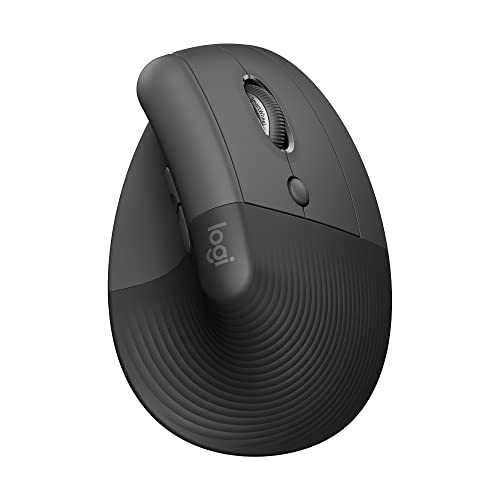
- 57-degree design with soft grip and thumb rest
- Bluetooth and Logi Bolt wireless connectivity
- Up to two years of battery life
Best For: Right-handed users with small to medium hands
Best Wireless Customization

- Neutral upright position for reduced wrist strain
- Six programmable buttons with Windows software
- Adjustable pointer speed from the side controls
Best For: Right-handed users wanting a customizable wireless vertical mouse
Best Multi-Device Pick
TECKNET 3-Device Vertical Mouse

- Bluetooth and 2.4GHz support up to three devices
- Six DPI levels up to 4800
- Quiet primary clicks and 36-month registered warranty
Best For: Right-handed users switching among multiple devices
Best Rechargeable Fit
ProtoArc EM11 NL Vertical Mouse

- Sized for hands under 7.5 inches
- Rechargeable 500mAh battery with USB-C charging
- Connects to three devices and has quiet primary clicks
Best For: Small to medium right-handed users wanting rechargeable operation
Best Budget Simplicity
TECKNET 52-Degree Vertical Mouse

- 52-degree handshake angle for wrist-focused ergonomics
- Compact design for small and medium hands
- 2.4GHz plug-and-play connection with up to 4800 DPI
Best For: Users wanting a simple USB wireless mouse for office work
Rechargeable Comfort Pick
Lekvey Vertical Wireless Mouse

- Neutral handshake-style ergonomic grip
- Rechargeable battery with USB-C charging
- Three DPI settings and browsing buttons
Best For: Medium-to-large-handed right-handed users seeking rechargeable wireless comfort
Multi-Device Precision Pick
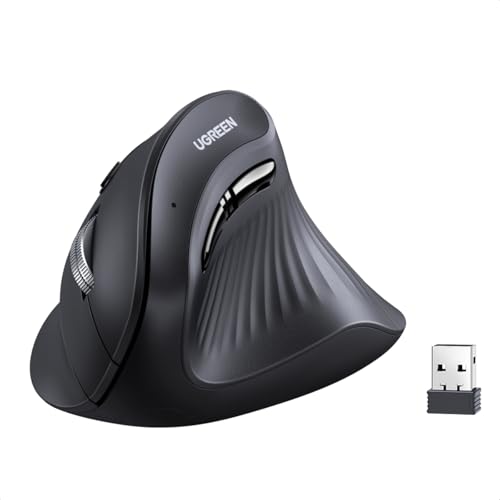
- 57-degree ergonomic vertical angle
- Bluetooth and 2.4G connectivity
- Four DPI settings up to 4000
Best For: Medium-to-large-handed users managing multiple compatible devices
Simple Budget-Friendly Pick

- Neutral vertical ergonomic structure
- Three adjustable DPI levels
- Browsing buttons and automatic power saving
Best For: Right-handed users wanting a simple 2.4G mouse for daily work
Best Overall – Logitech MX Vertical
If you want a polished vertical mouse for wrist pain, the Logitech MX Vertical combines a 57-degree upright design with wireless connectivity, a textured grip, and a thumb rest. Its 4000 DPI sensor and cursor-speed switch can also reduce the amount of hand movement needed during everyday work.
Best For: Right-handed users seeking a premium wireless mouse for office and general computer use.
Pros:
- 57-degree angle supports a more natural wrist and forearm posture.
- Wireless operation offers up to 10 meters of range and up to four months of battery life.
- 4000 DPI tracking and a cursor-speed switch help limit hand movement.
- Ergonomist-tested shape includes a textured surface and thumb rest.
Cons:
- Designed for right-handed use only.
- Offers four buttons, fewer than some productivity-focused alternatives.
The MX Vertical is a strong all-around pick when you want an ergonomic shape without giving up wireless convenience or precise tracking. Its larger form may take some adjustment, but the combination of posture support and customizable cursor speed is well suited to long work sessions.
Best Wired Choice – Evoluent Vertical Mouse VM4
The wired Evoluent VM4 is a practical vertical mouse for wrist pain for users who prefer a direct, dependable connection. Its handshake grip is designed to reduce forearm twisting, while six customizable buttons and four pointer speeds provide flexibility for work and other computer tasks.
Best For: Right-handed users with medium to large hands who prefer a wired mouse and extensive controls.
Pros:
- Upright handshake grip helps reduce wrist strain and forearm twisting.
- Six customizable buttons support shortcuts and productivity workflows.
- Four pointer-speed settings include indicator lights for quick adjustments.
- Finger support helps keep the pinkie from rubbing against the desk.
Cons:
- Wired design is less convenient than a wireless mouse.
- Sculpted specifically for medium to large hands.
- Optional Mouse Manager software is for Windows.
Choose the Evoluent VM4 if control and connection reliability matter more than cable-free convenience. Its hand-size-specific shape and configurable buttons make it especially appealing for desk-based professionals who want to minimize repeated hand movements.
Best for Small to Medium Hands – Logitech Lift
The Logitech Lift is a comfortable vertical mouse for wrist pain aimed at small to medium right hands. Its 57-degree shape, soft textured grip, thumb rest, quiet clicks, and SmartWheel make it a friendly option for focused work in shared or home-office spaces.
Best For: Right-handed users with small to medium hands who want a quiet, long-lasting wireless mouse.
Pros:
- Vertical 57-degree design encourages a more natural forearm posture.
- Bluetooth Low Energy and Logi Bolt provide flexible wireless connectivity.
- Up to two years of battery life reduces battery changes.
- Six buttons, quiet clicks, and a SmartWheel support comfortable productivity.
Cons:
- Right-handed design does not suit left-handed users.
- Its smaller fit may not be comfortable for large hands.
Lift is a particularly approachable choice if traditional vertical mice feel too large or disruptive. The quieter operation and broad device compatibility make it well suited to offices, laptops, and shared work areas.
Best Wireless Customization – Evoluent VM4RW
The Evoluent VM4RW is a configurable vertical mouse for wrist pain with an upright neutral-hand position, six programmable buttons, and on-the-fly pointer-speed controls. It is designed for right-handed use and connects wirelessly through USB for office work, gaming, and other precision tasks.
Best For: Right-handed Windows users who want wireless operation and extensive button customization.
Pros:
- Upright design supports a neutral hand position and aims to reduce wrist strain.
- Six buttons can be customized with Evoluent Mouse Manager software.
- Pointer speed can be adjusted without releasing the mouse.
- Broad bottom lip adds support during prolonged use.
Cons:
- Battery life is listed at about three months.
- Wireless range is listed at five meters.
- Software customization is centered on Windows.
The VM4RW makes the most sense for users who want more control than a basic ergonomic mouse provides. Its programmable buttons and grip-accessible speed controls can reduce repeated movements, while compatibility is listed for Windows, Mac, and Linux.
Best Multi-Device Pick – TECKNET 3-Device Vertical Mouse
If you need a vertical mouse for wrist pain that can move between several computers, this TECKNET model combines a near-vertical right-handed design with Bluetooth and 2.4GHz wireless connectivity. Its six DPI levels and quiet left- and right-click buttons make it adaptable for everyday work.
Best For: Right-handed users who switch between up to three devices and want quiet primary clicking.
Pros:
- Connects with two Bluetooth devices plus a 2.4GHz USB-A receiver.
- Offers six DPI settings from 800 to 4800 for adjustable cursor control.
- Near-vertical palm position is designed to reduce wrist pressure; left and right clicks are nearly silent.
- Compatible with Windows, Mac, Chrome, and Linux, with a 36-month warranty when registered.
Cons:
- Designed for right-handed use only.
- Requires two AAA batteries, which are not included.
- Side buttons are not compatible with macOS, and other function buttons are not silent.
This is a practical choice if multi-device flexibility matters as much as wrist positioning. The battery-powered design avoids charging cables, but buyers should account for the right-hand-only shape and macOS side-button limitation.
Best Rechargeable Fit – ProtoArc EM11 NL Vertical Mouse
For shoppers seeking a rechargeable vertical mouse for wrist pain, the ProtoArc EM11 NL is shaped for small to medium hands and keeps the wrist in a more natural position. It supports three-device connectivity and includes a built-in battery, though new users may need time to adapt to the vertical shape.
Best For: Right-handed users with hand lengths under 7.5 inches who prefer rechargeable, multi-device operation.
Pros:
- Designed specifically for small to medium hands under 7.5 inches long.
- Connects to up to three devices through dual Bluetooth and a 2.4G USB-A receiver.
- Built-in 500mAh lithium-ion battery recharges through the included USB-C cable.
- Quiet left and right clicks, plus forward and back buttons for navigation.
Cons:
- Manufactured for right-handed use.
- Requires a one- to two-week adjustment period for many users.
- Only offers 1000, 1600, and 2400 DPI; navigation buttons do not work with Mac OS.
The EM11 NL stands out when hand size and rechargeable convenience are priorities. Measure your hand before ordering, and expect an adjustment period before judging the vertical grip.
Best Budget Simplicity – TECKNET 52-Degree Vertical Mouse
This TECKNET model is a straightforward vertical mouse for wrist pain with a 52-degree handshake angle, 2.4GHz plug-and-play wireless connection, and a compact shape for small to medium hands. Its high DPI range and quiet main clicks suit routine office work.
Best For: Small to medium right-handed users who want a simple USB-receiver mouse for office tasks.
Pros:
- 52-degree vertical angle is intended to relieve wrist and arm pressure.
- Five DPI settings reach up to 4800 for adjustable tracking.
- Compact 4.13-by-2.55-inch shape is designed for small and medium hands.
- Stable 2.4GHz connection reaches up to 32 feet and needs no drivers.
Cons:
- Uses a USB receiver rather than Bluetooth or multi-device pairing.
- Forward and back buttons are not silent and are not supported on Mac OS.
- Requires a battery, and the supplied notes do not specify the battery type.
This model keeps the setup simple and focuses on an angled grip, compact sizing, and quiet primary clicks. It is a good fit for users who do not need Bluetooth or rechargeable power and can work with a USB port.
Rechargeable Comfort Pick – Lekvey Vertical Wireless Mouse
If you want a vertical mouse for wrist pain that avoids disposable batteries, the Lekvey combines a handshake-style grip with rechargeable wireless operation. Its medium-to-large design may take three to five days to adjust to, but it offers practical controls for everyday browsing.
Best For: Right-handed users with medium or large hands who want a rechargeable mouse for office and home use.
Pros:
- Vertical ergonomic shape encourages a neutral wrist and arm position.
- Rechargeable 600mAh battery can last about three to four weeks with regular daily use.
- Three DPI settings—800, 1200, and 1600—support adjustable pointer control.
- Includes forward and back buttons, USB receiver, and USB-C charging cable.
Cons:
- Recommended for medium or large hands, so it may feel oversized for smaller users.
- Uses a 2.4G USB receiver rather than Bluetooth.
- Buttons are not programmable.
The Lekvey is a convenient choice when charging and broad operating-system compatibility matter. Its vertical shape is designed to reduce strain, though users should allow time to adapt to the different grip.
Multi-Device Precision Pick – UGREEN 57° Vertical Mouse
The UGREEN is a flexible vertical mouse for wrist pain with a 57-degree angle intended to keep the hand and wrist more relaxed. Bluetooth and 2.4G connectivity make it suitable for switching among compatible computers, tablets, and other devices.
Best For: Medium-to-large-handed users who need multi-device wireless connectivity and a wide DPI range.
Pros:
- 57-degree vertical design supports a more natural hand and wrist position.
- Connects through Bluetooth or 2.4G wireless and supports up to three devices.
- Four DPI levels from 1000 to 4000 provide adjustable precision.
- Works with Windows, macOS, Linux, Chrome OS, Android, iOS, and iPadOS within the stated requirements.
Cons:
- Designed for medium to large hands and may not suit smaller hands.
- 2.4G mode requires a USB-A port.
- Device switching requires pressing the switch button, and the system mode must be set correctly.
Choose the UGREEN when connectivity flexibility and higher DPI options are priorities. Its larger palm length and multi-device controls are useful, but users with small hands should consider the fit carefully.
Simple Budget-Friendly Pick – Anker Wireless Vertical Mouse
The Anker Wireless Vertical Mouse is a straightforward vertical mouse for wrist pain that uses a neutral handshake-style design and a 2.4G USB receiver. It offers adjustable tracking, browsing buttons, and automatic power saving for everyday computer work.
Best For: Right-handed users seeking a simple wireless vertical mouse for work, browsing, and general use.
Pros:
- Ergonomic vertical structure promotes a neutral wrist and arm position.
- Adjustable 800, 1200, and 1600 DPI optical tracking supports different sensitivity preferences.
- Next and previous buttons make web browsing more convenient.
- Power-saving mode activates after eight minutes of inactivity.
Cons:
- Uses two AAA batteries, which are not included.
- Connects through a 2.4G USB receiver and does not use Bluetooth.
- Key click sounds are unavoidable.
The Anker is a practical option for users who want a basic vertical design without rechargeable or multi-device features. Its replaceable batteries and simple controls keep setup easy, while the right-handed shape limits flexibility for left-handed users.
How We Picked the Best Vertical Mouse for Wrist Pain
We focused on design features that matter during extended computer use: a genuinely vertical grip, stable tracking, comfortable hand support, practical button placement, and dependable connectivity. We also considered size options, battery or charging arrangements, noise levels, DPI adjustment, and whether a mouse suits office work, travel, or multi-device setups.
A vertical mouse is not a medical treatment, and comfort varies by person. If pain, numbness, or weakness persists, consult a qualified healthcare professional. For the best results, pair an ergonomic mouse with neutral wrist positioning, regular breaks, and a desk setup that keeps your elbow close to your body.
Quick Comparison
| Best For | Look For | Standout Features |
|---|---|---|
| Premium productivity | Precise shaping and reliable wireless | Comfort-focused design, programmable controls, strong build quality |
| Large hands | Longer body and deeper palm support | Roomier vertical grip and broad thumb support |
| Small or medium hands | Shorter reach and accessible buttons | Compact shell with reduced finger stretch |
| Multi-device work | Bluetooth plus 2.4GHz connectivity | Switching between computers, tablets, or phones |
| Quiet offices | Silent or low-noise switches | Less clicking noise during shared-space work |
| Budget buyers | Basic wireless functionality | Affordable ergonomic transition from a standard mouse |
Key Buying Factors for a Vertical Mouse for Wrist Pain
Grip Angle and Hand Size
The most important factor is whether the shell lets your wrist remain relaxed instead of forcing your palm to flatten onto the desk. Check the manufacturer’s recommended hand size, then consider how far your fingers must reach for the primary buttons. A mouse that is too large can strain the fingers; one that is too small may leave your palm unsupported.
Connectivity and Power
Bluetooth is convenient for laptops and tablets, while a 2.4GHz USB receiver generally offers simple plug-and-play use. Dual-mode models are more flexible. Rechargeable mice reduce disposable batteries, but battery-powered options can be easier to keep running during travel.
Controls, Tracking, and Noise
Adjustable DPI helps you balance precision and cursor speed. Extra buttons can improve productivity, but they should be easy to reach without shifting your grip. Silent switches are useful in offices, libraries, and shared rooms.
Desk Setup and Adaptation
Expect an adjustment period when switching from a conventional mouse. Start with shorter sessions, keep the mouse close to your keyboard, and avoid gripping it tightly. A suitable desk height and supportive chair can matter as much as the mouse itself.
Who Should Buy Which Vertical Mouse for Wrist Pain?
Choose a premium Logitech or Evoluent model if you spend long hours working and value refined ergonomics, dependable construction, or advanced controls. Look to TECKNET, ProtoArc, or UGREEN if you want useful wireless features, multi-device connectivity, or rechargeable convenience at a moderate price. Lekvey and Anker are practical entry points for shoppers testing a vertical design without a large investment.
Right-handed users will find the widest selection here, while shoppers with larger hands should prioritize the Evoluent options or any model with a roomier sculpted body. If portability is important, choose a compact rechargeable or Bluetooth model. Whichever option you select, prioritize a comfortable fit over the highest DPI rating or largest number of buttons.