Exploring geology does not require expensive equipment. The best mineral collection kits under $50 make it easy to examine, sort, identify, and learn about rocks, crystals, and gemstones at home or in the classroom.
Our selection ranges from compact starter boxes to larger collections with hundreds of specimens, identification materials, display packaging, or hands-on STEM learning features. Use the guide below to match the kit’s size, educational value, and presentation to the recipient.
Best 10 Mineral Collection Kits Under 50 Picks for 2026
Largest Variety
National Geographic 300+ Rock Collection

- Includes 300+ genuine specimens
- Two break-open geodes included
- Guide, magnifying glass, and storage bag
Best For: Young collectors seeking maximum variety
Display-Ready Pick
DANCING BEAR 18-Piece Rock Collection

- 18 rocks and minerals
- Includes plastic collection box
- Description sheet adds educational context
Best For: Beginners and compact displays
Bulk Specimen Value
450-Piece Crystal and Rock Set

- Approximately 450–500 pieces
- 40+ kinds of crystals and gemstones
- Mix of tumbled chips and rough stones
Best For: Bulk crafts, sorting, and group activities
Best for Sharing
National Geographic 50-Specimen Collection

- 50 specimens for group activities
- 10 carrying bags included
- Over one pound of polished rocks and gems
Best For: Classrooms, parties, and trading
Best All-Around Starter
54-Piece Rock & Mineral Collection

- 54 assorted rocks, crystals, and minerals
- Identification cards, guidebook, and magnifier
- Compartmented display case included
Best For: Beginner collectors, kids, and classroom STEM activities
Best Compact Gift Set
National Geographic 15-Specimen Collection
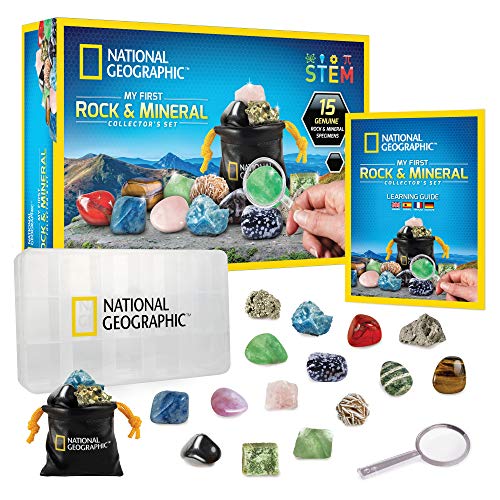
- 15 gemstones and crystal specimens
- Clear case, pouch, and color learning guide
- Includes recognizable stones such as pyrite and rose quartz
Best For: First-time collectors and portable geology gifts
Best for Serious Collectors

- 4 pounds of natural rocks, crystals, and minerals
- Includes a 64-page identification guide
- Designed for collecting, STEM, and geology study
Best For: Adult rock hounds, homeschoolers, and geology learners
Best Overall Variety
48-Piece Gemstone STEM Collection

- 48 natural rocks, minerals, and crystals
- Includes guide and magnifying glass
- Labeled compartments for storage and display
Best For: Kids and beginner collectors wanting a broad, organized geology set
Best for Global Variety

- 36 minerals and crystals from 30+ countries
- Portable storage case included
- Designed for hands-on STEM exploration
Best For: Youth collectors curious about world geology
Best Starter Tool Set

- 30 rocks, gemstones, and crystals
- Includes magnifying glass and brushes
- Full-color guide supports identification
Best For: Young beginners wanting an interactive geology activity
Largest Variety – National Geographic 300+ Rock Collection
For shoppers comparing mineral collection kits under 50, this National Geographic set stands out for its unusually large assortment. It includes more than 300 genuine rocks, minerals, and crystals, plus two break-open geodes, a magnifying glass, storage bag, and learning guide.
Best For: Kids ages 8 and up who want a large starter collection with hands-on geology activities.
Pros:
- Includes over 300 genuine specimens from around the world.
- Two geodes provide an engaging crystal-discovery activity.
- Learning guide and magnifying glass support identification and exploration.
- Storage bag helps keep the collection organized.
Cons:
- The large assortment may be more than a beginner needs.
- Specimen types and quantities may vary across the broad collection.
This is the strongest choice for maximum variety and an activity-focused experience, especially when the recipient wants to examine, identify, and expand a rock collection.
Display-Ready Pick – DANCING BEAR 18-Piece Rock Collection
Among mineral collection kits under 50, the DANCING BEAR set is a compact option for shoppers who prefer a curated display. It includes 18 rocks and minerals, a description sheet with educational information, and a plastic collection box.
Best For: Beginners, classrooms, teachers, or collectors who want a small organized set with display storage.
Pros:
- Compact 18-piece collection is easy to review and organize.
- Plastic collection box doubles as a display and storage case.
- Educational information supports basic geological learning.
- Suitable for a range of younger users and adult rock enthusiasts.
Cons:
- Contains substantially fewer specimens than bulk collections.
- The set does not list hands-on activities such as geode cracking.
This kit makes sense when neat presentation and simplicity matter more than specimen count. Its smaller format is convenient for a first collection or educational display.
Bulk Specimen Value – 450-Piece Crystal and Rock Set
This bulk set is worth considering when comparing mineral collection kits under 50 for quantity and crafting flexibility. It includes approximately 450 to 500 small stones, with tumbled crystal chips, rough stones, and at least 40 listed types of gemstones and crystals.
Best For: Kids’ geology activities, large-group projects, crafts, jewelry making, and collectors who want many small specimens.
Pros:
- Offers approximately 450 to 500 pieces in one package.
- Combines tumbled chips with natural rough stones.
- Includes a broad mix of crystal and gemstone types.
- Small pieces can support crafts, sorting, study, and collection building.
Cons:
- Pieces are small, with listed sizes generally below one inch.
- Contents are random, so exact varieties and quantities may differ.
- The notes do not mention an identification guide or display case.
Choose this set for volume rather than presentation. It provides plenty of material for sorting and creative projects, but buyers wanting larger labeled specimens may prefer a more curated kit.
Best for Sharing – National Geographic 50-Specimen Collection
For mineral collection kits under 50 designed around group use, this National Geographic set offers 50 sharing specimens and more than one pound of polished rocks and gems. It also includes 10 carrying bags, an identification card, and a learning guide.
Best For: Classrooms, homeschool groups, parties, and kids ages 8 and up who want to trade or share specimens.
Pros:
- Includes 50 specimens organized around sharing and group activities.
- Provides 10 carrying bags for distributing collections.
- Features 10 specimens each of pyrite, quartz, desert rose, pumice, and tiger’s eye.
- Learning materials support introductory geology activities.
Cons:
- It is less suited to buyers seeking hundreds of different specimens.
- The collection emphasizes sharing rather than a display case or storage box.
This is a practical pick when several children need their own samples. Its defined specimen groups and carrying bags make it especially useful for classroom lessons, group events, or trading activities.
Best All-Around Starter – 54-Piece Rock & Mineral Collection
If you want mineral collection kits under 50 that offer variety and built-in learning tools, this 54-piece starter set is a strong option. It combines polished gemstones, raw crystals, rocks, and minerals with identification cards, a guidebook, a magnifier, and a compartmented display case.
Best For: Kids ages 8 and up, beginner collectors, classroom activities, and STEM-focused exploration.
Pros:
- Includes 54 assorted specimens, including 9 polished gems and 45 raw stones.
- Comes with illustrated identification and game cards plus a geology learning book.
- Compartment storage case, magnifier, and labeled specimens support organized study.
Cons:
- The compact specimens are approximately 1 to 1.5 inches each.
- The set is designed for beginners rather than advanced mineral collectors.
With its unusually broad selection and educational extras, this kit offers a practical starting point for building a collection and learning basic geology.
Best Compact Gift Set – National Geographic 15-Specimen Collection
Among mineral collection kits under 50, this National Geographic set keeps the format simple and gift-ready. It includes 15 named gemstones and crystals, a clear storage case, a pouch, and a full-color guide for learning about and identifying the specimens.
Best For: Children ages 8 and up, first-time collectors, and compact geology gifts.
Pros:
- Features recognizable specimens such as tiger’s eye, rose quartz, pyrite, and fluorite.
- Clear storage case and pouch make the collection easy to organize and transport.
- Full-color learning guide supports basic rock and mineral identification.
Cons:
- Includes 15 specimens, fewer than the larger collection kits in this roundup.
- Does not list a magnifier or extensive reference book among the included components.
This is a straightforward choice when presentation, portability, and accessible geology learning matter more than specimen quantity.
Best for Serious Collectors – 4-Pound Rock Hound Kit
For shoppers comparing mineral collection kits under 50 with a focus on quantity, this rock hound kit provides 4 pounds of natural rocks, crystals, and mineral specimens. Its 64-page identification guide adds more depth for study, collecting, and homeschool earth science work.
Best For: Adult collectors, rock hounds, homeschool lessons, and classroom geology instruction.
Pros:
- Provides 4 pounds of hand-selected natural specimens for sorting and collection building.
- Includes a detailed 64-page guide covering identification and collection techniques.
- Suitable for STEM education, geological exploration, and mineralogy introductions.
Cons:
- Listed for adults and recommended for ages 18 and up.
- The supplied details do not mention a display case, magnifier, or labeled storage system.
This kit stands out for specimen volume and reference material, making it better suited to hands-on collecting and structured study than to a small decorative starter set.
Best Overall Variety – 48-Piece Gemstone STEM Collection
For shoppers comparing mineral collection kits under 50, this 48-piece set stands out for its broad selection of natural rocks, minerals, and crystals. It combines a full-color identification guide, magnifying glass, and compartmentalized storage case for an organized introduction to geology.
Best For: Kids and beginner collectors who want a large, organized specimen set for learning, displaying, or classroom use.
Pros:
- Includes 48 natural rocks, minerals, and crystals.
- Features specimens such as rose quartz, Desert Rose, red jasper, blue aventurine, and opal.
- Separate labeled compartments make the collection easy to identify and display.
- Includes a learning guide and magnifying glass for closer examination.
Cons:
- The manufacturer recommends it for ages 12 and up.
- The included guide and storage case may be more useful for beginners than advanced collectors.
With the highest specimen count of the three options, this kit is a practical choice when variety and organized presentation matter most. Its educational extras make it especially suitable as a STEM-oriented gift.
Best for Global Variety – 36-Piece World Mineral Kit
This 36-piece option is a strong pick among mineral collection kits under 50 for young learners interested in where specimens come from. Its natural rocks and gemstones are sourced from more than 30 countries and arrive in a portable storage case with a detailed learning guide.
Best For: Youth collectors who want an educational earth-science activity with internationally sourced specimens and portable storage.
Pros:
- Includes 36 unique minerals and crystals.
- Specimens are sourced from more than 30 countries.
- Compact case helps keep the pieces organized and protected.
- Supports hands-on STEM learning and exploration.
Cons:
- It includes fewer specimens than the 48-piece collection.
- The supplied notes do not mention a magnifying glass or other examination tools.
- The recommended age range is broad, so supervision may be appropriate for younger users.
The international sourcing gives this set a distinctive educational angle, while the portable case makes it convenient for carrying and displaying. Choose it when geographic variety is more important than the largest specimen count.
Best Starter Tool Set – 30-Piece Rock Discovery Kit
For buyers seeking mineral collection kits under 50 with useful exploration accessories, this 30-piece kit offers natural rocks, gemstones, and crystals alongside a magnifying glass, brushes, and a full-color study guide. The tools encourage children to inspect and clean specimens as they learn about geology.
Best For: Children ages 6 to 18 and beginner collectors who want an interactive kit with tools for examining specimens.
Pros:
- Includes 30 named rocks, gemstones, and crystals.
- Comes with a magnifying glass and brushes for closer inspection and cleaning.
- Full-color guide supports mineral identification and earth-science learning.
- Includes a gift-ready collection box.
Cons:
- Has fewer specimens than the 36-piece and 48-piece alternatives.
- The extensive listed specimen variety may be more suited to exploration than systematic advanced collecting.
- The supplied notes list the item weight as 1.73 kg, which may make it less convenient for younger children to carry.
This is the most hands-on choice of the group because it includes both cleaning and viewing tools. It makes sense for families prioritizing an engaging starter activity over maximum specimen count.
How We Picked the Best Mineral Collection Kits Under 50
We focused on kits that offer meaningful variety, clear educational value, and useful presentation at an accessible price. Important considerations included the number and range of specimens, whether names or identification information are included, how well the contents suit children or beginners, and whether the collection is practical for displaying, sorting, or classroom activities.
Because specimen counts can include small pieces or tumbled chips, we considered overall learning value rather than treating the largest number as automatically best. Packaging, storage, included guides, and age-appropriate usability also influenced the lineup.
Quick Comparison
- Best for maximum variety: Choose a high-count collection with hundreds of specimens or multiple types of stones.
- Best for beginners: Look for labeled samples and an identification sheet or guide.
- Best for sharing: Sets with several specimens of each type work well for siblings, groups, and classrooms.
- Best for display: Prioritize an organized box with larger specimens and attractive presentation.
- Best for hands-on STEM learning: Choose a kit that encourages sorting, identifying, comparing, and recording observations.
Key Buying Factors for Mineral Collection Kits Under $50
Specimen Count and Variety
A larger count can provide more opportunities for comparison, but verify whether the total includes tiny stones, chips, or duplicates. A smaller kit may be more useful if it offers recognizable specimens and better organization.
Labels and Identification Information
For children and first-time collectors, names, descriptions, and simple geology facts add substantial value. An identification guide can turn a box of stones into a structured learning activity.
Size, Finish, and Safety
Tumbled stones are generally easier to handle and display, while rough specimens may offer more natural texture and geological interest. Check the recommended age, supervise younger children, and keep small pieces away from children who may place objects in their mouths.
Storage and Display
A durable collection box helps prevent lost pieces and makes the set easier to revisit. If display matters, consider specimen size, compartments, labels, and whether the packaging can remain part of the collection.
Who Should Buy Which Mineral Collection Kits Under 50?
Young learners will usually benefit most from a manageable set with labeled rocks, colorful specimens, and straightforward educational information. Beginners and aspiring rock hounds may prefer a larger assortment with an identification guide and enough variety to support ongoing exploration.
Teachers, clubs, and families should look for collections with many pieces or repeated specimens that can be divided among learners. Gift buyers should prioritize presentation and storage, while collectors who already own a starter set may get more value from a larger or more varied collection.