The best engineering building sets for classrooms turn abstract STEM concepts into hands-on challenges. Students can test structures, explore motion, and revise designs while practicing collaboration and problem-solving.
This roundup compares 10 options across bridge building, gears, hydraulics, pulleys, construction, and open-ended maker play, with different age ranges, piece counts, and classroom uses.
Best 10 Engineering Building Sets for Classrooms Picks for 2026
Classroom Bridge Challenges

- 305 pieces for bridge and tower challenges
- Explores real-world bridge types
- Supports groups of up to 10 players
Best For: Collaborative early-elementary engineering activities
Physics in Motion
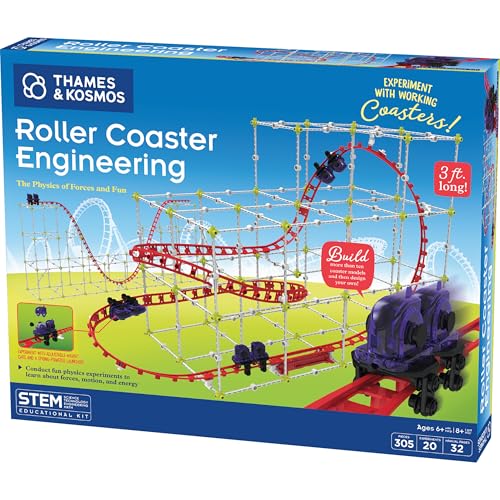
- Build working roller coaster models
- Explores force, motion, and energy
- Includes a 32-page guide
Best For: Physics-centered STEM projects and experiments
Early Mechanics Lab

- 100 pieces with gears and crank
- Explores motion and simple mechanics
- Suitable for ages 3 to 10
Best For: Early STEM centers and fine-motor activities
Structural Engineering Studio
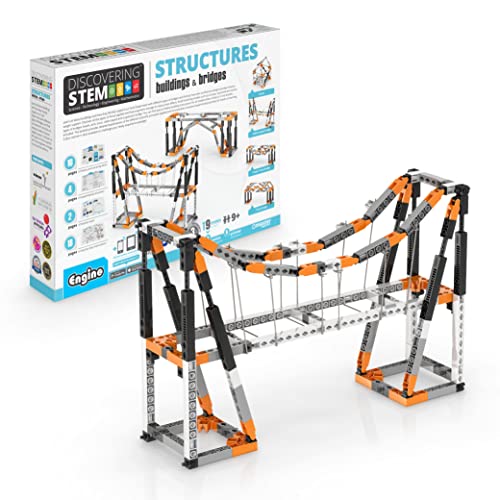
- Builds nine structures and bridge models
- Includes theory, experiments, and a quiz
- Designed for ages 9 and up
Best For: Advanced classroom engineering and science projects
Hands-On Playground STEM
Playground Engineering & Design Set
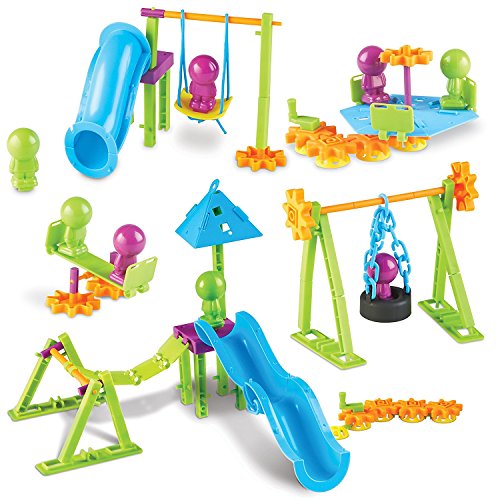
- 104-piece playground-themed STEM building kit
- Includes challenge cards and reproducible worksheets
- Supports guided and open-ended builds for ages 5–12
Best For: Structured classroom STEM activities and small-group building
Build-and-Rebuild Engineering Play
K'NEX Click & Construct 522-Piece Set

- Includes 522 interlocking K'NEX pieces
- Provides instructions for 35 unique models
- Builds can include real moving parts
Best For: Open-ended engineering projects for ages 7 and up
City Design Challenges
City Engineering & Design Building Set
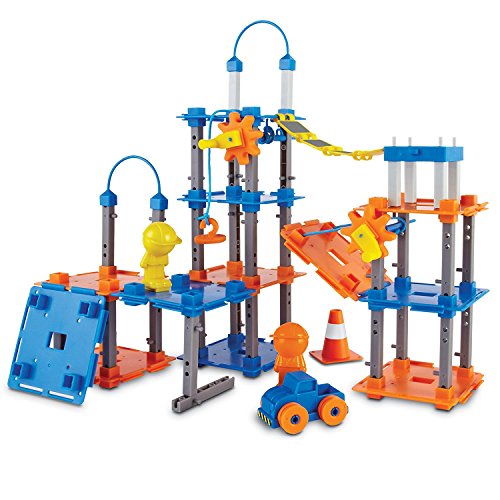
- 89-piece kit for towers, bridges, and city structures
- Activity cards teach the engineering design process
- Designed for ages 5–8 and classroom table use
Best For: Introductory engineering centers for preschool and early elementary students
Hands-On Hydraulics
Real Wood Engineering Maker Set

- Builds hydraulics, gears, levers, and pulleys
- Includes 10 guided challenges and 15 challenge cards
- Durable 156-piece wood construction for repeated use
Best For: STEM classrooms and maker spaces serving ages 8 and up
Collaborative Construction
600-Piece Straw STEM Building Set

- Provides 600 straws and connectors for large builds
- Works for individual or group classroom activities
- Develops spatial reasoning, motor skills, and logic
Best For: Collaborative STEM stations for children ages 3 to 12
Motorized Model Exploration

- Supports 50 different models built one at a time
- Integrated motor brings completed builds to life
- Beginner-friendly design for ages 6 to 12
Best For: Introductory classroom engineering activities for younger learners
Classroom Bridge Challenges – Bridge Builders Set
For classrooms seeking engineering building sets for classrooms, this expanded kit supports collaborative bridge and tower challenges. Students design, construct, test, and revise structures while exploring real-world bridge types and strengthening problem-solving skills.
Best For: Small-group classroom engineering challenges for children ages 5 and up.
Pros:
- Includes 305 interlocking plastic pieces for bridge and tower construction.
- Introduces suspension, beam, and other bridge structures.
- Supports collaboration, critical thinking, and hands-on testing.
- Designed for classroom use with up to 10 players.
Cons:
- The large set may require organized storage between activities.
- Its focus is primarily bridges and towers rather than broad mechanical building.
This is a strong classroom-centered choice when the goal is teamwork and iterative structural design. Its age guidance and challenge format make it especially practical for early elementary STEM stations.
Physics in Motion – Roller Coaster Engineering
This roller coaster kit is a hands-on option among engineering building sets for classrooms, pairing reusable construction pieces with physics exploration. Students build working models and investigate force, motion, and energy through guided challenges.
Best For: Physics-focused STEM lessons and engineering projects for learners ages 6 to 18.
Pros:
- Builds working roller coaster models in different shapes and sizes.
- Connects construction activities with force, motion, and energy concepts.
- Includes a 32-page manual with assembly steps and scientific explanations.
- Durable plastic pieces are reusable and require no batteries.
Cons:
- Its single-theme focus may be less versatile than a general construction set.
- The set includes one roller coaster car, which may limit simultaneous testing.
Choose this set when your classroom plans emphasize physics and visible cause-and-effect demonstrations. The guided manual can help teachers structure experiments while leaving room for design variation.
Early Mechanics Lab – Gears Deluxe Building Set
For younger learners, this gears set offers an accessible entry point among engineering building sets for classrooms. Children connect colorful gears, axles, pillars, bases, and a crank to explore motion, cause and effect, spatial reasoning, and simple mechanics.
Best For: Classroom centers, independent construction, and early STEM activities for ages 3 to 10.
Pros:
- Includes 100 pieces, including 46 gears and a crank handle.
- Supports exploration of motion, mechanics, and cause and effect.
- Helps develop fine motor skills, problem-solving, and spatial reasoning.
- Works for classroom, homeschool, and independent play without batteries.
Cons:
- Concepts and construction are geared toward younger children.
- Open-ended play may require teacher-provided challenges for structured lessons.
This is a practical choice for early-years classrooms that need a tactile, easy-to-assemble mechanics activity. Its colorful components and crank-driven designs encourage experimentation without requiring advanced engineering knowledge.
Structural Engineering Studio – Buildings and Bridges Kit
This Engino kit provides a more advanced option among engineering building sets for classrooms, with models spanning houses, pyramids, and several bridge designs. Guided theory, experiments, and a quiz connect hands-on construction with structural engineering principles for learners ages 9 and up.
Best For: Upper-elementary and middle-school engineering projects, science fairs, and STEM programs.
Pros:
- Supports nine model options, including beam, arch, truss, cable-stayed, and suspension bridges.
- Includes instructions, theory material, experiments, a quiz book, and a free app.
- Snap-fit components connect in multiple directions for 3D construction.
- Includes a two-year limited warranty and storage-friendly design features.
Cons:
- The recommended age of 9 and up makes it less suitable for early elementary students.
- The supplied details list AA batteries as required, although operation is manual.
Among these options, this kit offers one of the strongest links between model building and formal engineering concepts. It suits teachers who want structured theory and assessment alongside hands-on bridge and building projects.
Hands-On Playground STEM – Playground Engineering & Design Set
For classrooms seeking engineering building sets for classrooms, this 104-piece playground-themed kit combines guided challenges with open-ended construction. Activity cards, an activity guide, and reproducible worksheets support structured STEM lessons for children ages 5 to 12.
Best For: Small-group or independent classroom activities focused on playground design, problem-solving, and fine motor practice.
Pros:
- Includes 104 pieces for creating playground-style builds.
- Challenge cards and reproducible worksheets support lesson planning.
- Encourages both blueprint-guided and imaginative building.
- Requires no batteries and can be reused for screen-free play.
Cons:
- Recommended for ages 5 to 12, so it may not suit older students.
- The set has no listed manufacturer warranty.
This is a practical choice when you want a compact, classroom-ready engineering activity with built-in instructional support rather than a purely free-form block set.
Build-and-Rebuild Engineering Play – K'NEX Click & Construct 522-Piece Set
K'NEX - Click & Construct Value Building Set - 522 Pieces, STEM Building, Creative Play Set‚ Ages 7+
Check Price On AmazonAmong engineering building sets for classrooms, this 522-piece K’NEX kit stands out for its large part count and reusable snap-fit construction. Students ages 7 and up can follow instructions for 35 models or develop their own moving designs.
Best For: Older elementary learners who benefit from open-ended engineering, spatial reasoning, and construction projects with moving parts.
Pros:
- Includes 522 classic and micro K’NEX rods and connectors.
- Instruction booklet provides step-by-step guidance for 35 models.
- Supports builds with moving features such as wheels, rotors, wings, and tracks.
- Plastic storage tub helps keep pieces and unfinished models together.
Cons:
- Small parts may require organized storage and supervision.
- Recommended for ages 7 to 12, limiting its fit for younger classrooms.
- The large number of pieces may take more time to sort before use.
Choose this set when durability of play value and variety matter most: its substantial parts supply supports repeated model-building and student-designed creations.
City Design Challenges – City Engineering & Design Building Set
This city-themed 89-piece kit is a focused option among engineering building sets for classrooms. It introduces children ages 5 to 8 to towers, bridges, and city structures while activity cards model the engineering process from asking and imagining through improving.
Best For: Preschool and early elementary classroom centers, table activities, and introductory engineering lessons.
Pros:
- Activity cards guide students through ask, imagine, plan, create, and improve.
- City theme gives young learners a concrete design context.
- Supports both guided challenges and independent city building.
- Suitable for classroom, homeschool, or tabletop use.
Cons:
- Recommended age range is limited to 5 to 8 years.
- Its 89-piece assortment is smaller than the K’NEX set.
- The supplied details do not list reproducible worksheets or an included activity guide.
This set fits educators who want a straightforward introduction to the engineering design cycle, especially when lessons need a familiar city-building theme and manageable piece count.
Hands-On Hydraulics – Real Wood Engineering Maker Set
For classrooms looking for engineering building sets that support both guided lessons and open-ended design, the PATHFINDERS Engineering Maker Set offers a durable, hands-on option. Students can build working machines with hydraulics, gears, levers, and pulleys while exploring the engineering design process.
Best For: STEM classrooms, maker spaces, and school projects for learners ages 8 and up.
Pros:
- Includes 10 step-by-step challenges and 15 open-ended challenge cards.
- Working water-powered hydraulics provide practical lessons in pressure and mechanical advantage.
- Real wood components are designed for repeated building, rebuilding, and experimentation.
- Supports multiple play styles, from structured instruction to freeform tinkering.
Cons:
- Recommended for ages 8 and up, so it may be too advanced for younger elementary students.
- Manual operation and hydraulic builds may require teacher guidance during setup and troubleshooting.
With 156 pieces and several engineering concepts in one set, this is a strong choice when a classroom wants a reusable kit that goes beyond a single finished model.
Collaborative Construction – 600-Piece Straw STEM Building Set
This 600-piece straw constructor is a flexible choice for classrooms seeking engineering building sets for group activities. Students can plan, connect, and rebuild structures while practicing motor skills, spatial reasoning, logical thinking, and creative problem-solving.
Best For: Group STEM activities and open-ended construction projects for children ages 3 to 12.
Pros:
- Large 600-piece supply supports bigger structures and multiple design variations.
- Suitable for individual work or collaborative classroom building.
- Encourages planning, experimenting, spatial reasoning, and hand-eye coordination.
- Listed as non-toxic and tested to meet CPSC regulations and applicable safety standards.
Cons:
- Unlike motorized or hydraulic kits, the models rely on students’ manual construction.
- The open-ended format may need teacher-provided challenges or project goals.
Its high piece count and simple connector-based design make it especially practical for rotating groups, construction stations, and collaborative design challenges.
Motorized Model Exploration – 50-in-1 Electric Building Kit
For classrooms that want engineering building sets with an interactive result, this 50-in-1 kit lets students assemble one motorized model at a time. The 107-piece set combines step-by-step building with introductory exploration of mechanics, logical thinking, spatial reasoning, and problem-solving.
Best For: Beginner-friendly classroom activities and STEM play for children ages 6 to 12.
Pros:
- Offers 50 model possibilities, including vehicles and a Ferris wheel, built one at a time.
- Integrated motor makes completed models move and adds an interactive element.
- Includes instructions and is designed for beginner builders.
- Compact 107-piece set can support classroom activities or parent-child learning.
Cons:
- Requires three AAA 1.5V batteries, which are not included.
- Only one model can be built at a time, so it may not suit simultaneous group building without multiple sets.
- Its plastic construction offers a different hands-on experience than wood-based kits.
This kit is a useful entry point for younger learners who benefit from clear instructions and visible motion, though teachers should plan around the one-model-at-a-time format.
How We Picked the Best Engineering Building Sets for Classrooms
We focused on sets that support meaningful building and testing rather than one-time assembly. The selection spans guided challenge kits, open-ended construction systems, mechanical models, and larger multi-project sets. We considered age guidance, variety of activities, reusability, component range, clarity of instructions, and how easily each kit can support pairs, small groups, or rotating classroom stations.
Because classroom needs vary, the list includes both structured products—useful for introducing a specific engineering concept—and flexible sets that let students create, compare, and improve their own designs.
Quick Comparison
- Best for bridge challenges: Learning Resources STEM Explorers Bridge Builders Classroom Set.
- Best for motion and physics: Thames & Kosmos Roller Coaster Engineering Set.
- Best for gears: Learning Resources Official Gears Deluxe Building Set.
- Best for mechanical systems: PATHFINDERS Engineering Maker Set.
- Best for open-ended construction: K’NEX Click & Construct Value Building Set.
- Best for varied project stations: the 50-in-1 motorized STEM building kit.
Key Buying Factors for Engineering Building Sets for Classrooms
Age and Developmental Fit
Check the recommended age alongside your students’ fine-motor skills and reading ability. Sets for younger learners typically use larger, simpler components, while advanced kits may introduce gears, hydraulics, motors, or multi-step technical challenges.
Learning Objectives
Choose a focused kit when you are teaching bridges, levers, pulleys, gears, or forces. Select a versatile construction set when you want students to investigate several concepts or complete open-ended design projects.
Group Size and Piece Distribution
A classroom set should provide enough parts for the intended number of teams. If components are limited, plan for pairs, rotating stations, or teacher-led demonstrations. Small parts also require organized storage and a reliable cleanup routine.
Guidance Versus Creativity
Challenge cards and illustrated instructions help students begin independently. Open-ended pieces encourage more creativity but may require stronger teacher facilitation, project prompts, and assessment rubrics.
Durability and Classroom Practicality
Look for sturdy connectors, reusable components, labeled storage, and parts that are easy to sort. Mechanical or motorized kits may offer richer demonstrations but can require batteries, replacement parts, or additional setup time.
Who Should Buy Which Engineering Building Sets for Classrooms?
Choose a bridge, playground, or city engineering set for elementary classrooms introducing the design process through familiar structures and real-world scenarios. Gears and roller coaster kits are better for lessons centered on motion, force, energy transfer, and mechanical advantage. The PATHFINDERS set suits teachers who want hands-on exploration of hydraulics, levers, pulleys, and gears.
For flexible maker spaces, K’NEX, Engino, and the straw construction set provide broad opportunities for prototypes and collaborative builds. A multi-project motorized kit is a practical choice when one purchase needs to support several activity types, though teachers should verify the included components and classroom age range before ordering. Whichever set you choose, pair it with a clear challenge, a testing method, and time for students to explain how they improved their design.