The best science experiment sets for middle school students turn abstract lessons into hands-on discovery. The options in this roundup cover chemistry, physics, electricity, microbiology, and earth science, with kits suited to different ages, interests, and levels of guidance.
Before choosing, consider whether the student needs broad subject coverage, a focused science-fair project, or a more structured introduction to lab skills. The buying guide below highlights the practical differences that matter most.
Best 10 Science Experiment Sets for Middle School Students Picks for 2026
Best All-Around Variety
150-Experiment STEM Science Kit

- 150 experiments across chemistry, physics, earth science, and more
- Illustrated step-by-step manual
- Includes tools, materials, and goggles
Best For: Broad, hands-on science exploration at home
Best for Microbiology Projects

- Includes 10 ready-to-use agar plates
- Supplies include swabs, pipette, and vial
- Comes with an experiment eBook
Best For: Biology projects for students age 15 and older
Best Chemistry Starter
National Geographic 100+ Experiment Set

- Includes materials for 15 chemistry experiments
- Adds 85 household-item bonus activities
- Uses tools such as test tubes, beakers, and pipettes
Best For: Chemistry-focused STEM exploration and projects
Best for Electricity Lessons

- Builds series and parallel circuits
- Includes English assembly instructions
- Stores components in a plastic box
Best For: Grades 7–9 electricity projects and STEM activities
Best for Easy Setup
National Geographic Mega Science Lab
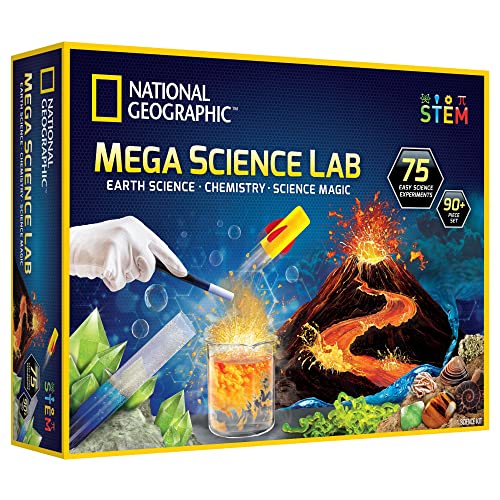
- 75 experiments across Earth science, chemistry, and science magic
- Includes rocks, minerals, crystals, and a real fossil
- Bonus activities use common household items
Best For: Broad, engaging STEM exploration
Best for Mechanics Practice
Physics Mechanics Experiment Kit

- Includes 26 physics mechanics experiments
- Covers forces, motion, pressure, buoyancy, pulleys, and levers
- Comes with dedicated lab tools and a detailed manual
Best For: Hands-on classical mechanics study for ages 14+
Best Introductory Chemistry Set

- Includes 28 guided chemistry experiments
- Covers acids, bases, gases, solids, liquids, and reactions
- Includes lab-style equipment and a 48-page color manual
Best For: Guided chemistry learning for ages 10–15
Best Earth Science Variety
National Geographic Earth Science Kit

- More than 15 Earth-science activities
- Includes crystals, volcanoes, rocks, and tornadoes
- Full-color guide with clear instructions
Best For: Students who want a broad, shareable Earth-science kit
Best for Biology Projects

- Includes 10 pre-poured LB-agar plates
- Comes with sterile swabs and resealable packaging
- Science-fair e-book offers project guidance
Best For: Older students working on guided biology investigations
Best for Electronics Exploration

- Includes more than 100 electrical experiments
- Creates lights, sounds, movement, and radio action
- Recommended for ages 8 to 16
Best For: Hands-on learners interested in beginner electronics
Best All-Around Variety – 150-Experiment STEM Science Kit
For shoppers comparing science experiment sets for middle school students, this UNGLINGA kit offers broad coverage across chemistry, physics, earth science, and surface tension. It includes kid-friendly tools, goggles, materials, and an illustrated manual, while some activities use common household items.
Best For: Families seeking a wide variety of hands-on experiments for home learning, school breaks, or weekend activities.
Pros:
- Includes 150 experiments spanning several science topics.
- Step-by-step, illustrated instructions are designed for easier following.
- Includes science tools, materials, and protective goggles.
Cons:
- Some projects require regular household items.
- The manufacturer recommends the kit for ages 8 and up, so supervision and activity selection may be useful for middle schoolers.
This is a flexible choice for students who enjoy switching between experiment types rather than focusing on one branch of science. Its large activity count and included tools add value for repeated use.
Best for Microbiology Projects – Pre-Poured Agar Plate Kit
For older middle school students and advanced learners, this microbiology kit provides a focused introduction to culture-based experiments. The pre-poured agar plates avoid the need to melt and pour agar, and the included guide explains the activities step by step.
Best For: Students age 15 and older working on biology projects, classroom activities, or science-fair investigations.
Pros:
- Includes 10 pre-poured nutrient agar petri dishes.
- Provides cotton swabs, a pipette, a plastic vial, and instructions.
- Includes an educational experiment eBook with additional project ideas.
Cons:
- Recommended for ages 15 and older, making it less suitable for younger middle school students.
- It is specialized for microbiology rather than offering a broad range of STEM topics.
This kit is a more targeted option than general science sets, especially when the goal is hands-on biology. Its ready-to-use plates simplify setup, but the age recommendation should be checked carefully before purchase.
Best Chemistry Starter – National Geographic 100+ Experiment Set
This National Geographic kit is a strong contender among science experiment sets for middle school students who are especially interested in chemistry. It combines materials for 15 guided experiments with a bonus guide containing 85 additional activities using common household items.
Best For: Students ages 8 and up who want engaging chemistry activities involving reactions, crystals, color changes, and scientific tools.
Pros:
- Offers more than 100 experiments in total.
- Includes materials for 15 chemistry experiments and tools such as test tubes, beakers, and pipettes.
- Provides 85 additional household-item experiments for continued use.
Cons:
- The included materials cover 15 of the experiments; the bonus activities use common household items.
- Its focus is primarily chemistry, so it may be less suitable for students wanting physics or biology activities.
With a clear chemistry focus and a large collection of bonus ideas, this set can support both structured projects and extra experimentation. It is particularly appealing when students want visible results such as crystals, glowing materials, and color-changing solutions.
Best for Electricity Lessons – EUDAX Circuit Learning Kit
Students looking for science experiment sets for middle school students with a physics focus may prefer this EUDAX circuit kit. It is designed for building series and parallel circuits, reinforcing textbook concepts, and practicing basic electrical rules through hands-on assembly.
Best For: Seventh- through ninth-grade science projects, science fairs, STEM clubs, homeschool units, and classroom learning.
Pros:
- Supports construction of basic series and parallel circuits.
- Includes English instructions for guided assembly.
- Parts come in a plastic storage box for organization.
- Targets hands-on understanding of electricity and current.
Cons:
- Two AA batteries are not included.
- The set focuses on basic electricity rather than multiple science subjects.
- The supplied details contain an inconsistent manufacturer age listing, so the intended grade range is the more useful purchasing guide.
This is a practical pick for students who learn best by assembling working circuits. It offers a narrower subject focus, but that specialization makes it useful for electricity units and introductory physics projects.
Best for Easy Setup – National Geographic Mega Science Lab
For families seeking science experiment sets for middle school students, this National Geographic kit offers broad variety in one box. It combines Earth science, chemistry, and science magic, with 45 included experiments plus 30 additional activities using common household items.
Best For: Curious learners who want a wide-ranging STEM introduction with engaging, visual experiments.
Pros:
- Includes 75 total experiments across three science areas.
- Features a volcano, crystals, fossils, rock specimens, chemical reactions, and science magic activities.
- Includes a bonus guide for experiments using household materials.
- No batteries are required.
Cons:
- The listed age range begins at 8, so some activities may be introductory for older middle school students.
- Not focused on one specific branch of science.
This is a strong pick when variety and easy hands-on exploration matter more than advanced depth. Its broad mix can keep students engaged across multiple sessions.
Best for Mechanics Practice – Physics Mechanics Experiment Kit
Students looking for science experiment sets for middle school students with a physics focus may appreciate this mechanics lab kit. It includes 26 experiments using tools such as pulleys, a balance, force gauge, trolley, ramp, lever ruler, and pressure gauge.
Best For: Learners around age 14 and up who want structured, hands-on practice with classical mechanics.
Pros:
- Covers Newton’s laws, kinematics, gravity, force, friction, pressure, buoyancy, pulleys, and levers.
- Includes a substantial selection of dedicated lab equipment.
- Comes with a professional manual containing procedures and explanations.
- Storage is designed to keep the components organized.
Cons:
- Its age recommendation of 14+ may make it less suitable for younger middle school students.
- It focuses on physics mechanics rather than multiple science disciplines.
Compared with general science kits, this set is more specialized and equipment-oriented. It is a practical choice for students ready to connect physics principles with measurable, hands-on activities.
Best Introductory Chemistry Set – Thames & Kosmos Chem C500
For students interested specifically in chemistry, the Thames & Kosmos Chem C500 is one of the more focused science experiment sets for middle school students. It provides 28 guided experiments covering acids and bases, reactions among solids, liquids, and gases, foaming effects, and invisible ink.
Best For: Learners ages 10–15 who prefer a guided introduction to core chemistry concepts.
Pros:
- Offers 28 classic chemistry experiments.
- Includes beakers, test tubes, chemicals, stoppers, and pipettes.
- The 48-page, full-color manual explains both procedures and results.
- Explores colorful, fizzy, foamy, and invisible-ink reactions.
Cons:
- It is limited to chemistry rather than covering Earth science or physics.
- The listed details indicate that one unknown battery may be required.
This kit suits students who want a clear, experiment-by-experiment chemistry introduction. Its guided manual and included lab-style components make it a focused option for building foundational understanding.
Best Earth Science Variety – National Geographic Earth Science Kit
For shoppers comparing science experiment sets for middle school students, this National Geographic kit offers broad Earth-science variety in one package. It includes more than 15 experiment activities, including crystal growing, volcano building, water tornadoes, and geologic dig kits, with a learning guide to explain the science behind them.
Best For: Curious students who want varied geology and Earth-science activities they can share with family, friends, or classmates.
Pros:
- Includes more than 15 hands-on experiments and activities.
- Covers crystals, volcanoes, rocks, tornadoes, and other Earth-science topics.
- Full-color learning guide explains the concepts behind the activities.
- Clear instructions support independent exploration.
Cons:
- The manufacturer lists the recommended age as 8 and up, so some activities may be more introductory for older middle school students.
- Its focus is Earth science rather than electronics or biology.
This is a strong all-around choice when variety and shareable activities matter most. Its wide topic range makes it suitable for home exploration, though students seeking a focused science-fair investigation may prefer a more specialized kit.
Best for Biology Projects – Bacteria Science Kit IV
Among science experiment sets for middle school students, this bacteria kit is the most specialized option. It provides 10 pre-poured sterile LB-agar plates and 10 sterile cotton swabs, plus a science-fair e-book with step-by-step experiments, project advice, and troubleshooting guidance.
Best For: Students ages 13 and up who are preparing a guided biology or science-fair project involving environmental microorganisms.
Pros:
- Includes 10 fresh, pre-poured 100-mm LB-agar plates.
- Provides 10 sterile six-inch swabs in resealable packaging.
- Free e-book includes tested experiment ideas and science-fair guidance.
- Offers access to live support from PhD scientists for product questions.
Cons:
- The manufacturer recommends this kit for ages 13 and up.
- Its biology focus is narrower than a general-purpose experiment set.
- Experiments involving microbial growth require careful adult or teacher oversight.
This kit is best suited to older students who want a focused, project-oriented biology experience rather than a collection of unrelated activities. The included plates and project guide make it practical for structured investigations, provided the work is supervised appropriately.
Best for Electronics Exploration – Dr. STEM Circuit Science Kit
For families seeking science experiment sets for middle school students with an electronics focus, this circuit kit provides more than 100 hands-on experiments. Students can explore lights, sounds, motors, a working radio, a floating ball, and a bell while learning basic circuit concepts through a working science lab format.
Best For: Students ages 8 to 16 who learn best through interactive electrical projects involving visible movement, sound, and light.
Pros:
- Offers more than 100 electrical experiments.
- Includes engaging outcomes such as lights, sounds, motors, and a working radio.
- Introduces electronics through hands-on circuit building.
- Suitable for home or school use according to the product notes.
Cons:
- The manufacturer provides only a 30-day warranty.
- The kit emphasizes basic circuit exploration rather than a single in-depth project.
- Students wanting Earth science or biology activities will need a different type of kit.
This is a compelling pick for students who enjoy immediate, interactive results and want to repeat experiments across many circuit configurations. It is particularly appealing for beginners because the activities connect basic electronics with lights, sounds, and motion.
How We Picked the Best Science Experiment Sets for Middle School Students
We selected kits across the main areas of middle school science, including chemistry, physics, circuits, microbiology, and earth science. We considered the number and variety of activities, the usefulness of included equipment and materials, age guidance, experiment structure, and whether the kit supports independent learning or adult-led instruction.
Because experiment counts can include variations on a single activity, we looked beyond the headline number. A smaller kit with clear instructions and relevant tools may be more useful than a large assortment with limited guidance. Safety, consumable requirements, and suitability for classroom, homeschool, and family use also influenced the selection.
Quick Comparison
| Best for | Recommended kit type | What to look for |
|---|---|---|
| Broad STEM exploration | Multi-subject science lab | Varied activities and organized instructions |
| Chemistry practice | Guided chemistry set | Measured experiments, protective equipment, and a clear science guide |
| Physics fundamentals | Mechanics or circuit kit | Reusable apparatus and explanations of force, motion, or electricity |
| Microbiology projects | Prepared agar-plate kit | Sealed supplies, project guidance, and careful handling instructions |
| Science-fair preparation | Focused project kit | Repeatable procedures, observation space, and ideas for variables |
Key Buying Factors for Science Experiment Sets for Middle School Students
Age, Supervision, and Safety
Check the manufacturer’s age range and read the safety requirements before buying. Chemistry and microbiology kits may require close adult supervision, protective eyewear, gloves, ventilation, or careful disposal. A kit can be educational without being appropriate for unsupervised use.
Subject Focus and Learning Goals
Choose a general lab if the student is still exploring interests. A chemistry-focused set suits learners drawn to reactions and crystals, while mechanics and circuit kits provide more relevant tools for force, motion, engineering, and electricity. Microbiology sets are better for students who want a structured investigation rather than a collection of unrelated demonstrations.
Instructions and Educational Depth
Look for illustrated steps, explanations of the underlying science, question prompts, and suggestions for changing variables. Clear guidance helps middle school students work more independently and makes the kit useful for reports or science-fair planning.
Included Materials and Replenishment
Review what is included and what must be supplied separately. Consumables such as agar, chemicals, batteries, or household ingredients may limit the number of usable experiments. Reusable tools, such as pulleys, circuit components, balances, and measuring equipment, can provide longer-term value.
Who Should Buy Which Science Experiment Sets for Middle School Students?
Choose a broad multi-topic lab for a curious student who wants variety or needs a general STEM activity set. Pick a dedicated chemistry kit for reaction-based learning, crystals, and introductory lab techniques. A mechanics kit is the stronger choice for lessons involving Newton’s laws, gravity, pressure, or buoyancy.
For students interested in electronics, select a circuit set with multiple components and repeatable wiring projects. Microbiology kits are best for mature learners working with an adult on a contained science-fair investigation. Earth science kits suit students who enjoy rocks, minerals, volcanoes, and crystal growth. Whichever option you choose, match the kit’s complexity to the learner’s confidence and plan for supervision, workspace, and replacement supplies.