The best advanced science experiment sets turn curiosity into structured, hands-on learning with real tools, clear instructions, and experiments kids can repeat and build upon.
This roundup compares 10 chemistry, physics, earth science, and science-magic kits for different ages, experience levels, interests, and budgets.
Best 10 Advanced Science Experiment Sets Picks for 2026
Advanced Chemistry Pick

- 333+ experiments across 27 chemistry chapters
- Real lab equipment and chemicals included
- Detailed 192-page manual for ages 12+
Best For: Serious young scientists and high school chemistry preparation
Most Varied Science Set
National Geographic Mega Science Lab
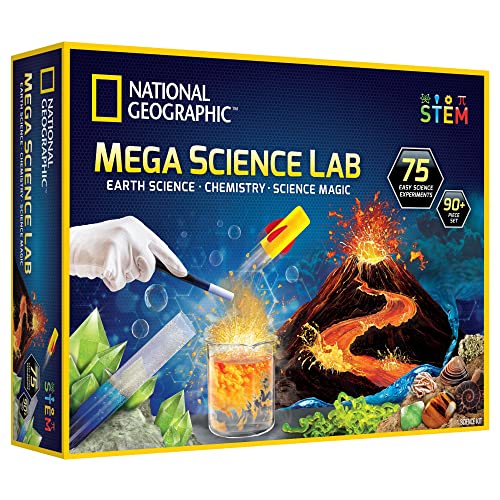
- Combines Earth science, chemistry, and science magic
- Offers 75 experiment ideas
- Includes rock, mineral, crystal, and fossil activities
Best For: Kids who want broad STEM variety and easy hands-on projects
Best Beginner Lab Setup

- 57-piece dedicated chemistry station
- Includes slime, fizz, bubbles, and chromatography activities
- Non-hazardous chemicals with no borax
Best For: Young learners starting guided chemistry exploration
Intermediate Chemistry Choice

- Includes 250 real chemistry experiments
- Features an alcohol burner and lab apparatus
- Builds toward advanced CHEM C3000 study
Best For: Middle school learners progressing beyond beginner chemistry
Most Variety
UNGLINGA 272-Experiment Science Kit

- 272 experiments across chemistry, physics, and STEM
- Includes volcano, crystal, and holographic activities
- Illustrated guide and child-size lab tools
Best For: Kids ages 8+ who want extensive experiment variety
Best Chemistry Variety
National Geographic Amazing Chemistry Set

- 100+ chemistry experiments overall
- Materials included for 15 featured activities
- Adds 85 household-item bonus experiments
Best For: Kids 8+ exploring chemistry with flexible follow-up projects
Best Guided Chemistry
Thames & Kosmos Chemistry C500

- 28 structured chemistry experiments
- 48-page full-color explanatory manual
- Includes core lab tools and chemicals
Best For: Students ages 10–15 ready for focused chemistry
Best for Young Lab Beginners

- 50 hands-on chemistry experiments
- 20+ child-safe lab tools included
- Illustrated instructions for ages 4 and up
Best For: Young children beginning chemistry exploration
Best for Experiment Variety

- Includes 150 diverse science projects
- Covers chemistry, physics, earth science, and more
- Comes with tools, materials, and goggles
Best For: Kids ages 8 and up who want many project options
Best for Science and Magic

- Combines STEM experiments with magic tricks
- Includes 20 experiments and 85+ bonus activities
- Designed for children ages 8 and up
Best For: Kids who enjoy entertaining science demonstrations
Advanced Chemistry Pick – Thames & Kosmos CHEM C3000
For shoppers seeking advanced science experiment sets, the Thames & Kosmos CHEM C3000 is a comprehensive home chemistry laboratory for serious young scientists. It includes more than 333 experiments, real lab equipment, a broad selection of chemicals, and a 192-page manual covering inorganic, organic, and electrochemistry.
Best For: Students ages 12 and up, homeschoolers, and aspiring chemists preparing for high school chemistry with adult supervision.
Pros:
- Offers more than 333 experiments across 27 chapters.
- Includes authentic equipment such as glassware, an alcohol burner, electrodes, and safety goggles.
- The full-color manual provides detailed procedures, scientific explanations, safety guidance, and waste-disposal instructions.
- Covers topics ranging from acids and bases to organic chemistry and electrolysis.
Cons:
- Requires adult supervision throughout.
- Some experiments require common household additions.
- The depth and number of components may be more than beginners need.
CHEM C3000 stands out for its breadth, equipment, and instructional depth. It is a strong choice when the goal is sustained chemistry study rather than a small collection of introductory demonstrations.
Most Varied Science Set – National Geographic Mega Science Lab
The National Geographic Mega Science Lab is a versatile option among advanced science experiment sets for children who want to sample several STEM subjects. It combines Earth science, chemistry, and science magic, with 45 included experiments plus 30 additional activities using common household items.
Best For: Kids ages 8 and up who enjoy variety, hands-on demonstrations, rocks and minerals, chemistry reactions, and science-themed magic tricks.
Pros:
- Combines three kits in one: Earth science, chemistry, and science magic.
- Includes 75 total experiment ideas, including household-material activities.
- Features a volcano, glow-in-the-dark crystal, water tornadoes, fossil digging, and chemical reactions.
- Provides real rock, mineral, and crystal specimens for collecting.
Cons:
- Its broad subject mix may offer less depth in chemistry than dedicated chemistry sets.
- Some of the bonus experiments require household items.
- Designed for ages 8 and up, so older students may want more advanced instruction.
This kit is a practical pick for families prioritizing variety and approachable activities. Its combination of geology, chemistry, and science magic can keep multiple interests engaged without requiring batteries.
Best Beginner Lab Setup – Ooze Labs Chemistry Station
The Ooze Labs Chemistry Station is a colorful, approachable choice for younger learners comparing advanced science experiment sets. Its 57-piece setup supports activities such as glowing slime, fizzing reactions, bubbles, chromatography, and an underwater volcano, using non-hazardous chemicals and no borax.
Best For: Children ages 6 and up who want a dedicated play-lab layout and guided introductory chemistry activities.
Pros:
- Includes a large functional chemistry station with 57 pieces.
- Provides beakers, test tubes, flasks, pipettes, a petri dish, and other lab-style tools.
- Experiment cards clip onto the station for convenient reference.
- Uses non-hazardous chemicals and does not contain borax.
Cons:
- Its activities are more introductory than the experiments in advanced chemistry kits.
- The separate manual is only 16 pages.
- Most components are plastic rather than glass laboratory equipment.
The Chemistry Station is best viewed as an accessible first lab rather than a deep chemistry curriculum. Its organized workspace and visual experiments make it a useful entry point for children who are not ready for more technical sets.
Intermediate Chemistry Choice – Thames & Kosmos CHEM C2000
The Thames & Kosmos CHEM C2000 is a strong middle ground for shoppers evaluating advanced science experiment sets. With 250 real chemistry experiments, an alcohol burner, laboratory equipment, chemicals, and a 128-page manual, it builds skills beyond beginner kits while offering a progression toward the CHEM C3000.
Best For: Students ages 11 and up, homeschoolers, and middle school learners ready for structured chemistry with adult supervision.
Pros:
- Includes 250 experiments organized across 18 themed chapters.
- Introduces heat-based work with an alcohol burner, tripod components, and related apparatus.
- Covers acids and bases, electrochemistry, chromatography, food chemistry, and more.
- Includes real lab equipment, selected chemicals, safety goggles, and detailed safety guidance.
Cons:
- Adult supervision is required.
- Some experiments use an alcohol burner and therefore require careful handling.
- It is less extensive than the advanced CHEM C3000.
CHEM C2000 is a sensible progression for learners who have outgrown basic kits but are not ready for the largest Thames & Kosmos chemistry set. Its structured chapters and heat-based experiments provide a substantial foundation for further study.
Most Variety – UNGLINGA 272-Experiment Science Kit
For shoppers seeking advanced science experiment sets with maximum variety, the UNGLINGA kit offers 272 activities spanning chemistry, physics, and STEM play. Kids can explore volcanoes, crystal growing, holographic projection, rainbow walking water, and other reactions with child-size lab tools and an illustrated guide.
Best For: Children ages 8 and up who want a large selection of guided experiments for home, school breaks, or group activities.
Pros:
- Includes 272 experiments for extended exploration.
- Covers chemistry, physics, crystals, volcanoes, and visual STEM activities.
- Includes plastic test tubes, a beaker, conical flask, and measuring spoon.
- Illustrated instructions support step-by-step learning.
Cons:
- The very large experiment count may make the kit feel less focused.
- Recommended activities require adult involvement for younger children.
This is a strong pick when breadth matters most. Its wide activity range and accessible manual make it suitable for families seeking an all-purpose STEM project kit.
Best Chemistry Variety – National Geographic Amazing Chemistry Set
The National Geographic Amazing Chemistry Set is one of the more approachable advanced science experiment sets for hands-on chemistry. It provides materials for 15 featured experiments, plus a guide with 85 additional activities using common household items, including crystal growing, color-changing reactions, glowing projects, and bouncy-ball making.
Best For: Kids ages 8 and up who want a chemistry-focused kit with both included-material experiments and household-item extensions.
Pros:
- Offers more than 100 experiments in total.
- Includes materials for 15 featured chemistry experiments.
- Uses test tubes, beakers, and pipettes for hands-on lab practice.
- Bonus guide adds 85 activities using common household items.
Cons:
- Only 15 of the listed experiments include all necessary kit materials.
- The additional 85 activities require household items.
This set balances an engaging core kit with a substantial bonus guide. It is especially practical for families that want to continue experimenting after the included materials are used.
Best Guided Chemistry – Thames & Kosmos Chemistry C500
For older children who prefer structured learning, the Thames & Kosmos Chemistry C500 is a focused option among advanced science experiment sets. Its 28 guided experiments cover acids and bases, fizzy and foamy reactions, invisible ink, and the behavior of solids, liquids, and gases.
Best For: Students ages 10 to 15 who want clearly explained introductory chemistry experiments rather than a broad activity collection.
Pros:
- Provides 28 classic, guided chemistry experiments.
- Includes a 48-page, full-color manual with explanations of results.
- Explores acids, bases, gases, invisible ink, and reaction effects.
- Includes beakers, test tubes, chemicals, stoppers, and pipettes.
Cons:
- Offers fewer experiments than the larger kits in this roundup.
- Its recommended age range makes it less suitable for younger children.
This kit emphasizes depth and explanation over sheer quantity. The detailed manual and chemistry-specific equipment make it a sensible choice for learners ready for more structured experimentation.
Best for Young Lab Beginners – Junior Chemistry Set
For families seeking advanced science experiment sets for younger children, this National Geographic Junior Chemistry Set offers 50 hands-on activities using kid-friendly tools and common household items such as baking soda and vinegar. The illustrated instructions are designed to make early chemistry exploration approachable.
Best For: Children ages 4 and up who are beginning to explore chemistry with adult guidance.
Pros:
- Includes 50 interactive chemistry experiments.
- Provides more than 20 child-safe lab tools, including test tubes and goggles.
- Illustrated, step-by-step instructions support independent participation.
- Requires no batteries and incorporates common household materials.
Cons:
- The activities are intended for early learners, so older children may want more advanced challenges.
- Some experiments require additional household items.
This is a practical starter kit for introducing young children to basic chemistry concepts. Its substantial experiment count and included tools add variety, while the age-focused format keeps the activities accessible.
Best for Experiment Variety – 150 Experiments Science Kit
Among advanced science experiment sets, the UNGLINGA kit stands out for its broad selection of 150 activities. Projects span earth science, surface tension, chemistry, physics, crystals, volcanoes, and more, giving families a flexible option for hands-on learning at home.
Best For: Children ages 8 and up who want a wide mix of science projects for weekends, school breaks, or family activity time.
Pros:
- Offers 150 experiments across several science topics.
- Includes kid-friendly tools, materials, and safety goggles.
- Uses an illustrated, step-by-step scientific manual.
- Many activities can be supplemented with regular household items.
Cons:
- Some projects require household materials beyond the included contents.
- The wide topic range may require adult help when choosing or organizing activities.
Choose this set when variety is the priority. It provides an especially large activity library and can support repeated science sessions, although families should review each project and gather any additional materials beforehand.
Best for Science and Magic – Science Magic Kit
For children interested in advanced science experiment sets with an entertaining twist, this National Geographic Science Magic Kit combines chemistry-based activities with magic tricks. It includes materials for 20 magic experiments plus a bonus booklet containing more than 85 additional experiments.
Best For: Children ages 8 and up who enjoy presenting science activities as magic tricks and STEM projects.
Pros:
- Combines science experiments with magic-themed activities.
- Includes everything needed for 20 magic experiments.
- Adds a booklet with more than 85 additional magic experiments.
- Supports STEM-focused, hands-on learning without requiring batteries.
Cons:
- The magic theme may be less suitable for children seeking traditional lab experiments.
- The product is recommended for ages 8 and up.
This kit is a strong match for kids who learn best through performance and surprise. Its combination of included activities and bonus experiments offers considerable content, especially for children drawn to science magic.
How We Picked the Best Advanced Science Experiment Sets
We focused on kits that offer more than a few novelty activities. Our comparison considers the number and variety of experiments, the usefulness of included equipment, the quality of the instructions, age suitability, and how well each set supports independent learning. We also looked for kits covering core STEM concepts such as chemical reactions, crystals, density, physics, earth science, and observation.
Experiment count is useful, but it is not the only measure of value. A smaller kit with better explanations and reusable equipment may be more rewarding than a larger box filled with repetitive activities or consumable materials.
Quick Comparison
| Best For | What to Prioritize |
|---|---|
| First-time experimenters | Short guided activities, simple setup, and clear safety instructions |
| Growing science interests | Reusable lab tools, varied topics, and experiments with increasing difficulty |
| Independent learners | Detailed manuals, scientific explanations, and a broad experiment library |
| Family activities | Fast preparation, accessible materials, and projects suitable for supervision |
| Gift buyers | Strong presentation, variety, and enough activities to justify the price |
Key Buying Factors for Advanced Science Experiment Sets
Age and Difficulty
Match the kit to the child’s reading ability, patience, and previous experience—not just the age printed on the box. Advanced sets can be excellent for older children or younger learners who have adult help, but overly difficult instructions can reduce engagement.
Experiment Variety
Look for a balanced mix of chemistry, physics, earth science, and observation activities. Kits featuring crystals, reactions, density, volcanoes, slime, and optical effects can maintain interest better than sets focused on one repeated project.
Equipment and Refill Needs
Check whether the kit includes useful tools such as beakers, test tubes, droppers, measuring equipment, goggles, or a working lab setup. Also consider which ingredients are supplied and whether common household materials are needed. Consumables may eventually require replacement.
Instructions and Safety
A strong manual explains the purpose of each experiment, lists materials, gives step-by-step directions, and describes what results mean. Adult supervision is still important, especially for chemical handling, heat, glass-like components, spills, and younger children.
Who Should Buy Which Advanced Science Experiment Sets?
Choose a comprehensive Thames & Kosmos-style chemistry set for an older or experienced learner who wants structured progression and substantial lab equipment. National Geographic kits are a practical choice for families seeking accessible, colorful experiments with broad STEM appeal. Ooze Labs is especially suitable for children drawn to visual chemistry activities such as fizzing reactions, slime, and underwater effects.
For younger beginners, prioritize a junior or introductory set with fewer steps and strong adult guidance. Large UNGLINGA kits can suit families that want maximum activity variety at a lower cost, provided expectations are realistic about repetition and supervision. Science-magic sets are best for children who enjoy demonstrations and performance alongside basic scientific concepts.
Whichever kit you choose, set up a dedicated workspace, read the safety guidance first, and treat the experiments as a starting point for asking questions, recording results, and trying controlled variations.