The right enclosure can turn an internal SATA drive into a practical backup destination without the cost of a complete external hard drive. Whether you need a simple 2.5-inch SSD case, a powered dock for desktop drives, or a multi-bay enclosure for redundancy, the best choice depends on your drives and backup routine.
We’ve assembled 10 hard drive enclosures for backups covering portable, desktop, high-capacity, and multi-drive setups. Use the guide below to compare connection speeds, power requirements, drive compatibility, expansion options, and ease of use before buying.
Best 10 Hard Drive Enclosures for Backups Picks for 2026
Best Single-Drive Dock
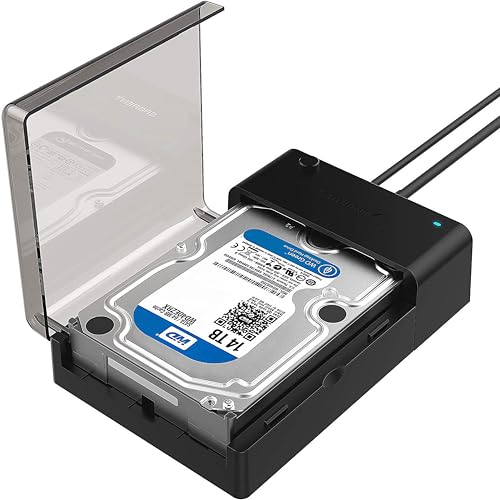
- Accepts one 2.5- or 3.5-inch SATA drive
- Includes 12V power for 3.5-inch HDDs
- USB 3.0 Type-A with UASP support
Best For: Occasional SATA drive swaps and single-drive backups
Best RAID Backup Enclosure
TerraMaster D2-320 Two-Bay DAS

- Two-bay enclosure with RAID 0, 1, JBOD, and Single
- Supports up to two 22TB SATA drives
- USB 3.2 Gen 2 Type-C connectivity
Best For: Two-drive desktop backups with optional RAID 1 mirroring
Best Value Enclosure
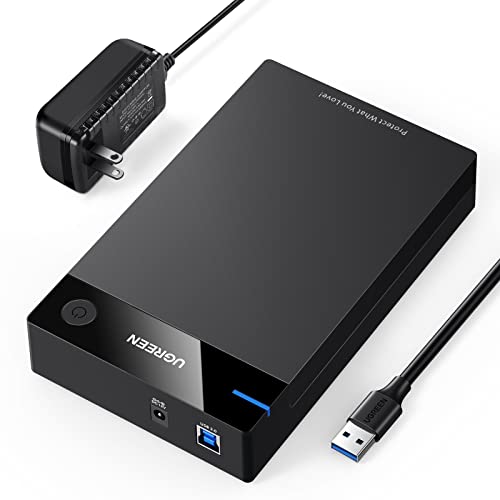
- Supports 2.5- and 3.5-inch SATA drives
- Includes 12V adapter and USB 3.0 cable
- UASP support and up to 20TB drive capacity
Best For: Affordable single-drive backups and storage expansion
Best Compact Pick
Sabrent 2.5-Inch USB 3.0 Enclosure
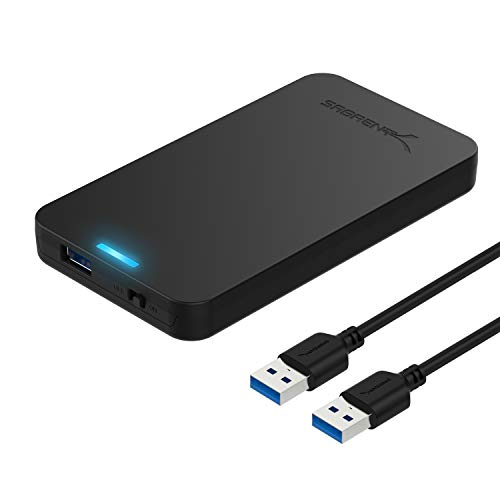
- Tool-free installation for 2.5-inch SATA drives
- Supports HDDs, SSDs, and UASP SATA III
- Compact USB 3.0 enclosure for single-drive backups
Best For: Portable backups using a 2.5-inch SATA HDD or SSD
Best Multi-Drive Pick
TerraMaster D4-320 4-Bay Enclosure

- Four hot-swappable bays for separate drives
- USB 3.2 Gen 2 speeds up to 10 Gbps
- Supports up to 120TB total capacity
Best For: Multi-drive backups without built-in RAID
Best 3.5-Inch Pick
ORICO Aluminum USB-C Enclosure

- Supports 3.5-inch drives up to 20TB
- Aluminum shell and ventilation aid cooling
- Includes USB-C/A cable and power adapter
Best For: Single-drive desktop backups with a 3.5-inch SATA HDD
Best with Extra Features
BENFEI 2.5-Inch SATA Enclosure

- Tool-free installation for one 2.5-inch SATA drive
- USB Type-C/Type-A connectivity with up to 5Gbps transfers
- Supports drives up to 6TB and includes an 18-month warranty
Best For: Portable single-drive SSD or HDD backups
Best Heavy-Duty Pick

- Supports two 2.5- or 3.5-inch SATA drives
- Tool-free, hot-swappable design with active cooling
- USB A/C 3.0 and daisy-chain expansion support
Best For: Desktop backup systems using multiple SATA drives
Best 3.5-Inch Single-Bay Pick

- Supports 2.5- and 3.5-inch SATA drives up to 24TB
- Includes detachable USB-A/USB-C cable
- Aluminum housing with ventilation and automatic sleep mode
Best For: High-capacity single-drive desktop backups
Best Single-Drive Dock – Tool-Free SATA Backup Dock
For straightforward backups, the SABRENT EC-DFLT is a compact hard drive enclosure alternative that lets you connect one bare 2.5- or 3.5-inch SATA drive to a computer. Its tool-free, lay-flat design suits occasional drive swaps, cloning, and file recovery, but check your drive connector and host port before buying.
Best For: Users who need a simple, single-drive SATA reader for Windows, macOS, or Linux backup tasks.
Pros:
- Supports 2.5- and 3.5-inch SATA HDDs and SSDs.
- Tool-free installation, hot-swapping, and plug-and-play operation.
- Includes the required 12V adapter for 3.5-inch drives and supports UASP.
- Compact design with power and activity LED indicators.
Cons:
- Supports SATA drives only; it does not support IDE/PATA, M.2, NVMe, or SAS drives.
- Uses a USB Type-A host cable, not USB-C.
- Does not pass S.M.A.R.T. diagnostics through the USB bridge.
This is a practical choice when you already have a bare SATA drive and want an inexpensive, easy-to-store backup dock. It is less suitable for multi-drive backups or computers equipped only with USB-C ports unless you add an adapter.
Best RAID Backup Enclosure – TerraMaster D2-320 Two-Bay DAS
The TerraMaster D2-320 is a two-bay hard drive enclosure for backups that adds hardware RAID options to a direct-attached USB setup. It supports two 2.5- or 3.5-inch SATA drives, allowing you to choose mirrored RAID 1 for redundancy or other modes for capacity and flexibility.
Best For: Home users and creators who want two-drive backup storage with RAID 1, high-capacity support, and USB-C connectivity.
Pros:
- Supports RAID 0, RAID 1, JBOD, and Single modes.
- Holds up to two SATA drives, with up to 22TB per drive according to the supplied specifications.
- USB 3.2 Gen 2 Type-C interface offers up to 10Gbps interface speed.
- Tool-free trays and temperature-controlled fan simplify installation and cooling.
Cons:
- Diskless design requires you to supply compatible SATA drives.
- It is a DAS, not a network-attached storage device.
- RAID 0 improves capacity and performance but does not provide redundancy.
For backup-focused storage, RAID 1 is the standout feature because one drive mirrors the other. Remember that mirroring is not a substitute for an additional offline or separate backup, and select the RAID mode carefully before loading important data.
Best Value Enclosure – UGREEN SATA Backup Case
The UGREEN external hard drive enclosure is a practical one-drive option for turning a bare 2.5- or 3.5-inch SATA HDD or SSD into external backup storage. It includes a 12V adapter for 3.5-inch drives, uses USB 3.0 with UASP, and supports drives up to 20TB.
Best For: Users seeking an affordable, broadly compatible enclosure for SATA backup drives, media storage, or console expansion.
Pros:
- Supports 2.5- and 3.5-inch SATA I/II/III HDDs and SSDs.
- Includes a 12V/2A power adapter and USB 3.0 A-to-B cable.
- UASP support can improve transfer performance over traditional USB 3.0 operation.
- Works with Windows, Linux, macOS, and supported PlayStation and Xbox systems.
Cons:
- Holds one drive and uses a USB 3.0 connection rather than USB-C.
- Requires safe removal before unplugging to help avoid data loss.
- Does not provide RAID or automatic drive mirroring.
This enclosure offers a useful balance of compatibility, power, and simplicity for a single backup disk. It is a good fit for repurposing an existing SATA drive, provided your computer or console has the required USB connection and the drive is removed safely.
Best Multi-Drive Backup Case – ORICO Five-Bay SATA Enclosure
The ORICO five-bay hard drive enclosure is designed for large desktop backup libraries, family media, and video projects. It accepts up to five 2.5- or 3.5-inch SATA drives and connects through USB Type-C, while a built-in fan and multiple protection features help support extended operation.
Best For: Users who need a high-capacity multi-drive enclosure for family archives, video editing storage, or multiple backup disks.
Pros:
- Five bays support up to five SATA HDDs or SSDs, with up to 22TB per drive according to the supplied notes.
- Tool-free magnetic cover enables quick drive installation.
- USB Type-C interface provides up to 5Gbps transfer speed.
- Includes a 60mm fan and over-voltage, over-current, overheat, and short-circuit protection.
Cons:
- It is a large desktop enclosure rather than a portable solution.
- Linux users may read only one hard drive at a time, according to the supplied notes.
- The supplied details list a USB A-to-B data cable, so a USB-C host connection may require checking the included cabling.
With five bays and support for drives up to 22TB each, this ORICO model is suited to building a substantial local backup collection. Its cooling and protection features are useful for sustained use, but confirm your operating-system and connection requirements before filling all bays.
Best Compact Pick – Sabrent 2.5-Inch USB 3.0 Enclosure
For straightforward backups from a 2.5-inch SATA drive, this Sabrent enclosure keeps the setup simple. Its tool-free design supports standard notebook HDDs and SSDs, connects over USB 3.0, and works with Windows and Mac without requiring drivers.
Best For: Users converting a spare 2.5-inch SATA notebook drive into a portable backup drive.
Pros:
- Tool-free installation with plug-and-play operation
- Supports 2.5-inch SATA HDDs and SSDs, including SATA III with UASP
- USB 3.0 transfer rates up to 5 Gbps, with USB 2.0 and 1.1 backward compatibility
- Compact, lightweight plastic enclosure with included USB cable
Cons:
- Limited to one 2.5-inch drive
- Not designed for 3.5-inch desktop hard drives
This is a practical low-complexity choice for individual-drive backups, especially when portability and easy installation matter more than multi-drive capacity.
Best Multi-Drive Pick – TerraMaster D4-320 4-Bay Enclosure
For larger backup collections, the TerraMaster D4-320 provides four drive bays in a diskless direct-attached enclosure. It connects through USB 3.2 Gen 2 at up to 10 Gbps, supports separate drives without RAID, and works with 3.5-inch HDDs, 2.5-inch HDDs, and 2.5-inch SSDs.
Best For: Users managing several backup drives from one Windows, Mac, or Linux workstation.
Pros:
- Four tool-free, hot-swappable drive bays
- Supports up to 30TB per drive and 120TB total capacity
- USB 3.2 Gen 2 Type-C connectivity with plug-and-play compatibility
- Temperature-controlled fan, vibration damping, and sound-absorbing panels
Cons:
- Diskless design requires four drives to be purchased separately
- Does not provide RAID functionality
- Larger and less portable than a single-drive enclosure
The D4-320 is a strong fit when backup capacity and drive convenience are priorities. Its four independent bays simplify drive swapping, but users needing RAID protection will need a different solution.
Best 3.5-Inch Pick – ORICO Aluminum USB-C Enclosure
This ORICO enclosure is designed for single-drive backups using a 3.5-inch SATA hard drive, while also accommodating 2.5-inch SATA drives. Its aluminum shell, USB 3.2 Gen 2 interface, included USB-C-to-USB-C/A cable, and 12V power adapter make it a flexible desktop storage option.
Best For: Desktop backup setups using a high-capacity 3.5-inch SATA HDD.
Pros:
- Aluminum enclosure with ventilation for improved heat dissipation
- Supports 3.5-inch HDDs and 2.5-inch SATA HDDs or SSDs up to 20TB
- USB 3.2 Gen 2 connectivity with UASP support
- Includes a versatile USB-C-to-USB-C/A cable and 12V/2A power adapter
Cons:
- Supports only one drive at a time
- Requires an external power adapter for compatible drives
- Users should safely eject the drive before unplugging to help avoid data loss
With broad operating-system compatibility and support for large desktop drives, the ORICO is well suited to a stable, single-drive backup station rather than a compact travel enclosure.
Best with Extra Features – BENFEI 2.5-Inch SATA Enclosure
For backups using a 2.5-inch SATA SSD or hard drive, the BENFEI enclosure offers a simple, portable setup. Its tool-free design, USB Type-C/Type-A connectivity, and support for UASP make it convenient for moving files between computers, laptops, and compatible consoles.
Best For: Users who need a lightweight enclosure for a single 2.5-inch SATA drive, especially an SSD.
Pros:
- Tool-free, plug-and-play installation with no driver required.
- Includes USB Type-C/Type-A connectivity and supports transfer rates up to 5Gbps.
- Supports 2.5-inch, 7/9.5mm SATA HDDs and SSDs up to 6TB.
- Includes an 18-month warranty.
Cons:
- Supports only one 2.5-inch drive.
- Not designed for 3.5-inch hard drives.
The BENFEI is a practical choice when portability and easy installation matter more than multi-drive capacity. It is particularly well suited to SSD-based backup and file-transfer routines.
Best Heavy-Duty Pick – CENMATE 2-Bay HDD Enclosure
For backup users managing multiple drives, the CENMATE 2-bay enclosure provides a desktop-oriented storage setup for 2.5- and 3.5-inch SATA HDDs or SSDs. It combines tool-free installation, hot swapping, USB A/C connectivity, and active cooling in a dual-drive design.
Best For: Individuals or businesses that need to access two SATA drives and expand storage through daisy chaining.
Pros:
- Holds two 2.5- or 3.5-inch SATA drives, with up to 20TB supported per drive.
- Aluminum construction and a built-in fan help manage heat.
- Supports hot swapping and tool-free drive installation.
- Offers USB A/C 3.0 connectivity and daisy-chain expansion up to three devices.
Cons:
- It is a desktop enclosure rather than a highly portable option.
- The fan operates around 40–50 decibels and may be noticeable in quiet spaces.
- This model is DAS and does not provide RAID or NAS functionality.
The CENMATE makes sense for larger backup workflows where two drive bays and expansion flexibility are more valuable than silent operation. Be sure to account for its fan noise and lack of RAID or NAS features.
Best 3.5-Inch Single-Bay Pick – RSHTECH USB-C SATA Enclosure
The RSHTECH enclosure is designed for single-drive backups involving larger 3.5-inch SATA hard drives, while also accommodating 2.5-inch drives. Its aluminum housing, USB-A/USB-C cable, UASP support, and automatic sleep function provide a flexible desktop backup solution.
Best For: Users who want a single-bay enclosure for high-capacity 3.5-inch drives and computers with USB-A or USB-C ports.
Pros:
- Supports 2.5- and 3.5-inch SATA drives up to 24TB.
- Includes a detachable 2-in-1 USB-A/USB-C cable for broad host compatibility.
- Supports UASP and transfer rates up to 5Gbps.
- Aluminum housing, ventilation, sleep mode, and drive-activity indicators support desktop use.
Cons:
- Only one drive can be installed at a time.
- It is intended for SATA drives and does not offer RAID or NAS features.
The RSHTECH is a strong fit for straightforward, high-capacity backups from a single SATA disk. Its interchangeable cable and removable stand add flexibility, while the enclosure remains focused on direct USB storage rather than networked or multi-drive operation.
How We Picked These Hard Drive Enclosures for Backups
We focused on enclosures that support common SATA hard drives and SSDs while offering practical features for regular backup use. The selection includes compact 2.5-inch USB cases, universal 2.5/3.5-inch docks, and multi-bay models for users who need several drives or RAID support.
We also considered connection standards, power delivery, tool-free installation, cooling, hot-swapping, capacity support, and the difference between a basic enclosure and a diskless storage system. Because backup reliability depends on the entire setup, compatibility with your computer, drives, cables, and backup software matters as much as headline speed.
Quick Comparison
| Type | Best For | What to Look For |
|---|---|---|
| 2.5-inch enclosure | SSDs and laptop hard drives | USB 3.x, UASP, tool-free installation |
| Single-bay 3.5-inch dock | Desktop drives and occasional cloning | 12V power adapter, stable drive support |
| Two-bay enclosure | Mirrored or expanded storage | RAID modes, cooling, USB-C bandwidth |
| Four- or five-bay enclosure | Large libraries and multiple backups | Drive cooling, capacity limits, hot-swap access |
Key Buying Factors for Hard Drive Enclosures for Backups
Drive Size and Interface
Confirm whether the enclosure accepts 2.5-inch drives, 3.5-inch drives, or both. Most models in this roundup use SATA drives; they do not accept M.2 NVMe SSDs unless explicitly stated. A 3.5-inch hard drive generally needs an external power adapter, while a 2.5-inch SSD or laptop drive may run from USB power.
USB Speed and Connector Type
USB 3.0 is adequate for many hard drives, but USB 3.2 Gen 2 can provide more bandwidth for SSDs and multi-drive enclosures. Check whether the host connection is USB-A, USB-C, or both, and remember that real transfer speeds are limited by the drive and computer. UASP support can improve performance and reduce overhead with compatible systems.
Power, Cooling, and Reliability
Powered enclosures are essential for 3.5-inch drives and multiple disks. Look for a substantial adapter, ventilation, and—on larger units—a fan or other active cooling. For backups, stable operation is more important than maximum burst speed, especially during long transfers.
RAID and Drive Management
Multi-bay models may support RAID 0, RAID 1, JBOD, or independent disks. RAID 1 can provide redundancy against a single drive failure, but it is not a substitute for a separate backup. Verify how the enclosure configures RAID and whether changing modes can erase existing data.
Who Should Buy Which Hard Drive Enclosures for Backups?
Choose a compact 2.5-inch tool-free enclosure if you are backing up a laptop SSD or spare portable hard drive. Pick a single-bay dock or universal case when you need flexible access to both 2.5- and 3.5-inch SATA drives. For larger collections, a two-bay model is a practical middle ground, while four- and five-bay enclosures suit media libraries, work archives, and users managing several backup disks.
Before ordering, verify drive compatibility, included cables, power requirements, maximum supported capacity, and whether the enclosure’s RAID features match your backup plan. Keep at least one additional copy offline or in another location for protection against accidental deletion, hardware failure, ransomware, and other risks.